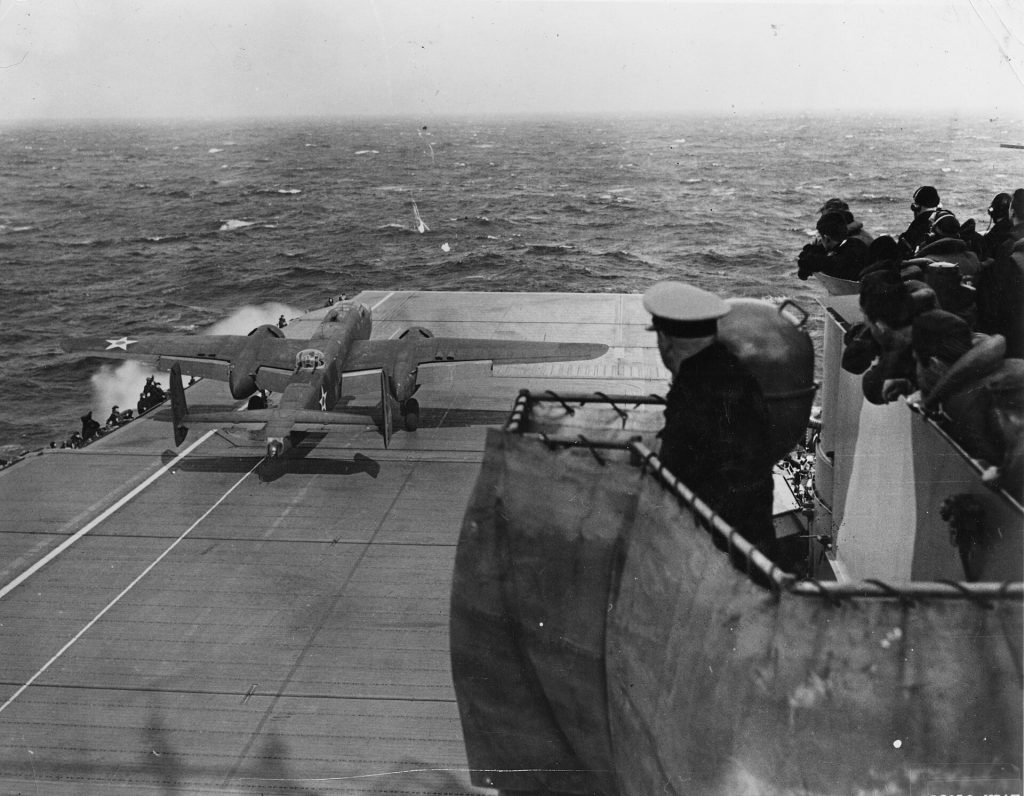
18 April 1942: The Doolittle Raid
Sixteen army bombers take off from the deck of an aircraft carrier and bomb Tokyo and other Japanese cities. The damage is small; the shock is enormous.
Dispatches involving United States.
Sixteen army bombers take off from the deck of an aircraft carrier and bomb Tokyo and other Japanese cities. The damage is small; the shock is enormous.
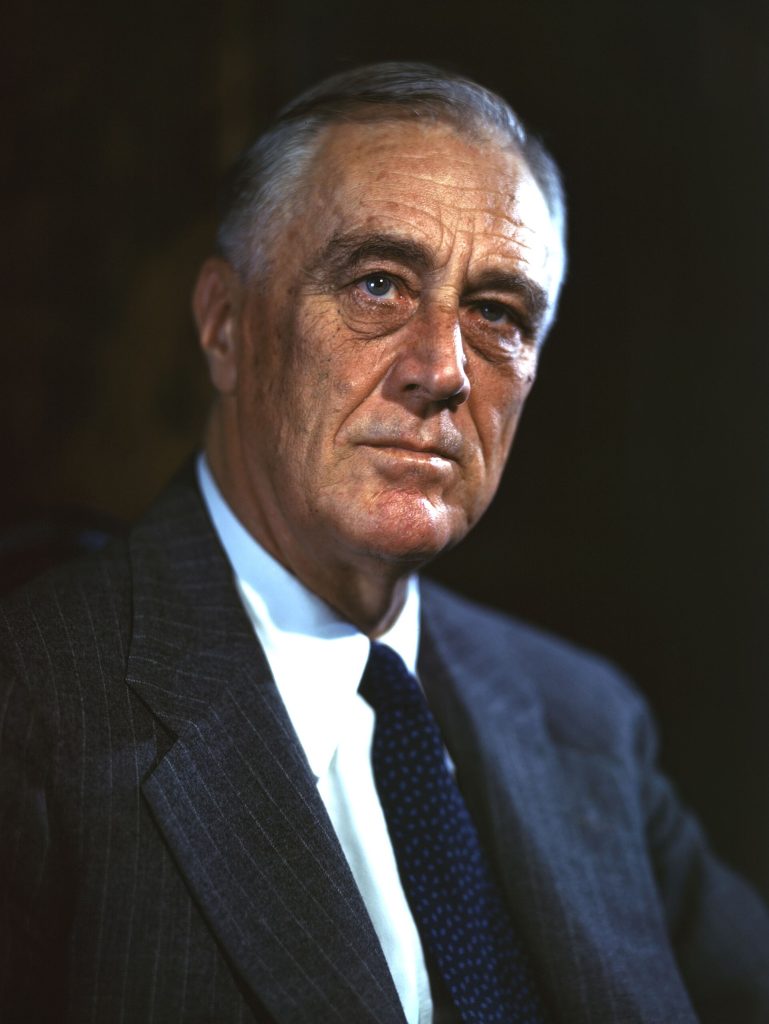
At his retreat in Warm Springs, Georgia, Franklin D. Roosevelt collapses while sitting for a portrait. Within hours, Harry Truman is president.
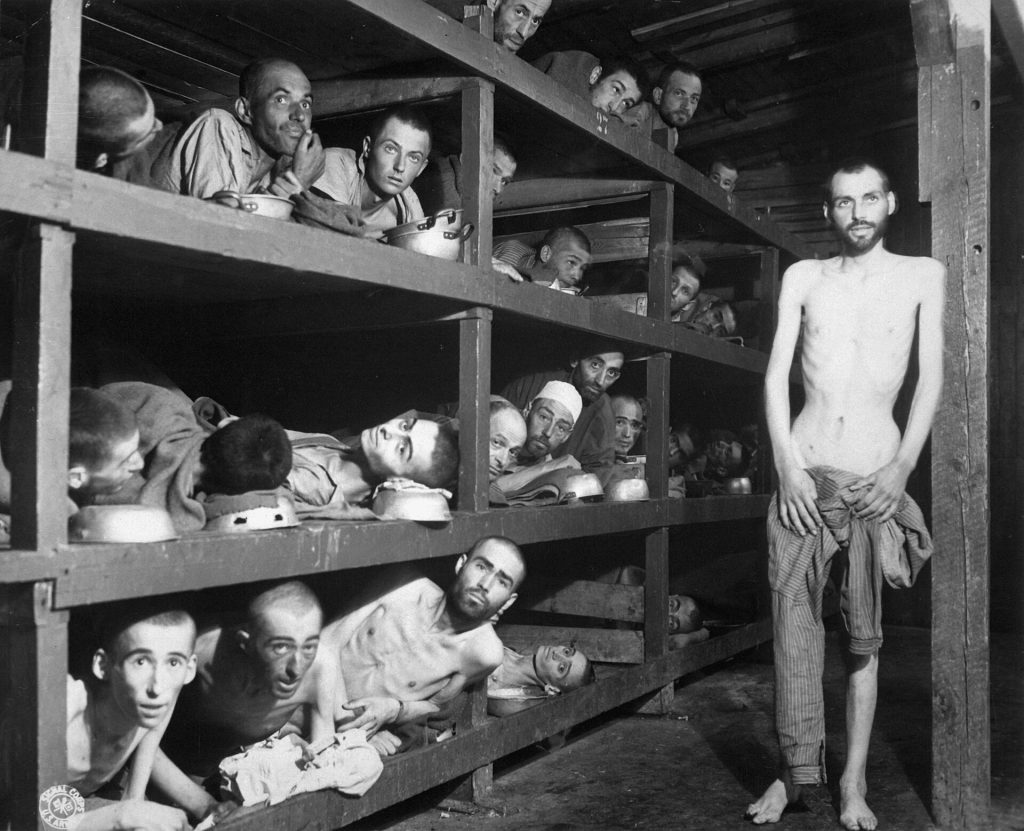
As the SS guards flee, prisoners take control of Buchenwald. That afternoon, American tanks arrive. More than 20,000 people are still alive inside.
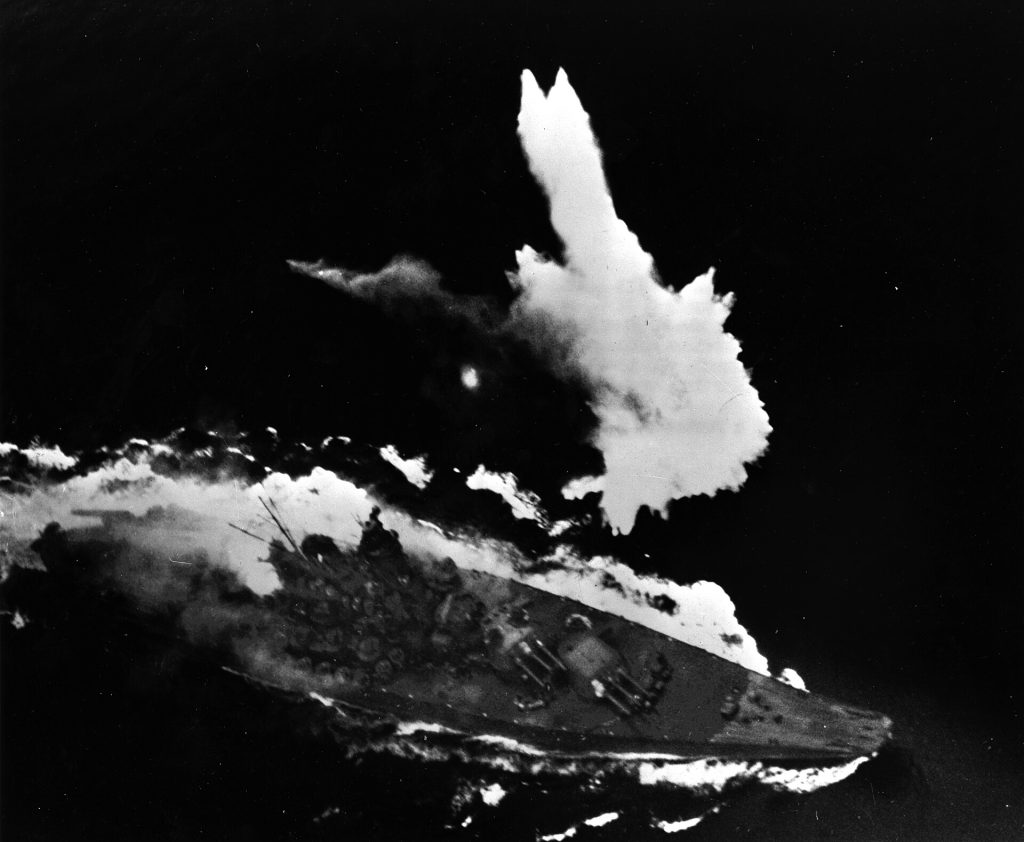
The largest battleship ever built sails on a one-way mission to Okinawa. Hundreds of American carrier aircraft find her long before she arrives.
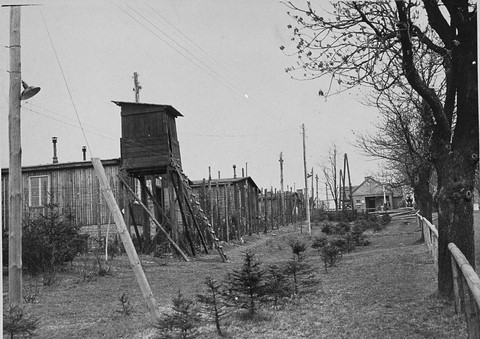
American troops enter a camp outside the town of Ohrdruf in Thuringia. It is the first Nazi camp to be liberated by the US Army.
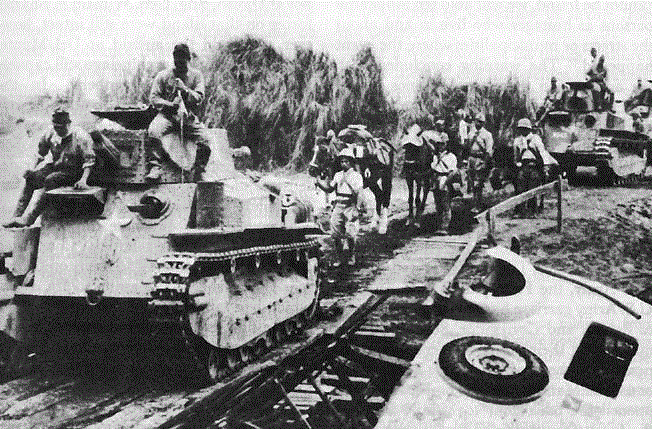
On Good Friday, Japanese artillery opens a massive bombardment on the starving defenders of Bataan. Within a week, the largest surrender in American military history follows.
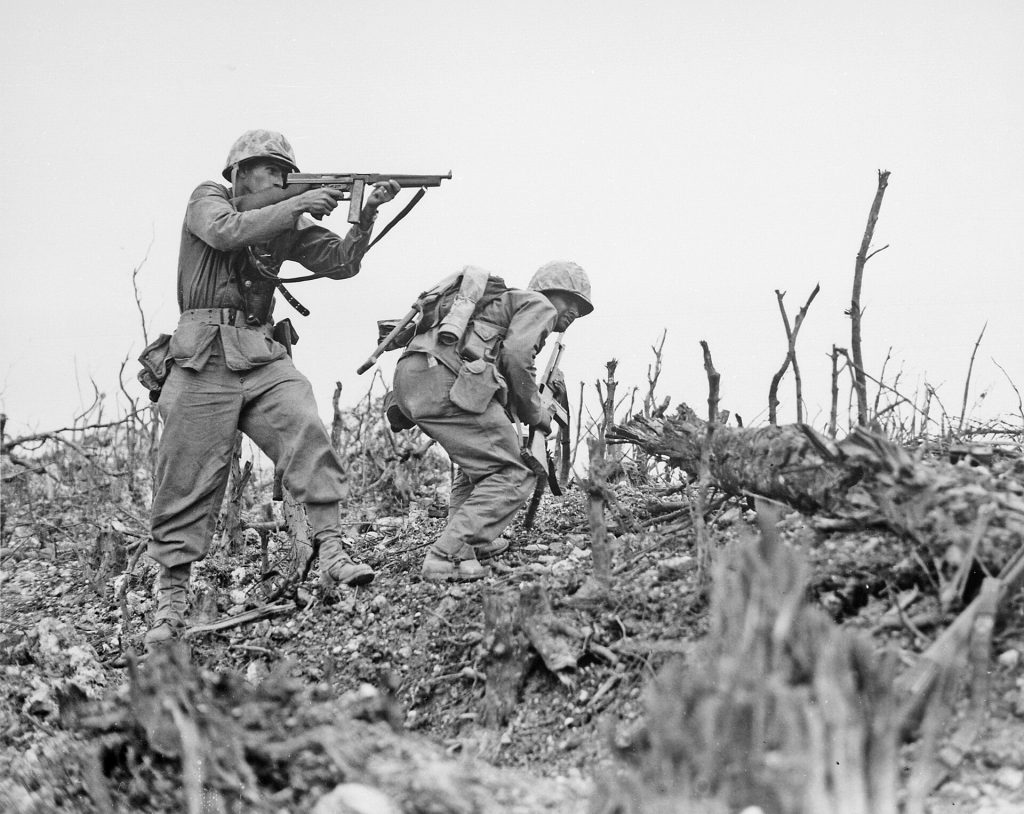
On Easter Sunday, the largest amphibious assault of the Pacific war lands on Okinawa almost unopposed. The Japanese are waiting in the south.
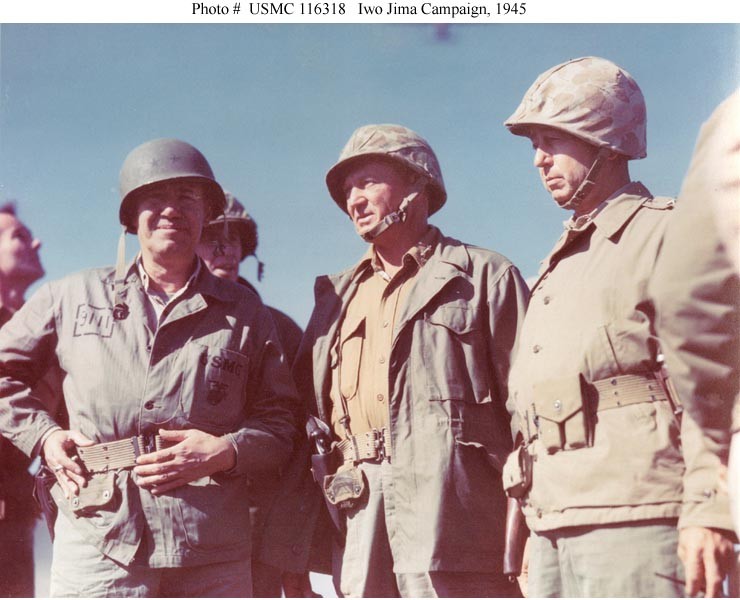
Before dawn, the last Japanese survivors launch a surprise attack on American camps near the airfields. When it is beaten off, the battle for Iwo Jima is declared over.
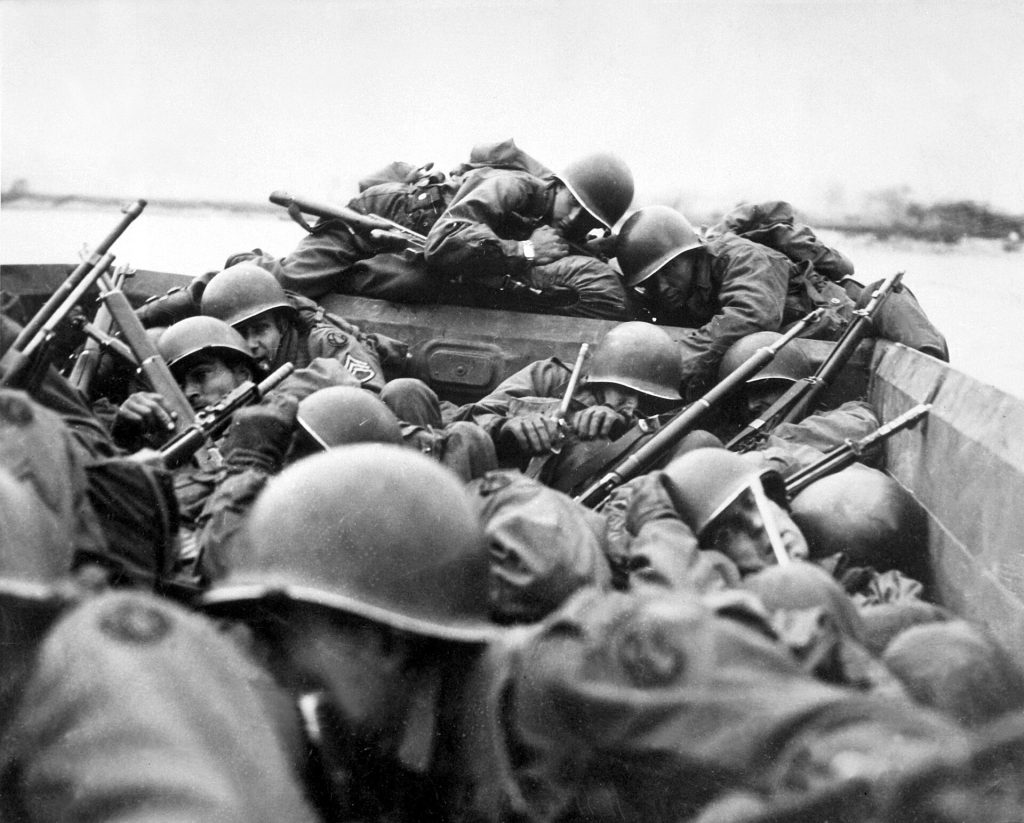
After a thunderous bombardment, Montgomery’s 21st Army Group crosses the Rhine on a broad front at night. The next morning two airborne divisions land on the far bank.
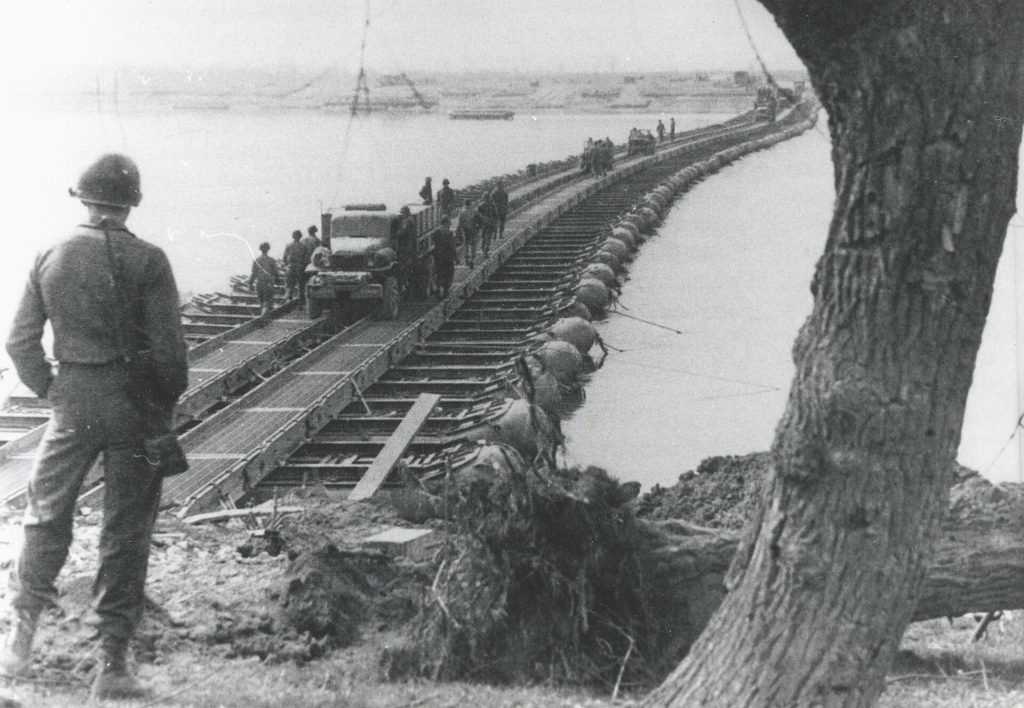
Without a bombardment or an announcement, Patton’s infantry quietly paddle across the Rhine at night. They beat Montgomery’s carefully prepared crossing by a day.
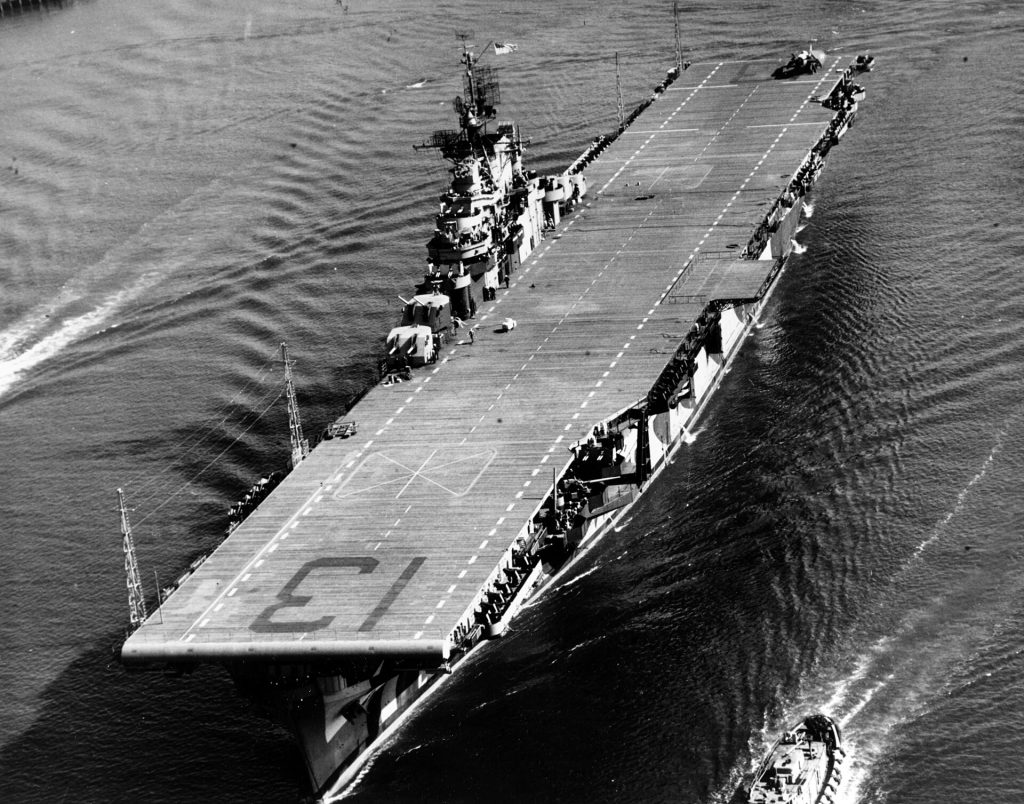
Off the coast of Japan, a single bomber hits the carrier Franklin as her aircraft prepare to launch. She survives the fires and explosions that follow, at a terrible cost.
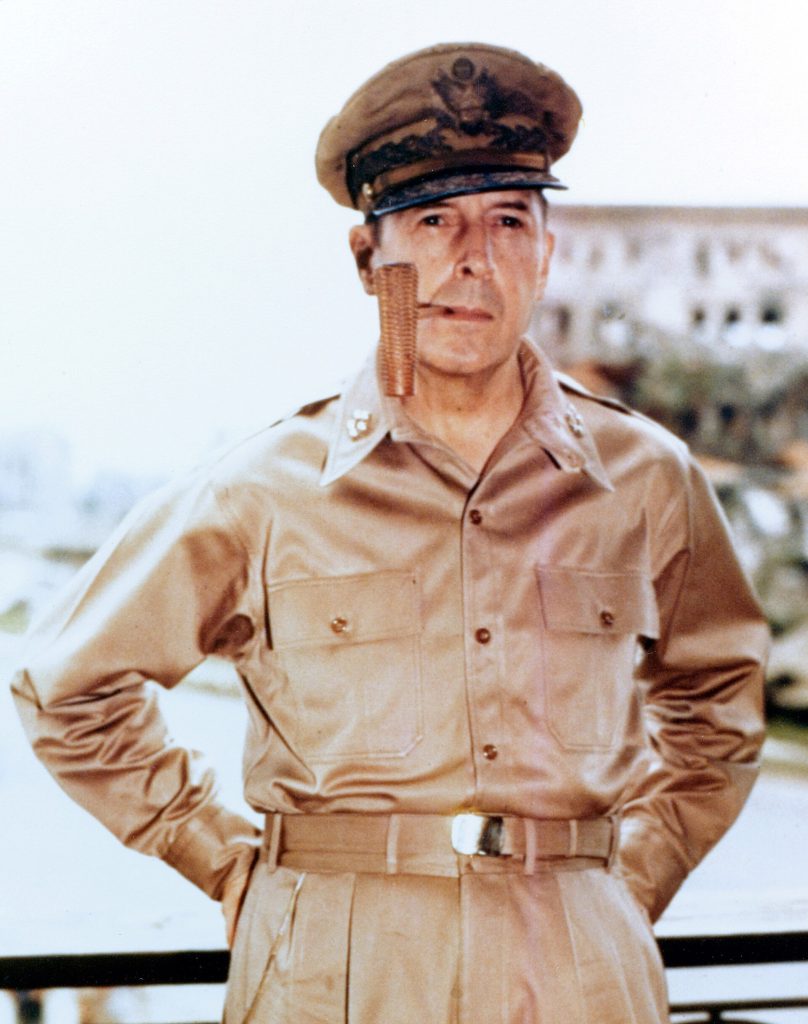
After a dangerous escape from Corregidor by torpedo boat and bomber, General Douglas MacArthur lands in northern Australia. Days later he promises: “I shall return.”
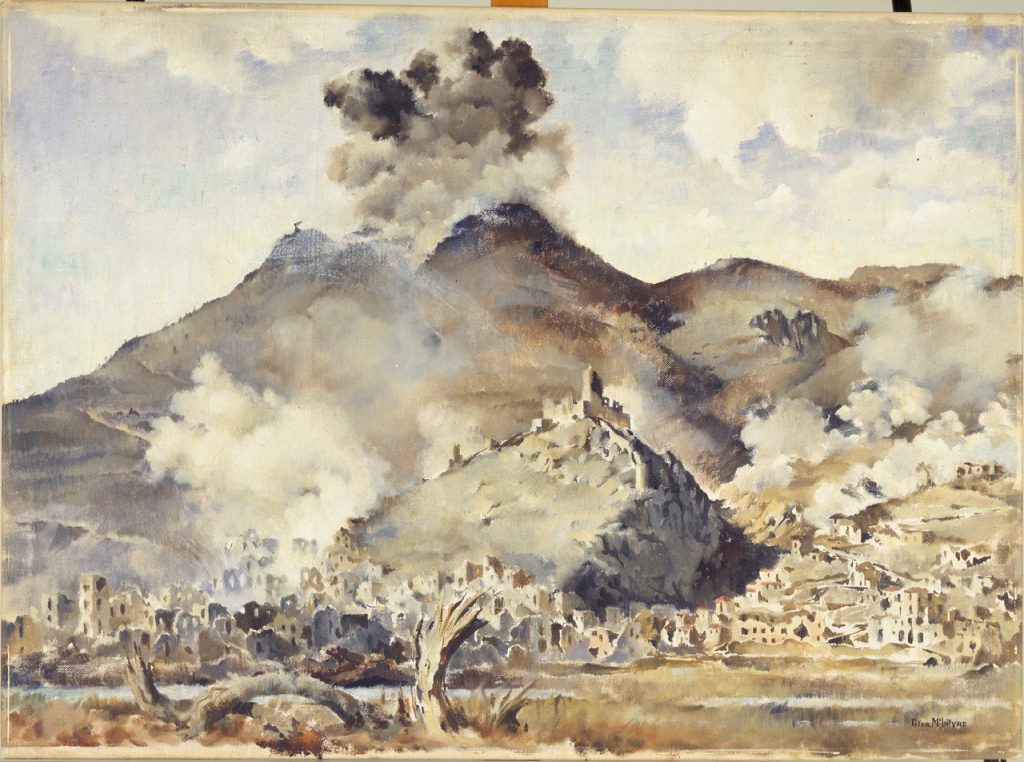
Hundreds of Allied bombers reduce the town of Cassino to rubble. New Zealand and Indian troops go in, but the German paratroopers are still there.
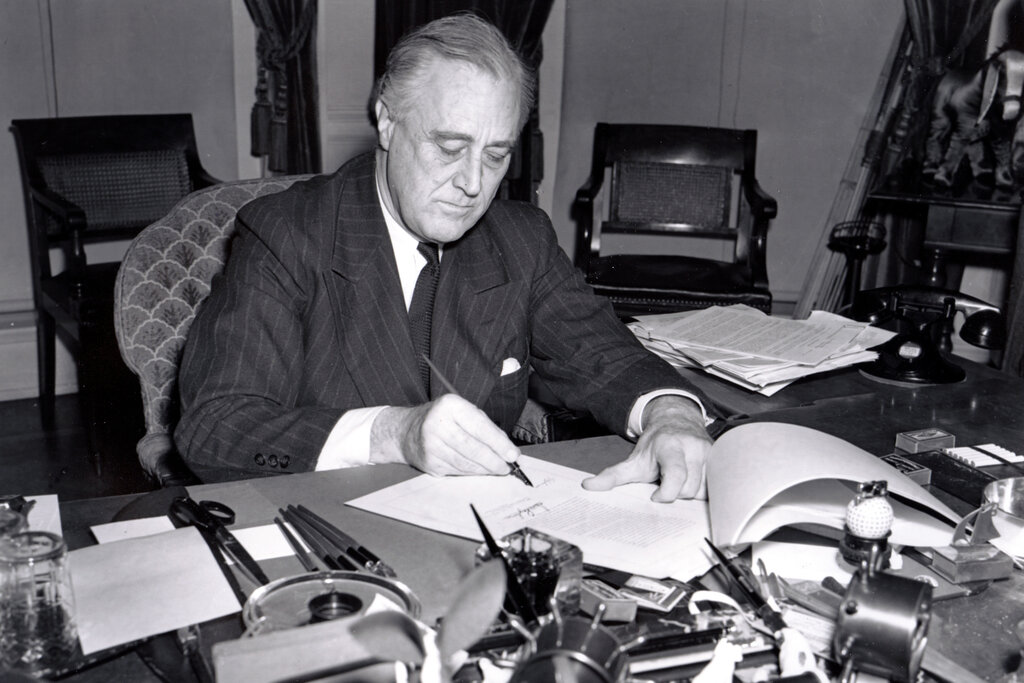
Roosevelt signs into law a bill allowing the United States to send weapons and supplies to nations fighting the Axis without immediate payment. America becomes the arsenal of democracy.
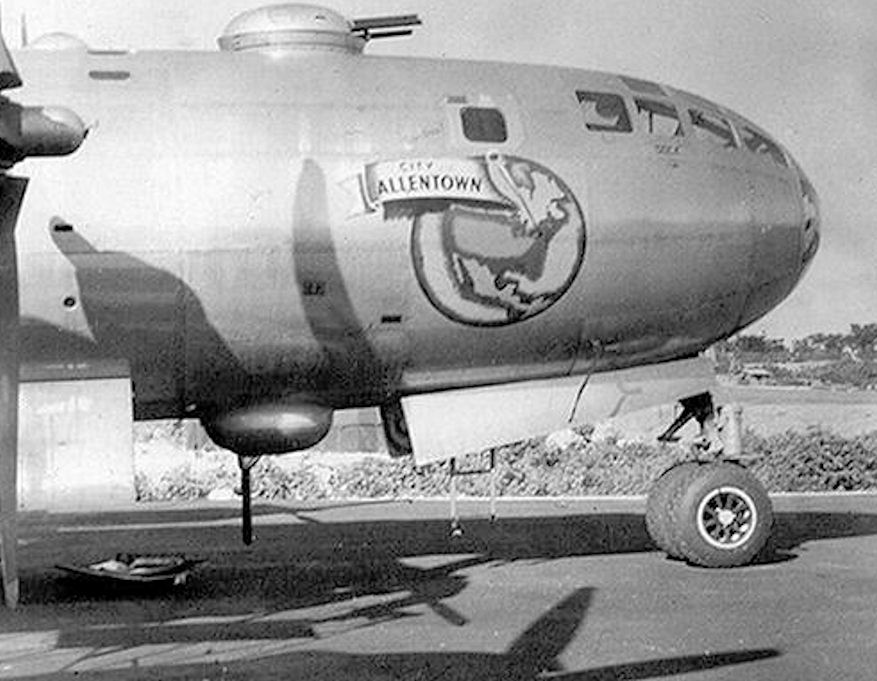
In the early hours, hundreds of B-29s flying low over Tokyo drop incendiaries on its crowded wooden neighbourhoods. It is the deadliest air raid in history.
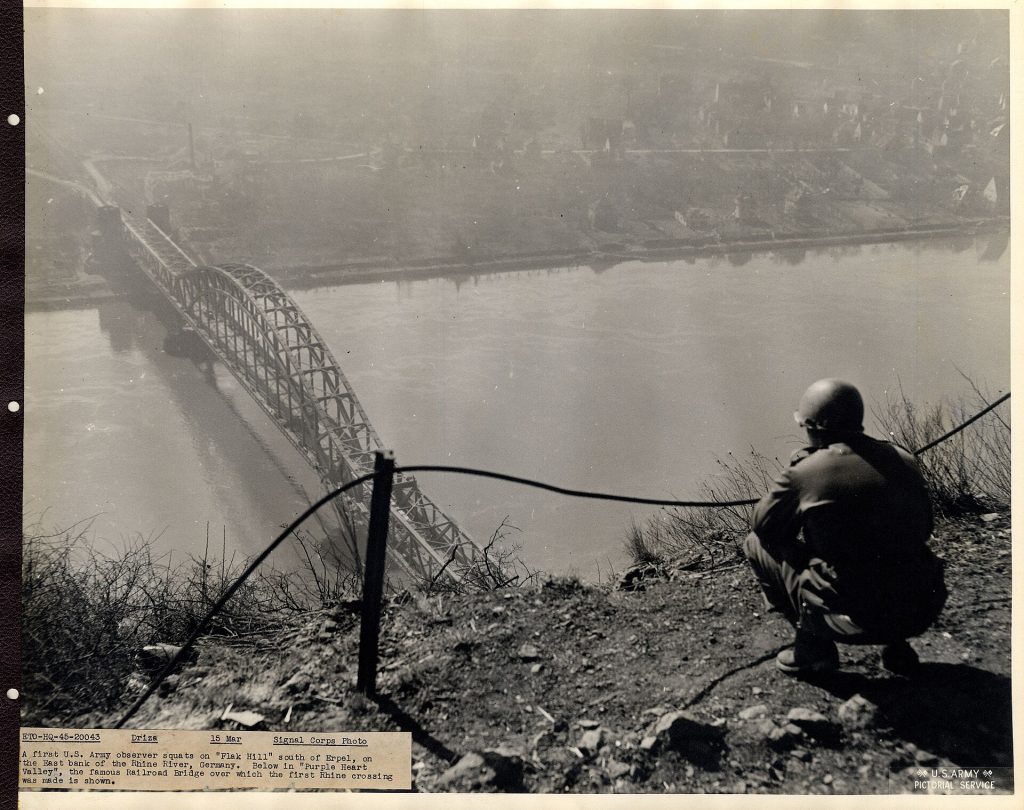
American tanks and infantry reach the Rhine at Remagen and find a railway bridge still standing. A German demolition charge fails, and the first Allied troops cross the river.
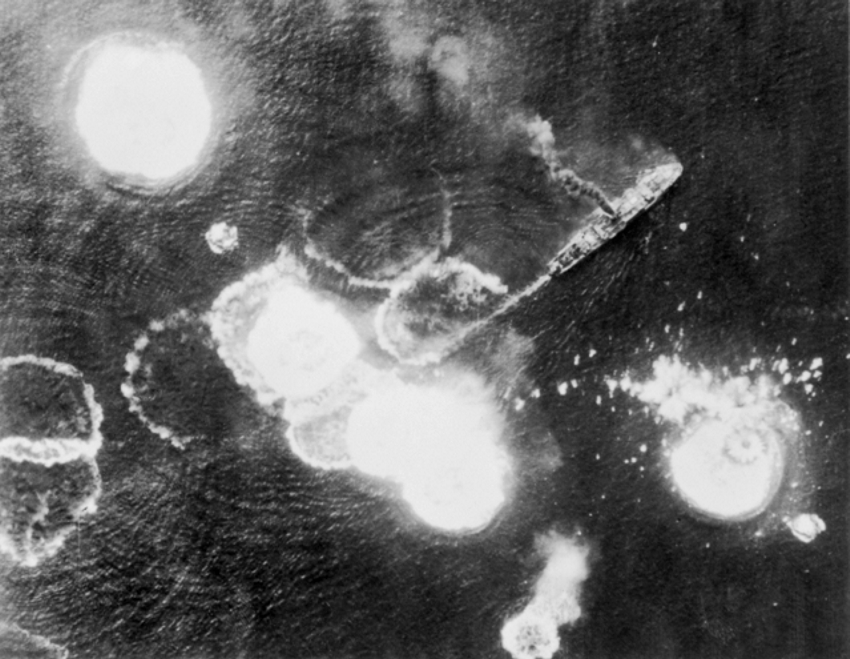
Allied bombers find a Japanese convoy carrying an army division to New Guinea. In three days of air attacks, every transport is sunk.
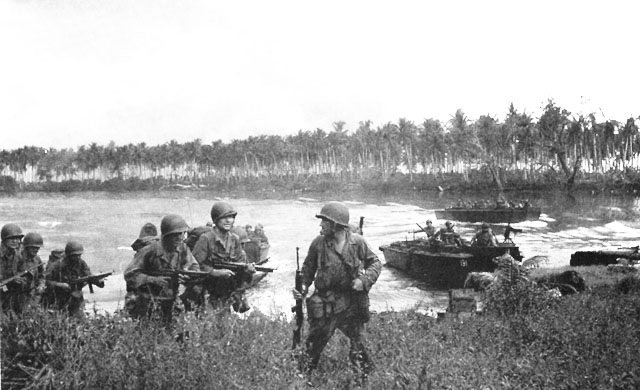
On the war’s last leap day, a thousand American cavalrymen land on Los Negros in a gamble ordered by MacArthur. It seals the fate of Rabaul.
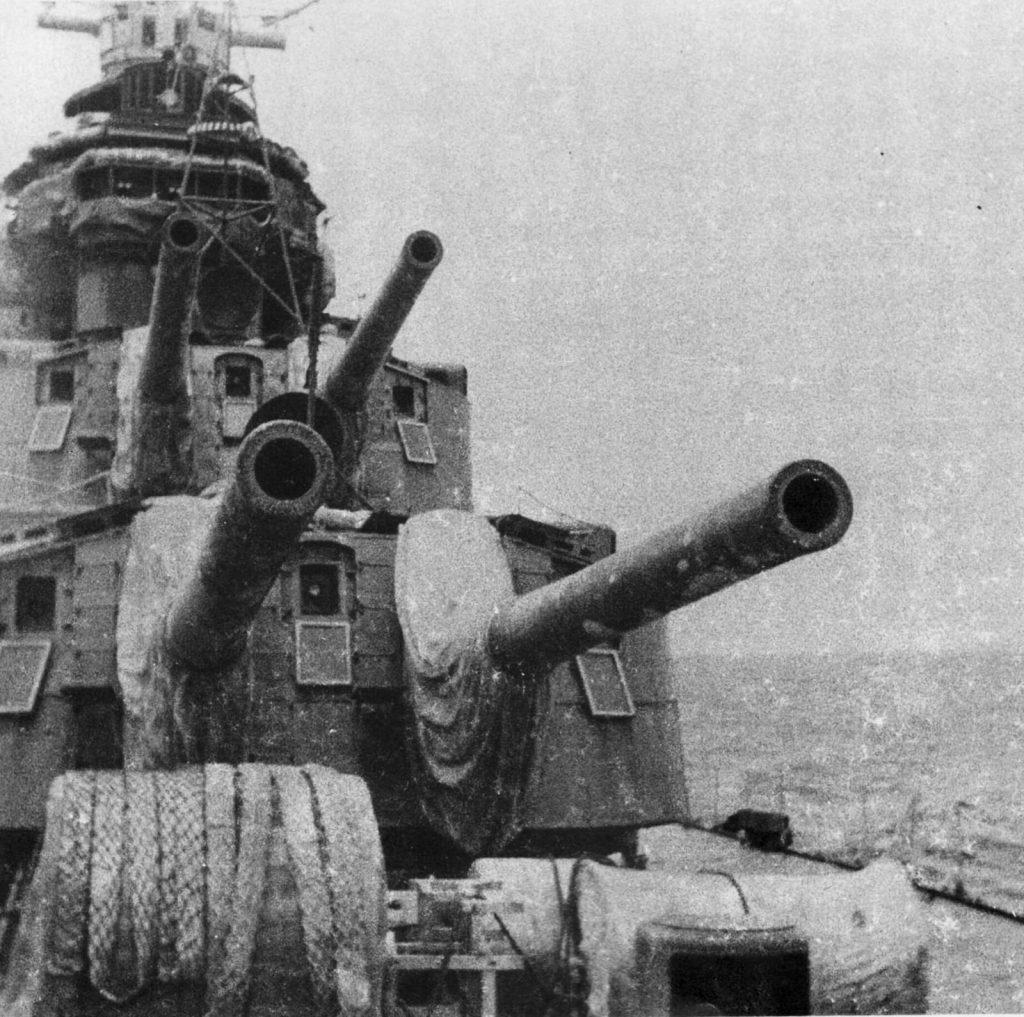
A combined Dutch, British, Australian and American squadron sails out to stop the Japanese invasion of Java. By midnight its admiral is dead and two of its cruisers are sunk.
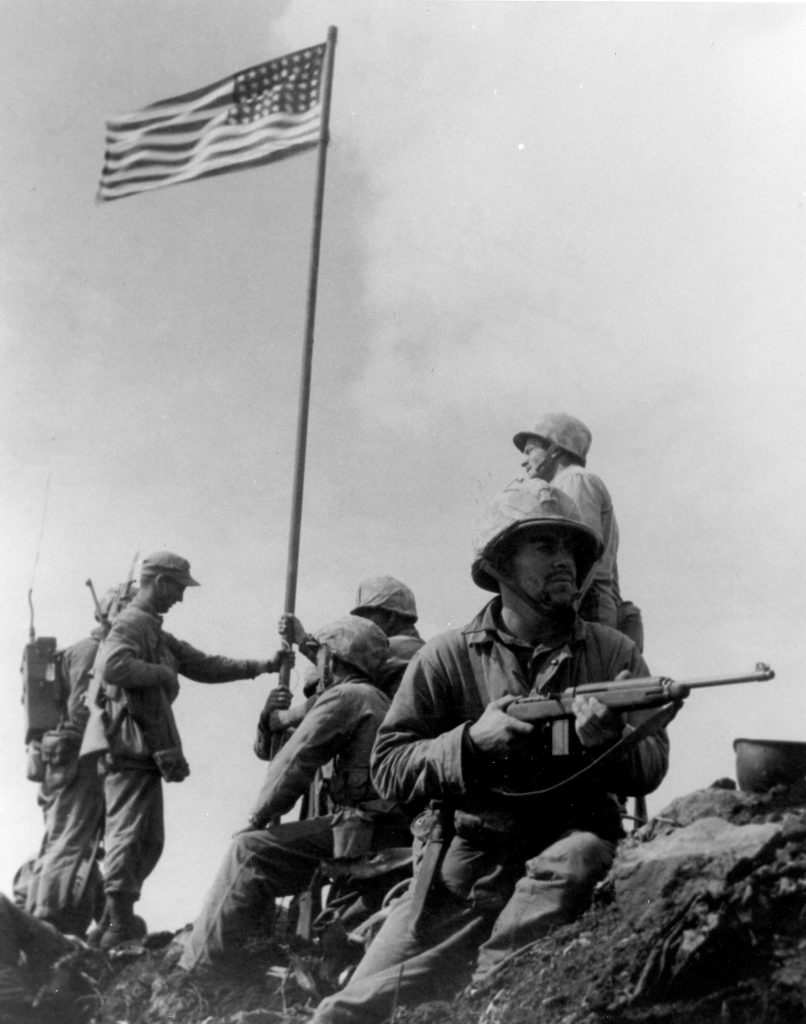
Marines reach the summit of Mount Suribachi and raise the Stars and Stripes. A second, larger flag raised hours later becomes the most famous photograph of the war.
 United Kingdom
 United States
 Soviet Union
 Germany
 Japan
 France
 Poland
 South Africa