Western Front · Land Battles · Britain, United States and Canada vs Germany
Operation Plunder
After a thunderous bombardment, Montgomery’s 21st Army Group crosses the Rhine on a broad front at night. The next morning two airborne divisions land on the far bank.
- Location
- Lower Rhine, around Rees, Wesel and Xanten
- Commander
- Field Marshal Bernard Montgomery
- Armies
- British Second Army and US Ninth Army
- Airborne operation
- Varsity, 24 March 1945
- War clock
- Day 2,031 of 2,194
Montgomery’s crossing of the lower Rhine was the largest river crossing operation of the war in the west. For weeks, smoke screens hid the build-up of troops, boats, bridging equipment and ammunition along the west bank. Churchill came to watch.
The crossing
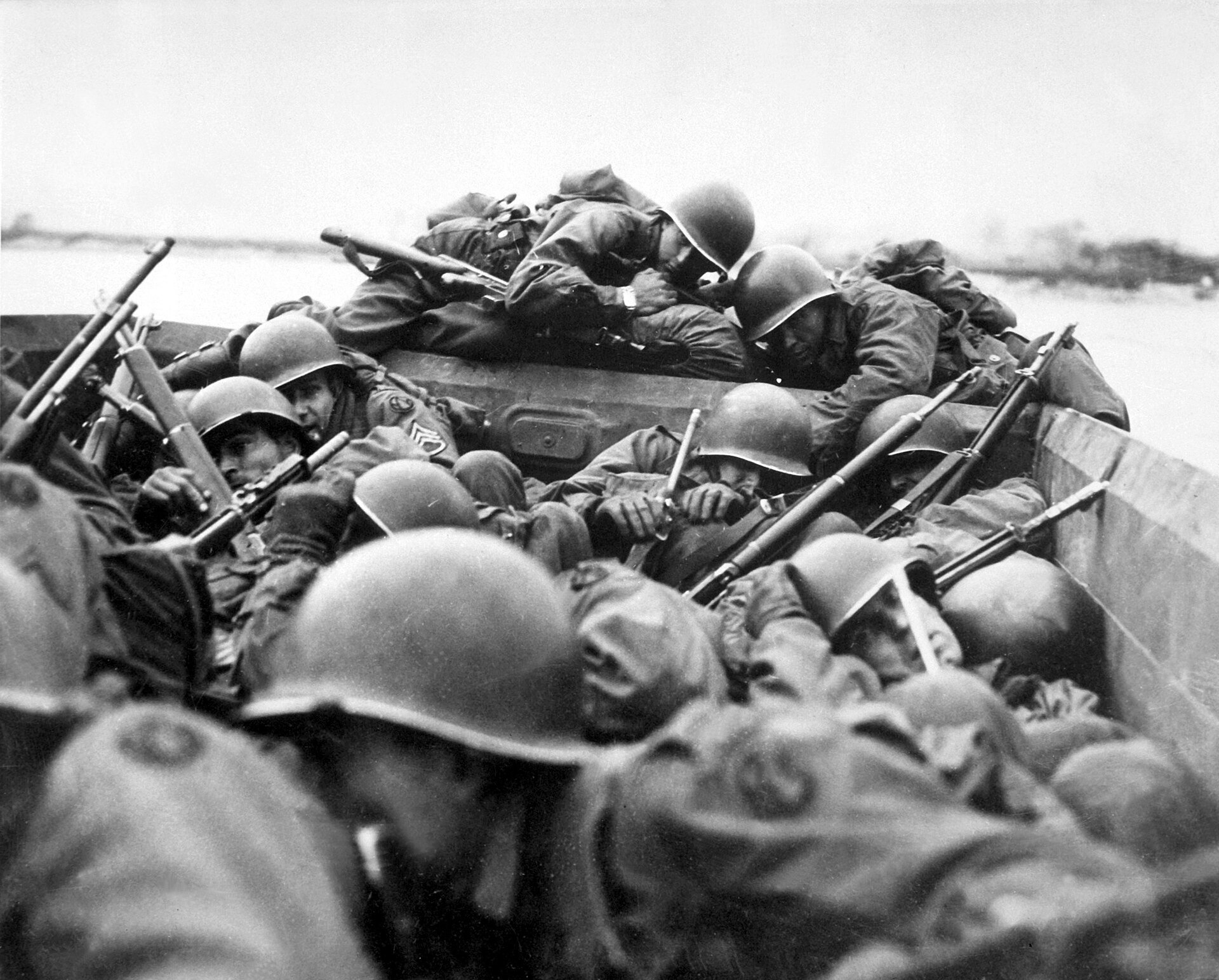
On the evening of 23 March 1945, after a massive artillery bombardment, British, Canadian and American troops began crossing in amphibious vehicles and assault boats. Commandos attacked Wesel after heavy bombing. By morning, bridgeheads had been established along the river.
Varsity
On the morning of 24 March the British 6th Airborne Division and the US 17th Airborne Division were dropped by parachute and glider east of the Rhine, in the largest single-day airborne operation of the war. The airborne troops suffered heavy losses but linked up with the ground forces the same day.
Sources and further reading
Lead image: British troops crossing the Rhine in an assault boat. US Army, Office of War Information (OWI), Public domain, via Wikimedia Commons. See our sources and image policy.
 United Kingdom
 United States
 Soviet Union
 Germany
 Japan
 France
 Poland
 South Africa