Pacific · Air War · United States vs Japan
The Firebombing of Tokyo
In the early hours, hundreds of B-29s flying low over Tokyo drop incendiaries on its crowded wooden neighbourhoods. It is the deadliest air raid in history.
- Operation
- Meetinghouse
- Commander
- Maj Gen Curtis LeMay, XXI Bomber Command
- Area burned
- Around 41 square kilometres
- Deaths
- Estimated at around 100,000
- War clock
- Day 2,018 of 2,194
American high-altitude daylight raids on Japanese factories from the Marianas had achieved disappointing results, hampered by cloud and powerful jet stream winds. General Curtis LeMay changed tactics. His B-29s would attack at night, at low altitude, carrying incendiary bombs instead of high explosives, and most of their guns and gunners would be removed to carry more bombs.
The raid
The bombers took off on the evening of 9 March, and the first reached Tokyo shortly after midnight. Pathfinders marked a target area in the densely populated districts east of the Imperial Palace. Hundreds of bombers followed, dropping clusters of napalm and other incendiaries. A strong wind spread the fires into a conflagration that consumed the wooden houses, workshops and shops.
The cost
Around 41 square kilometres of Tokyo burned. Estimates of the dead are usually around 100,000, and around a million people were left homeless. People who sought refuge in canals and the river died from the heat and smoke.
Sources and further reading
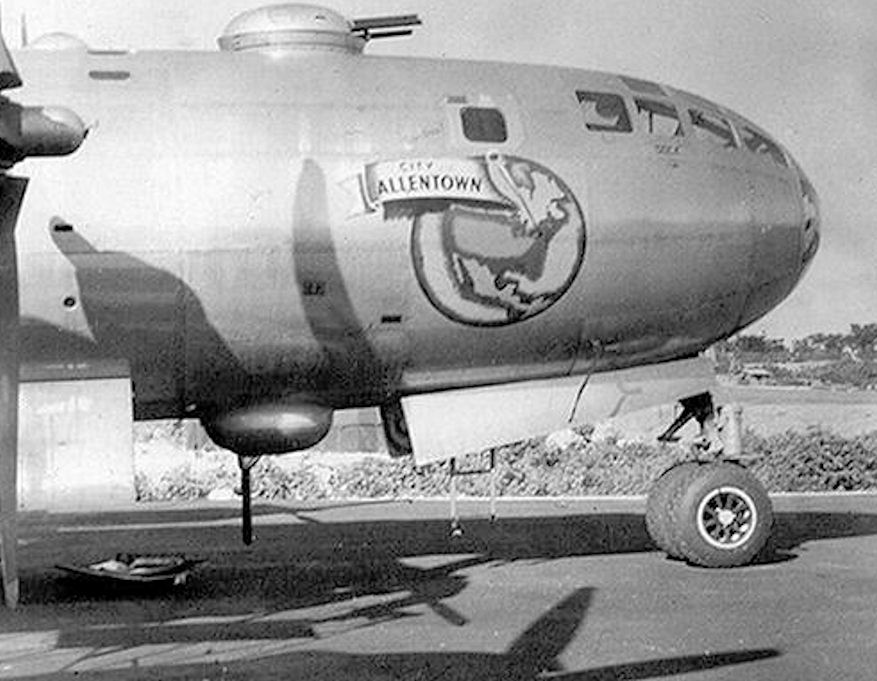
Lead image: A B-29 Superfortress of the 29th Bombardment Group. United States Army Air Forces, Public domain, via Wikimedia Commons. See our sources and image policy.
 United Kingdom
 United States
 Soviet Union
 Germany
 Japan
 France
 Poland
 South Africa