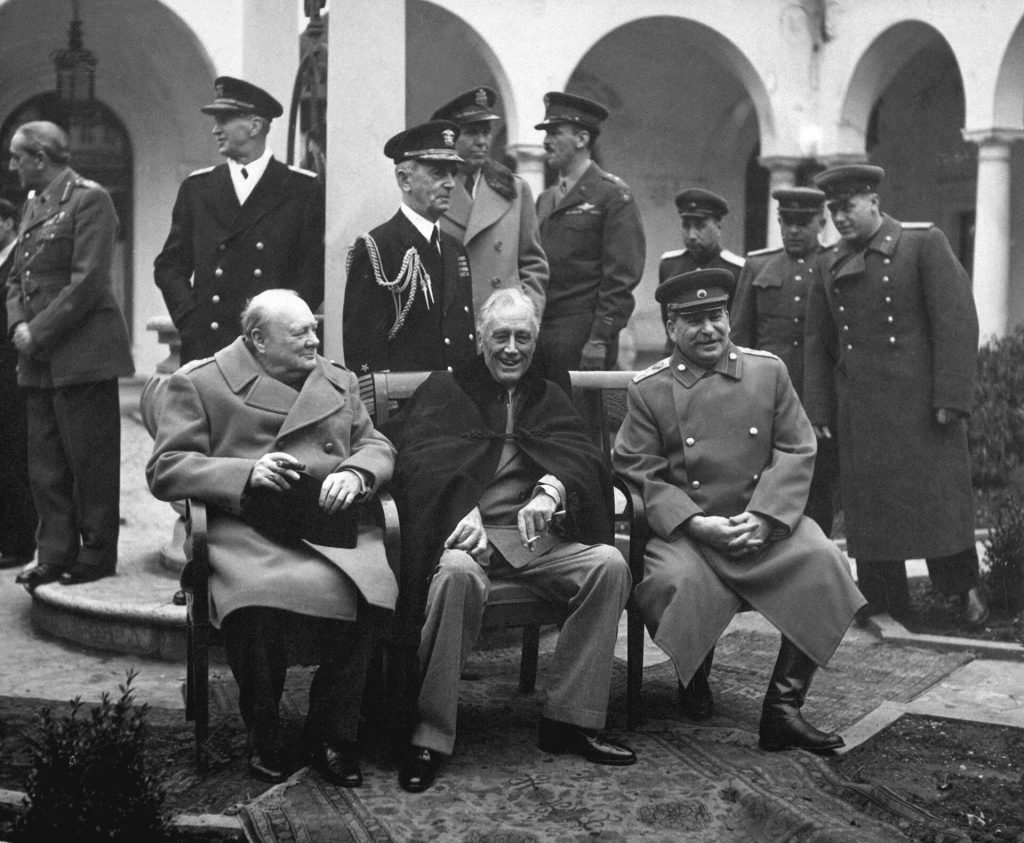
4 February 1945: The Yalta Conference
Roosevelt, Churchill and Stalin meet in a former tsar’s palace in the Crimea. They plan the end of the war and the shape of the peace.
Treaties, conferences, declarations and alliances.
Roosevelt, Churchill and Stalin meet in a former tsar’s palace in the Crimea. They plan the end of the war and the shape of the peace.
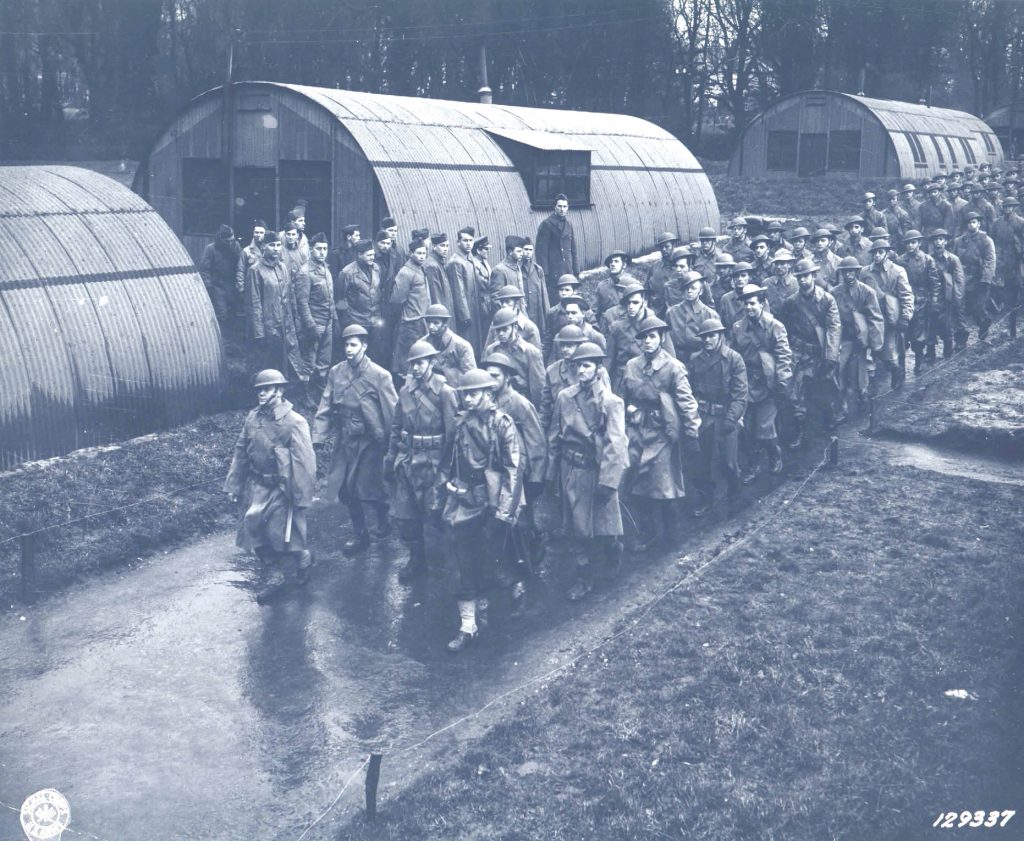
Seven weeks after Pearl Harbor, the first American soldiers to reach Europe in this war step ashore in Belfast. Millions more will follow.
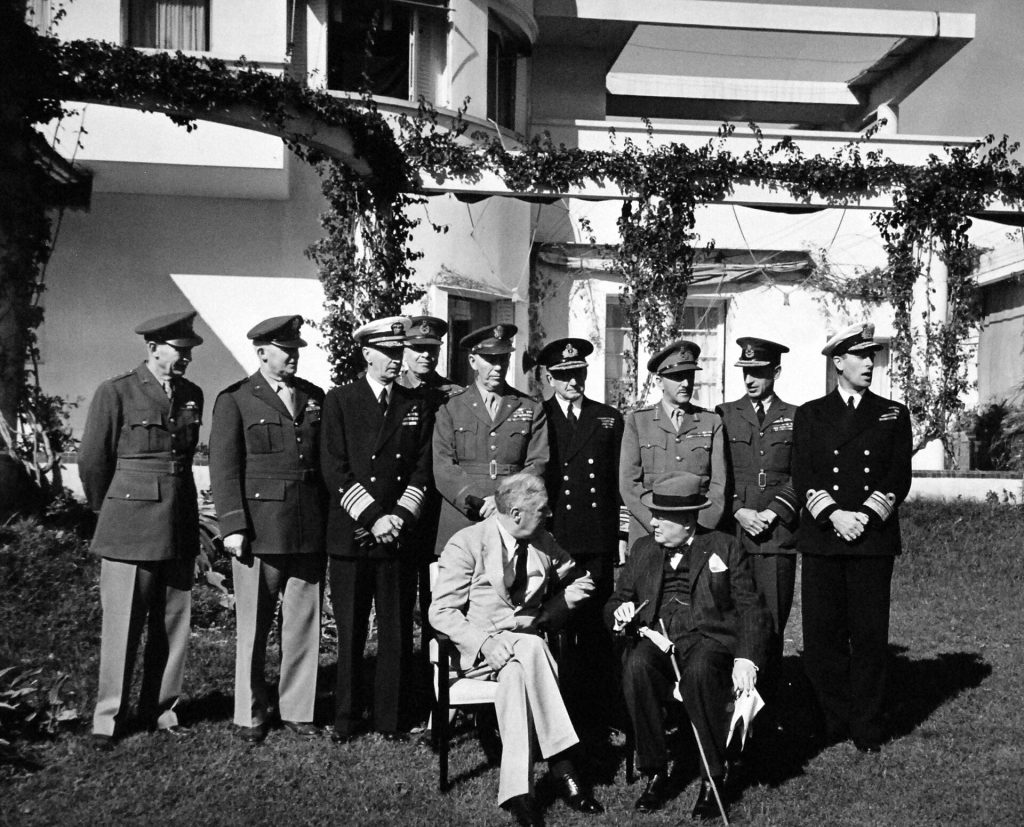
Roosevelt and Churchill meet in liberated Morocco to plan the next year of the war. They leave with a decision on Sicily and a demand the Axis will hear loud and clear: unconditional surrender.
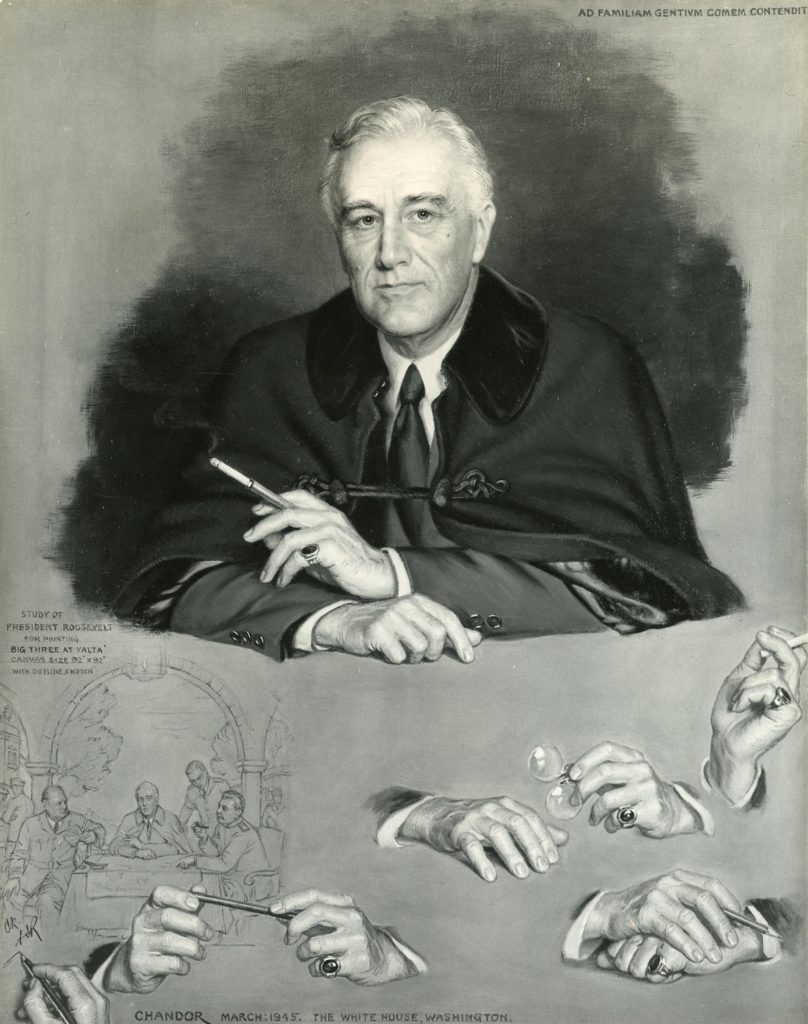
In his State of the Union address, Roosevelt sets out four freedoms that he says every person in the world should enjoy, and asks Congress to arm the nations defending them.
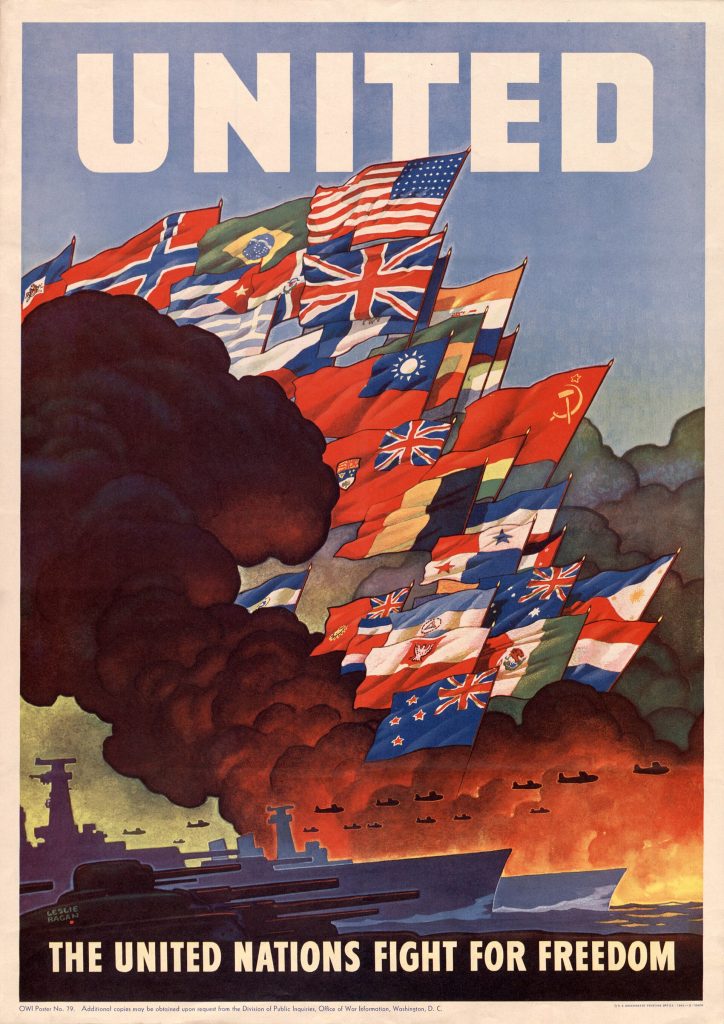
Weeks after Pearl Harbor, the nations fighting the Axis sign a single pledge in Washington. Their name for themselves will outlive the war.
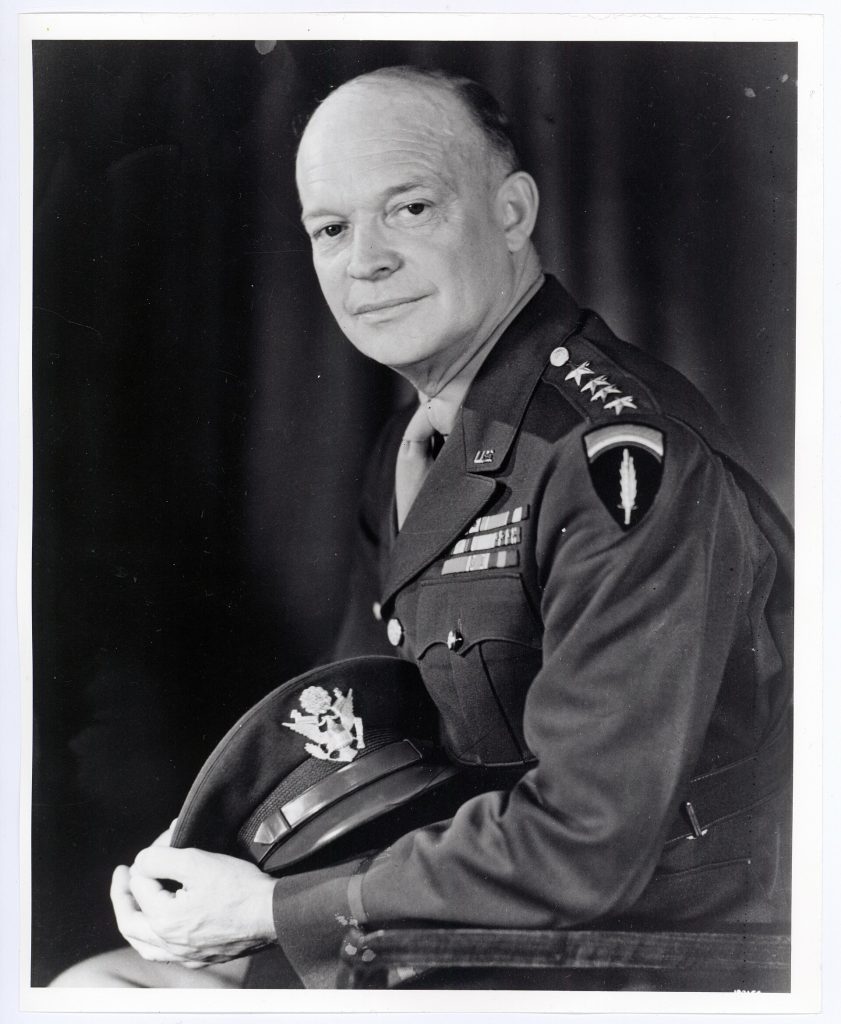
In a Christmas Eve radio address, Roosevelt announces that General Dwight D. Eisenhower will command the Allied invasion of Western Europe.
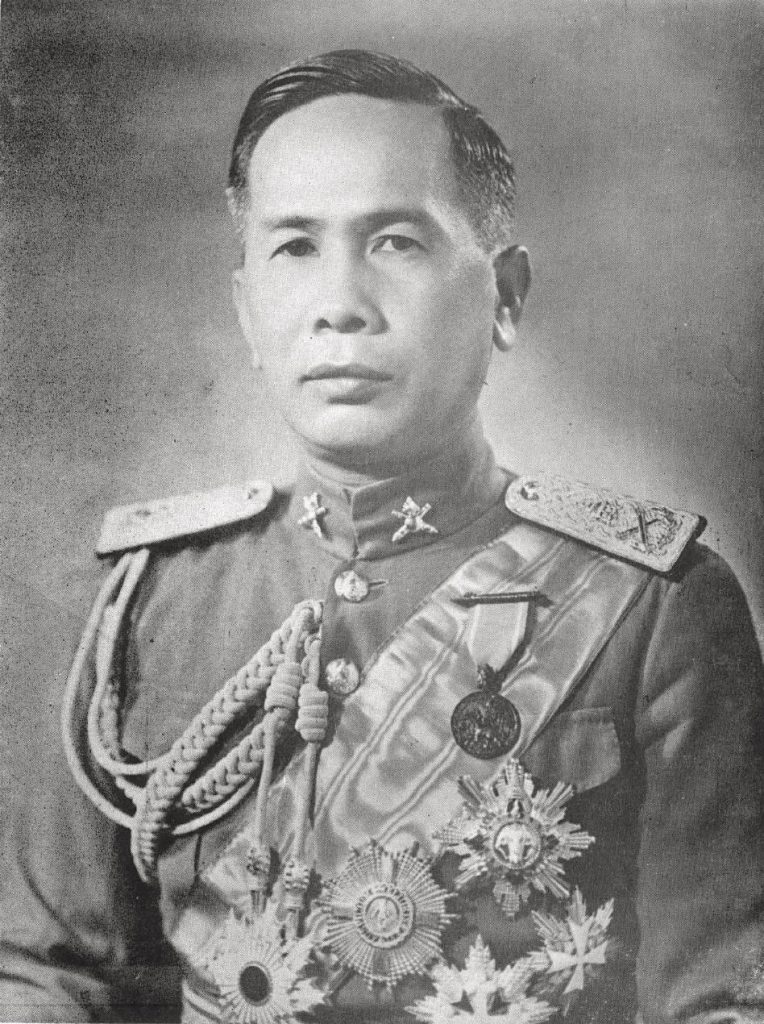
Two weeks after Japanese troops crossed its borders, Thailand signs a treaty of alliance with Japan in Bangkok. In Washington, the Thai ambassador quietly refuses to go along.
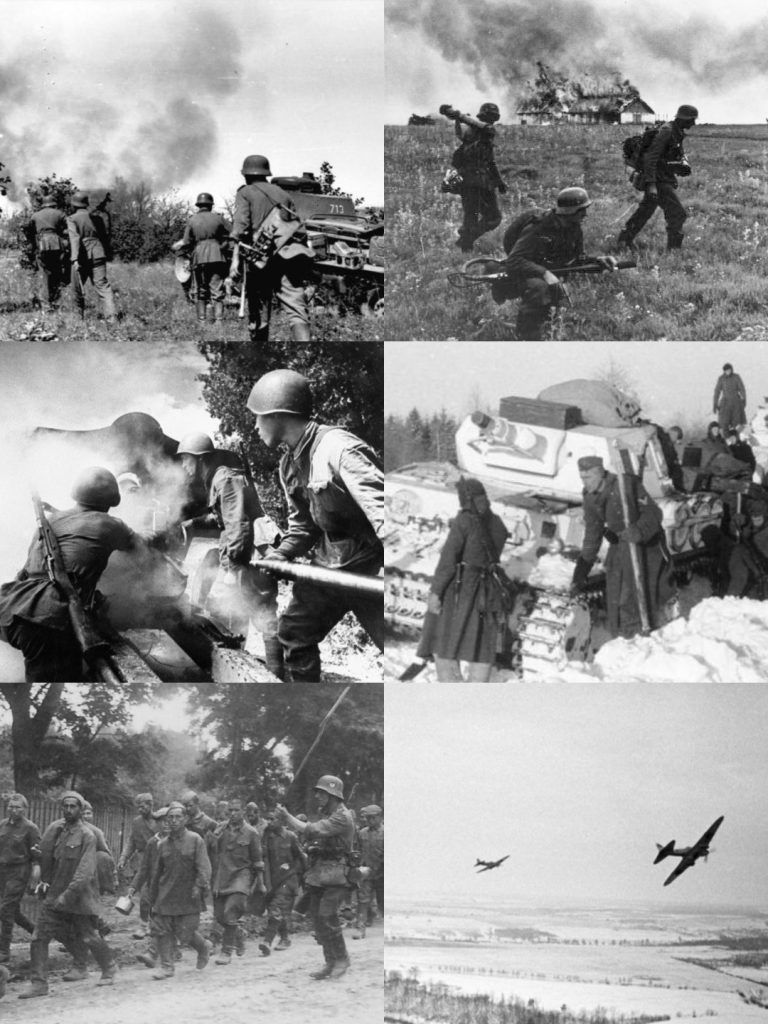
Hitler signs the order for Operation Barbarossa: the German armed forces must be ready to crush the Soviet Union in a rapid campaign, even before Britain is defeated.
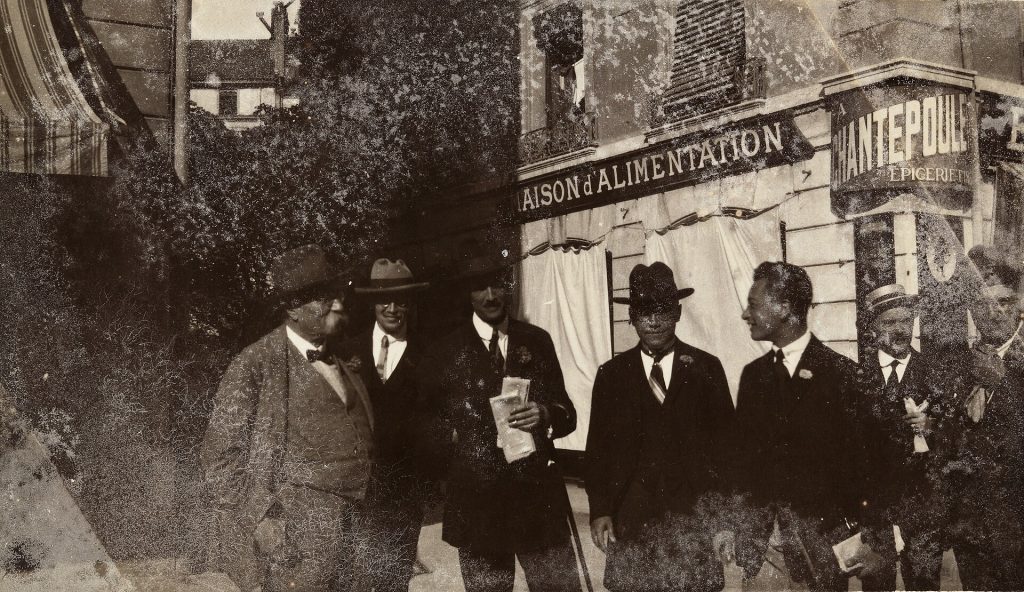
Two weeks after the invasion of Finland, the League of Nations expels the Soviet Union. It is the League’s last significant act.
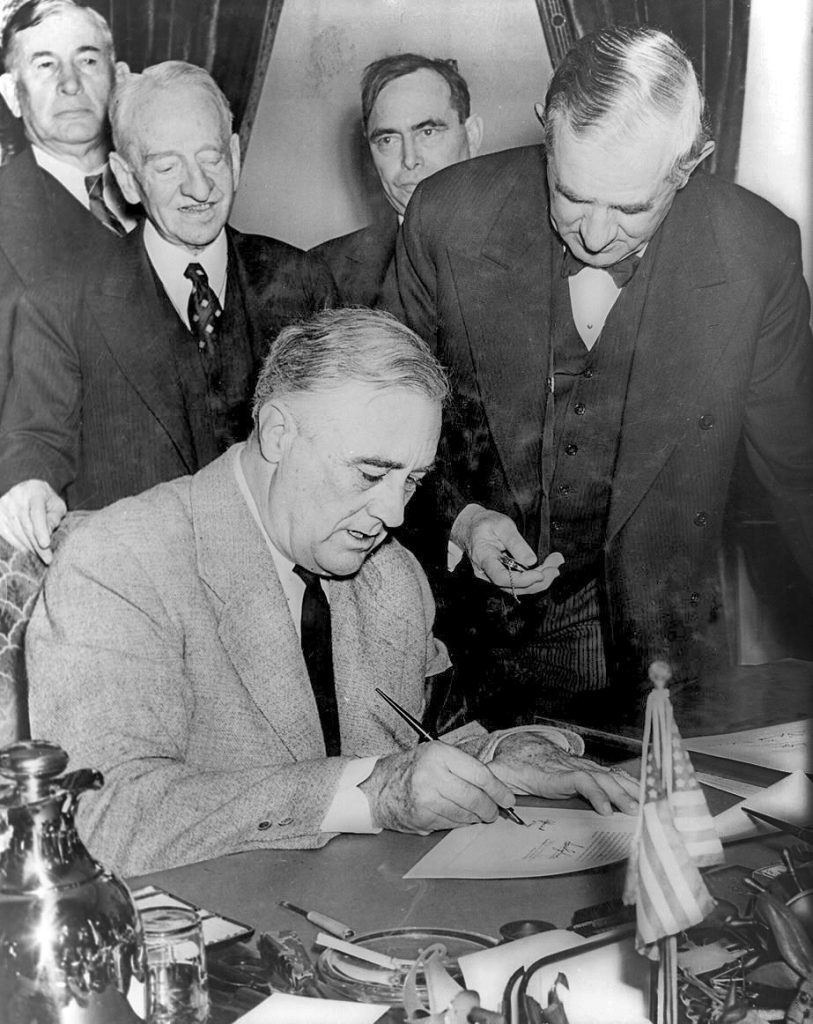
Under no treaty obligation to do so, Hitler declares war on the United States. Roosevelt no longer has to persuade Americans to fight Germany.
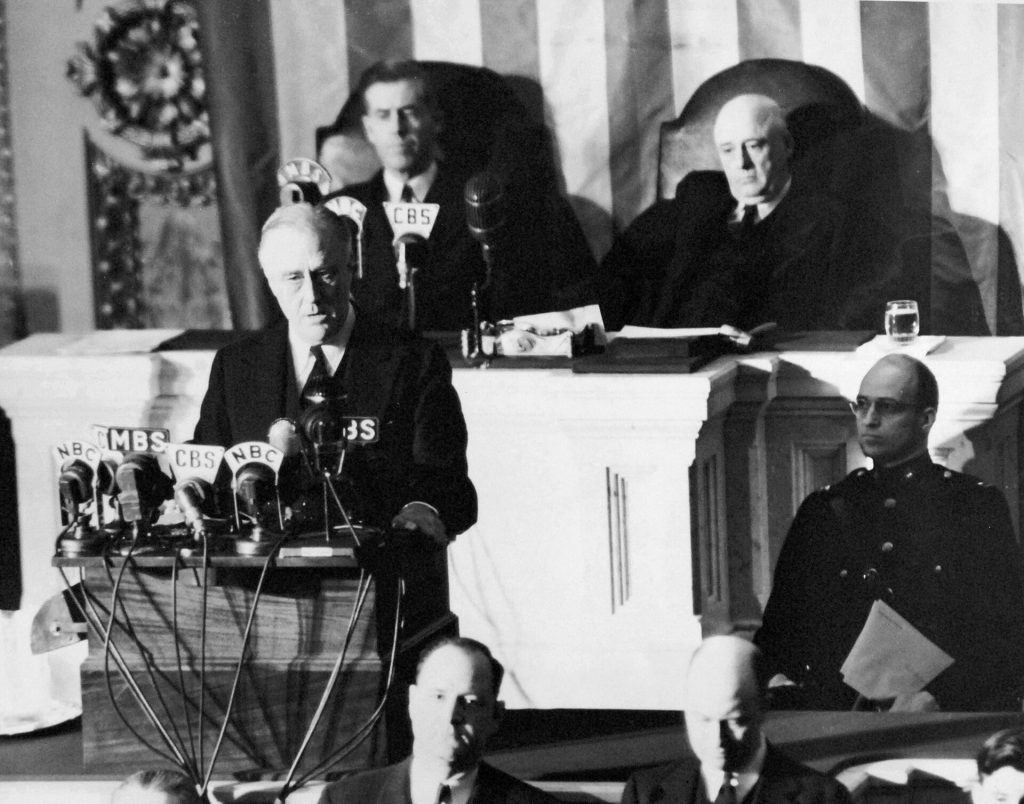
Roosevelt asks Congress for a declaration of war on Japan, as Japanese forces strike Malaya, Hong Kong, the Philippines, Guam and Wake across a front of thousands of kilometres.
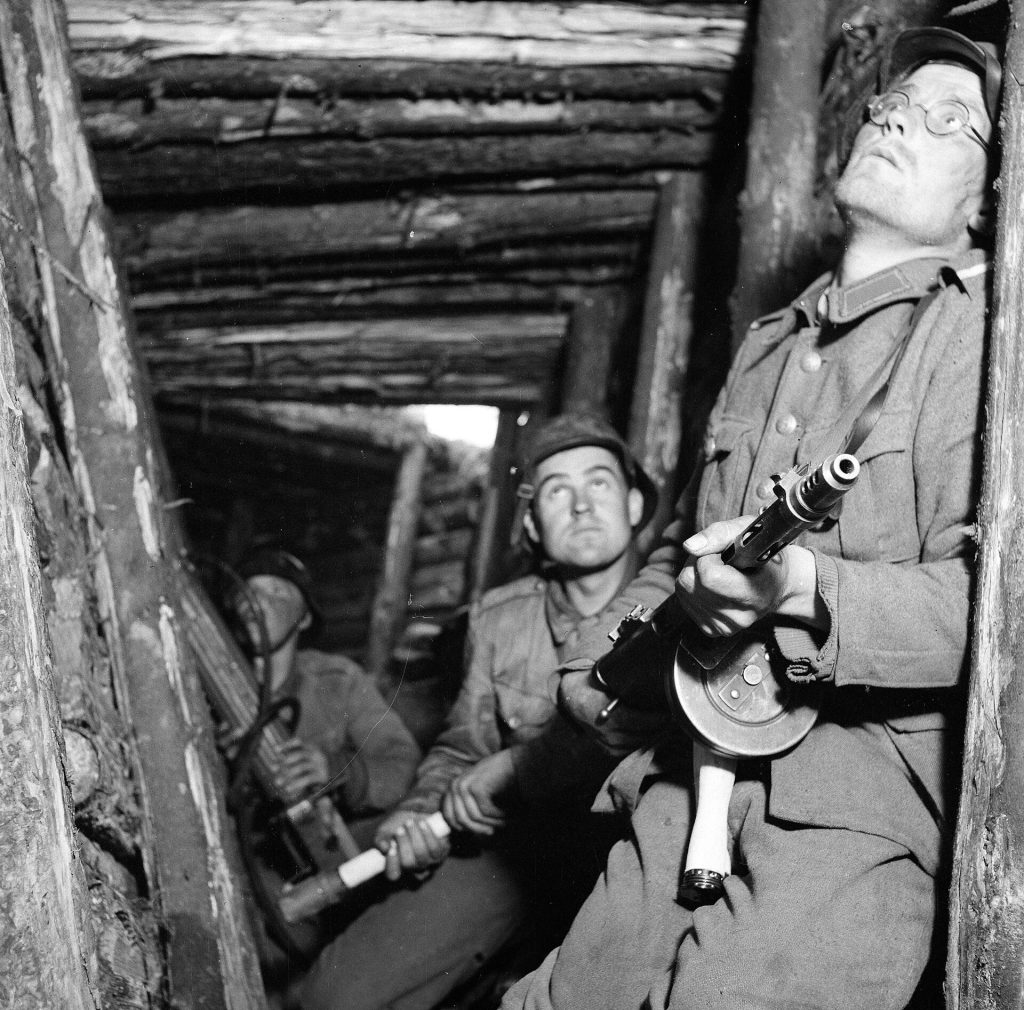
Under pressure from Stalin, Britain declares war on three of Germany’s partners in the invasion of the Soviet Union, including Finland, which Britain had cheered on against the Soviets two years earlier.
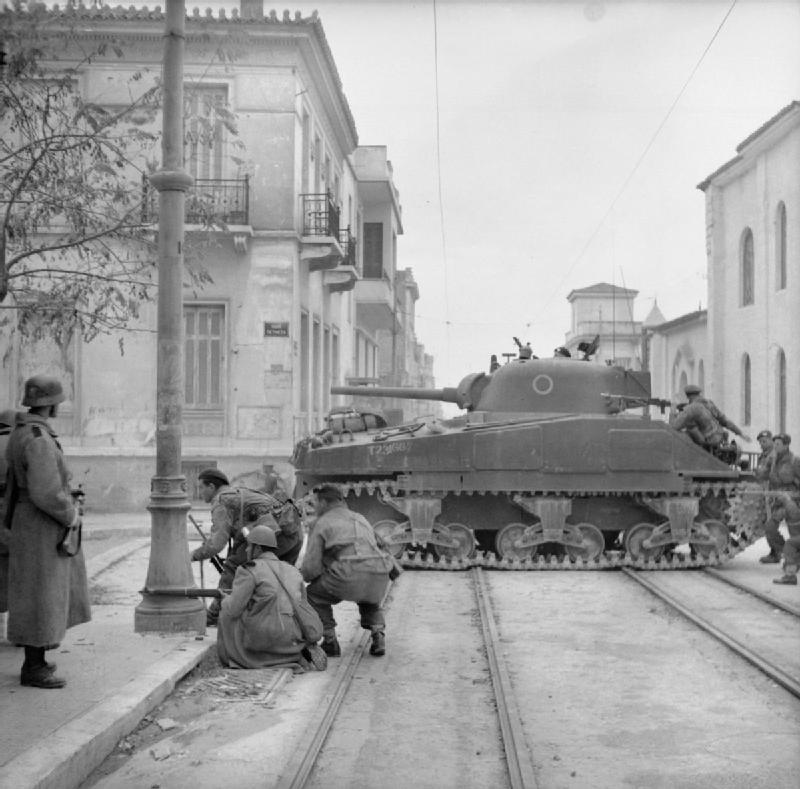
Weeks after the Germans leave Athens, police open fire on a left-wing demonstration in Syntagma Square. British troops and Greek resistance fighters are soon fighting street by street.
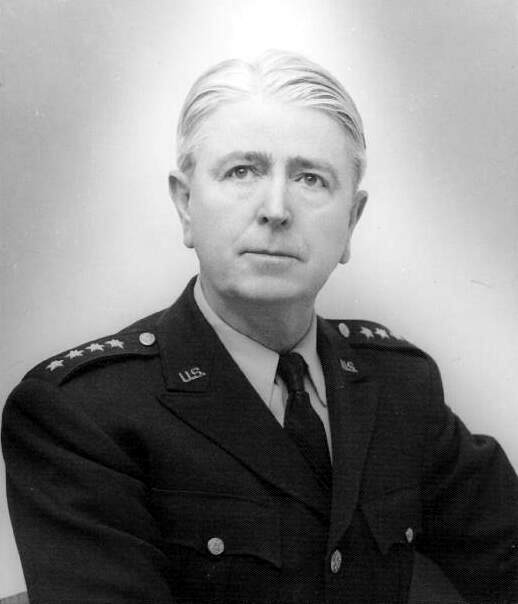
Three days before Pearl Harbor, an isolationist newspaper publishes America’s top-secret plan for fighting and winning a world war.
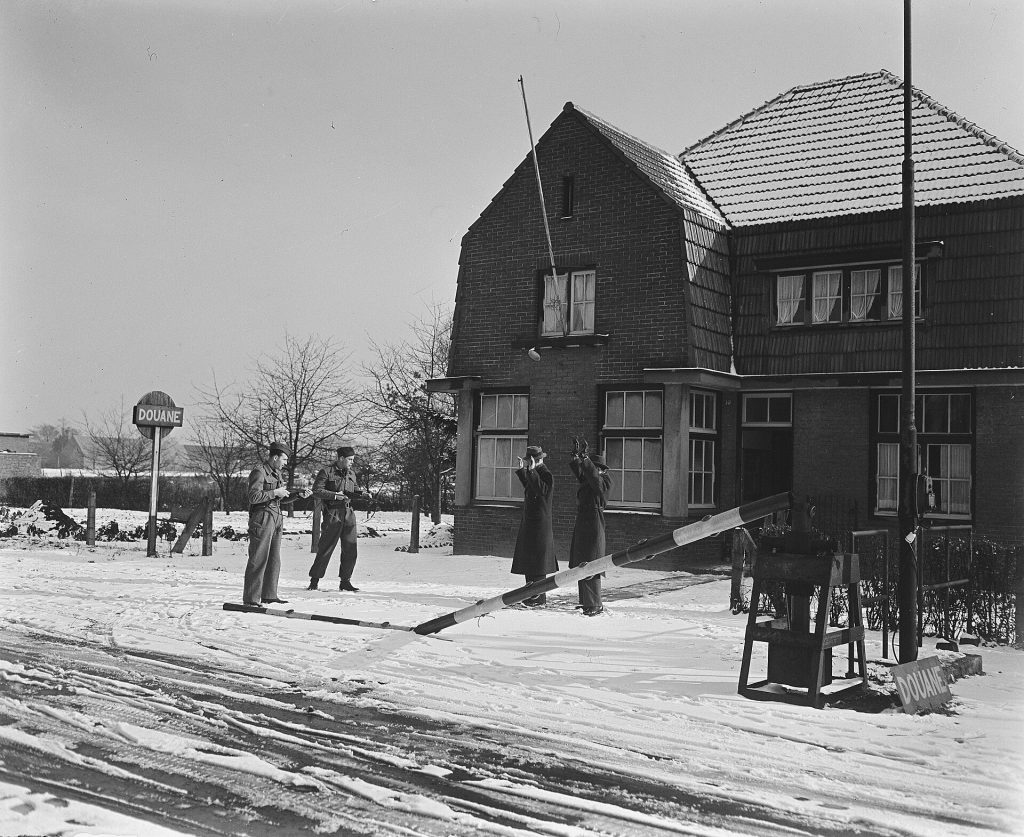
Two British intelligence officers, lured by German agents posing as anti-Hitler conspirators, are seized at a café on the Dutch border and dragged into Germany.
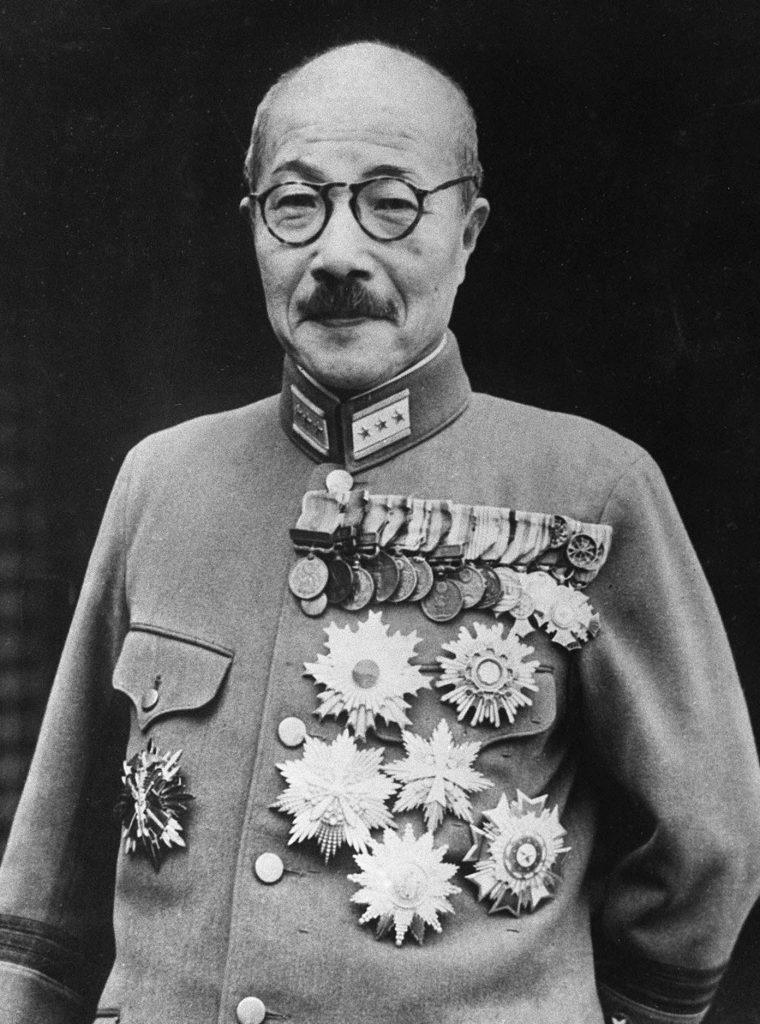
In the presence of Emperor Hirohito, an Imperial Conference in Tokyo formally approves war against the United States, Britain and the Netherlands. The carriers are already at sea.
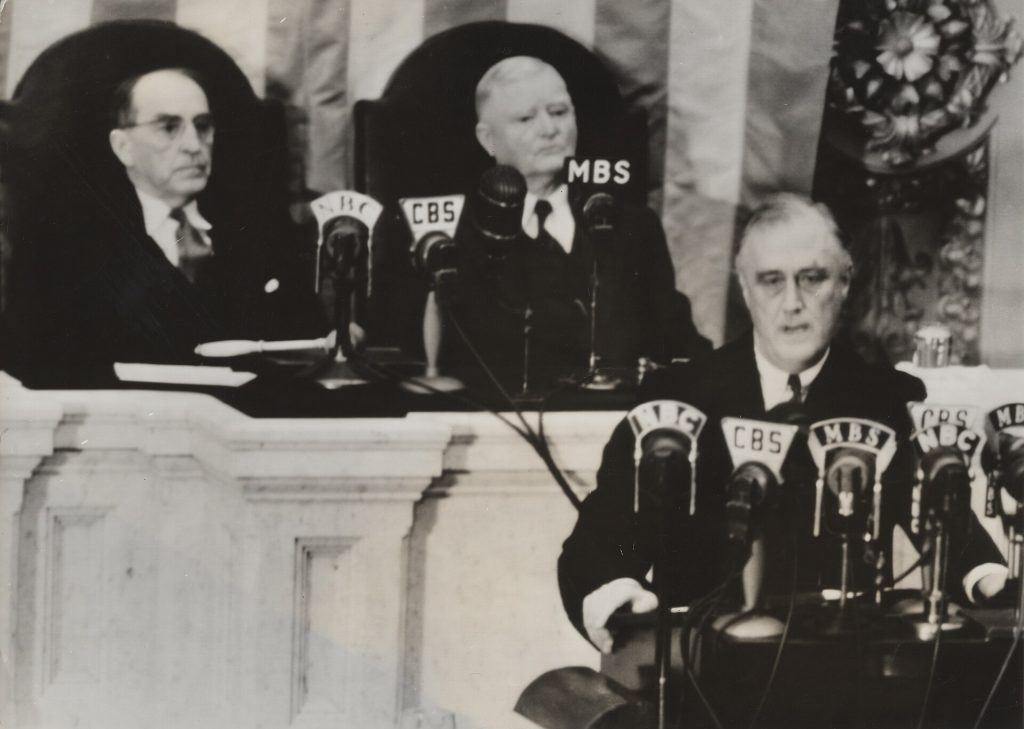
President Roosevelt signs the Neutrality Act of 1939, lifting the arms embargo so that Britain and France can buy American weapons, provided they pay cash and carry them home in their own ships.
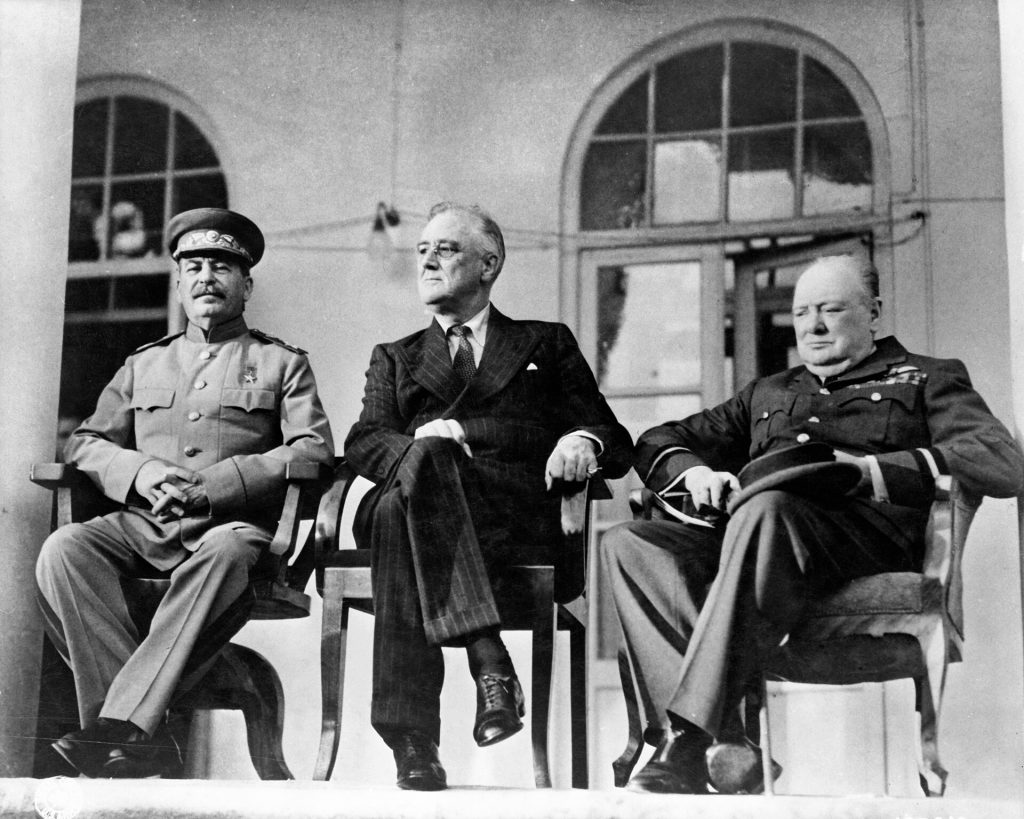
Roosevelt, Churchill and Stalin meet together for the first time. In four days they fix the date for the invasion of France and sketch the outline of the post-war world.
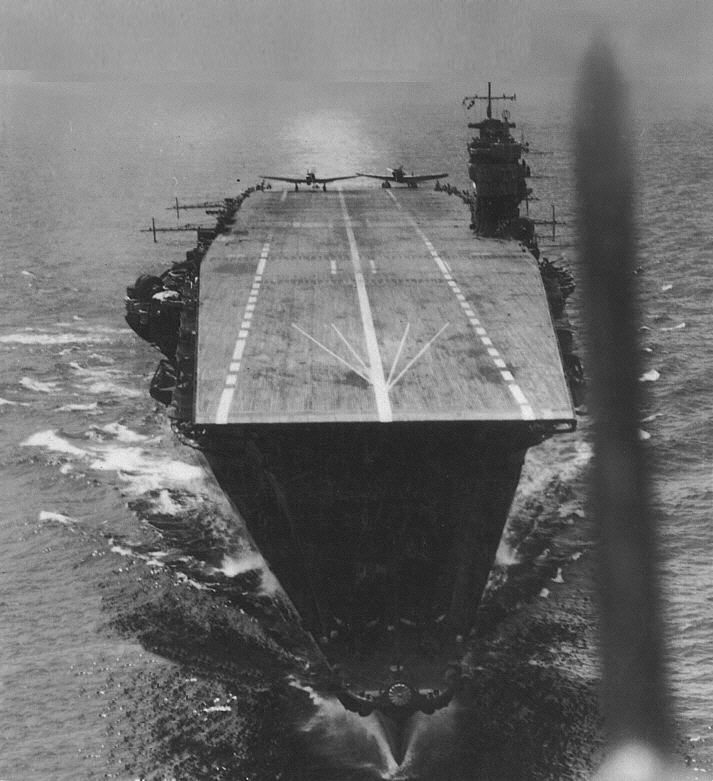
Six Japanese aircraft carriers slip out of a remote bay in the Kuril Islands and head east under radio silence. In Washington the same day, the Hull Note ends any real hope of a deal.
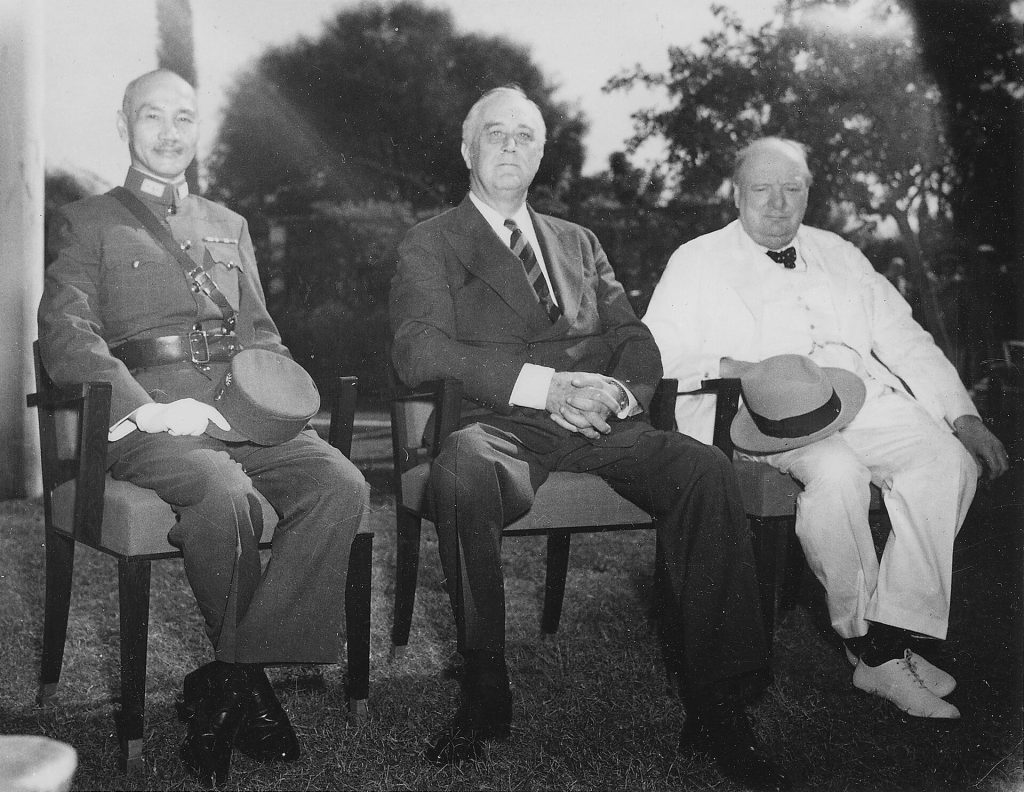
Roosevelt, Churchill and Chiang Kai-shek meet beside the pyramids to plan the defeat of Japan, and agree a declaration that will shape the map of East Asia for decades.
 United Kingdom
 United States
 Soviet Union
 Germany
 Japan
 France
 Poland
 South Africa