Grand Strategy · Politics · United Kingdom
War with Finland, Hungary and Romania
Under pressure from Stalin, Britain declares war on three of Germany’s partners in the invasion of the Soviet Union, including Finland, which Britain had cheered on against the Soviets two years earlier.
- Declared by
- United Kingdom, followed by Commonwealth dominions
- Against
- Finland, Hungary and Romania
- Reason
- Their part in the invasion of the Soviet Union
- Notable
- Finland’s Independence Day
- War clock
- Day 828 of 2,194
When Germany invaded the Soviet Union in June 1941, Finland, Hungary and Romania joined in. Romania and Hungary sent armies deep into Ukraine and southern Russia. Finland fought what it called the Continuation War, seeking to recover the territory lost in the Winter War of 1939 to 1940, and then advanced beyond its old border into Soviet East Karelia.
Stalin’s demand
Now allied to the Soviet Union, Britain came under steady pressure from Stalin to declare war on all of Germany’s partners in the east. Churchill was reluctant, especially over Finland, which had won wide sympathy in Britain during the Winter War. He wrote personally to the Finnish leader, Marshal Carl Gustaf Mannerheim, urging him to halt his advance. Britain then issued formal warnings to all three governments.
6 December 1941
When none of them withdrew, Britain declared war on Finland, Hungary and Romania on 6 December, which happened to be Finland’s Independence Day. Canada, Australia, New Zealand and South Africa followed with declarations of their own. There was little direct fighting between British and Finnish forces. The United States never declared war on Finland at all.
Also on 6 December
- 1941President Roosevelt sends a personal appeal for peace to Emperor Hirohito, hours before the attack on Pearl Harbor.
Sources and further reading
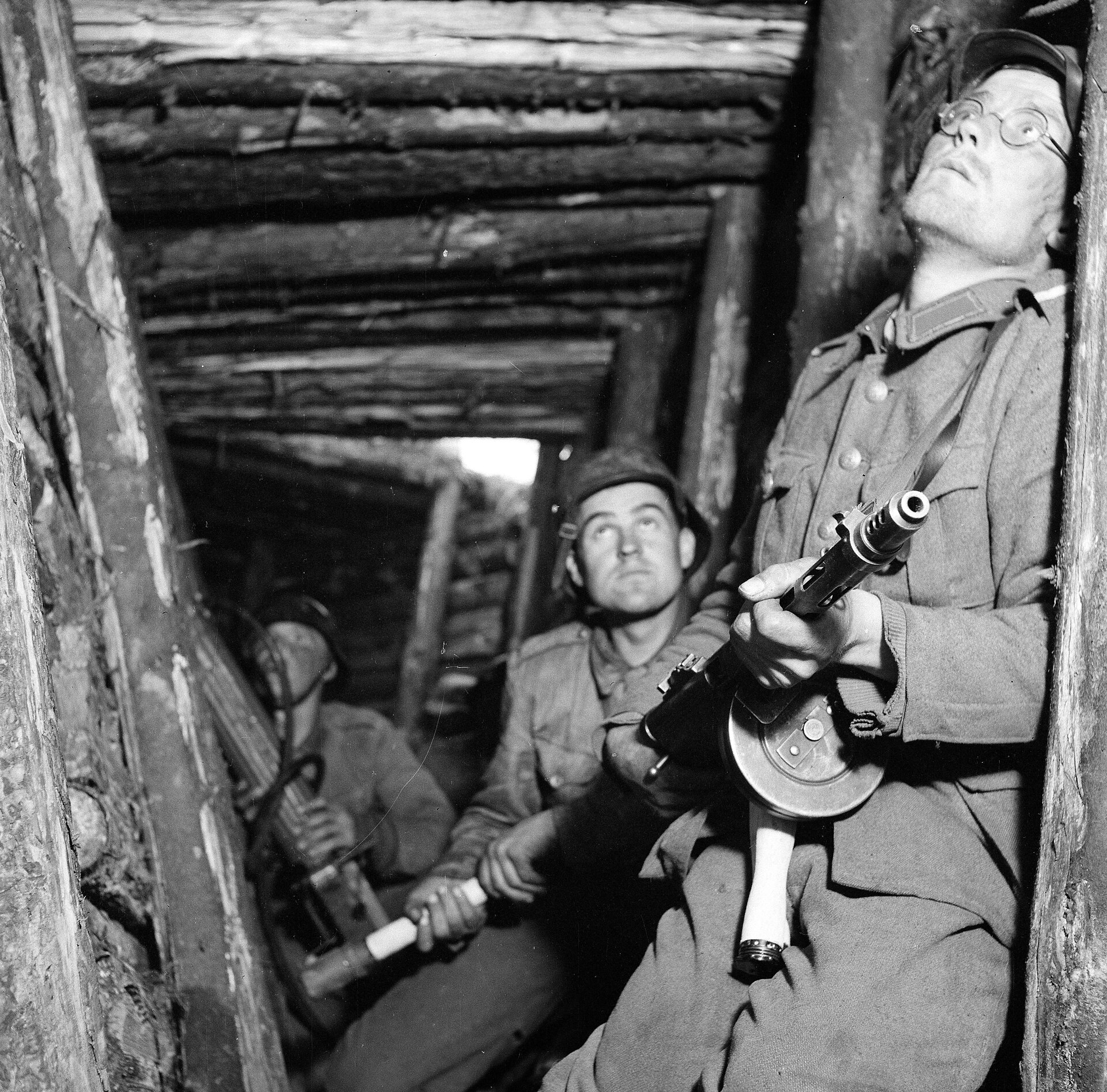
Lead image: Finnish soldiers during the Continuation War. Uuno Laukka, Finnish Defence Forces, Public domain, via Wikimedia Commons. See our sources and image policy.
 United Kingdom
 United States
 Soviet Union
 Germany
 Japan
 France
 Poland
 South Africa