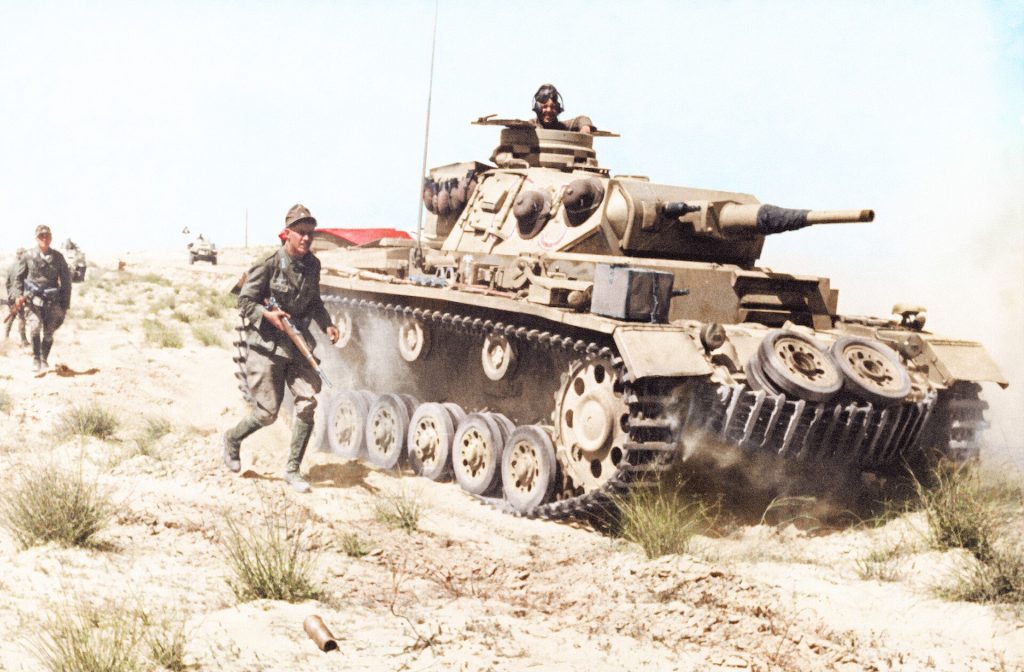
31 March 1941: Rommel Strikes
Weeks after arriving in Libya with orders to defend, Erwin Rommel attacks the thin British line at Mersa el Brega. Within two weeks the British are back in Egypt.
Campaigns and battles on land.
Weeks after arriving in Libya with orders to defend, Erwin Rommel attacks the thin British line at Mersa el Brega. Within two weeks the British are back in Egypt.
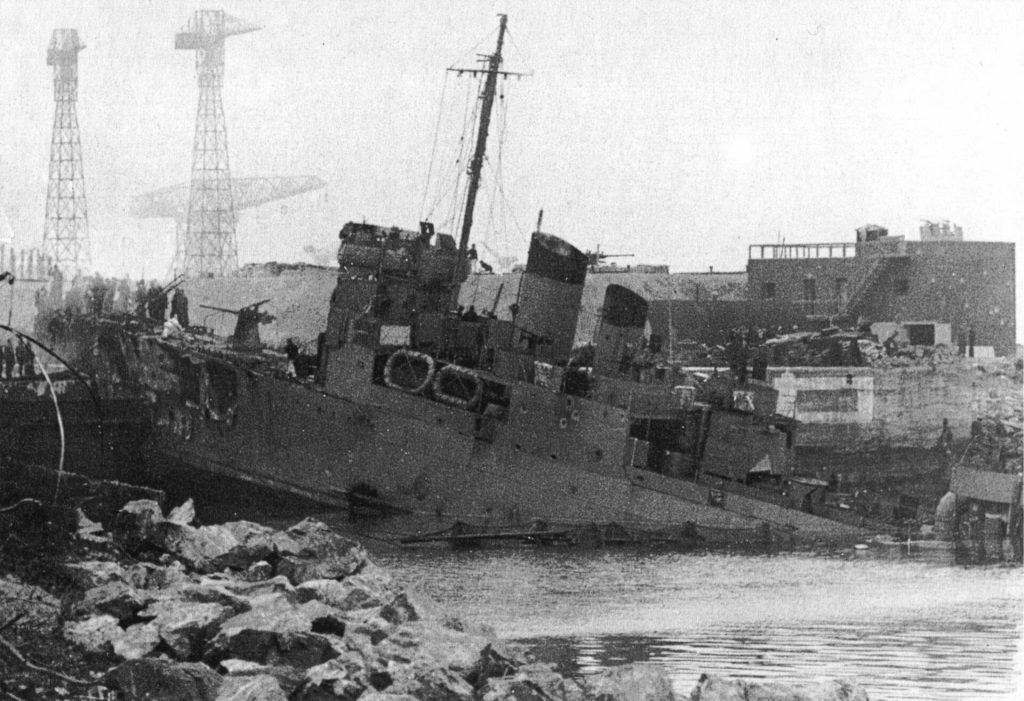
An old destroyer packed with explosives rams the gates of the only dry dock on the Atlantic coast big enough for the Tirpitz. Hours later, it blows up.
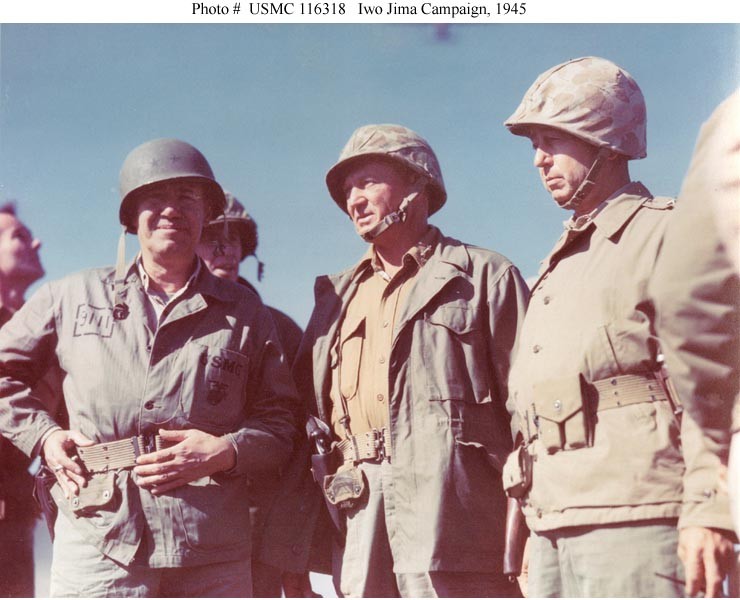
Before dawn, the last Japanese survivors launch a surprise attack on American camps near the airfields. When it is beaten off, the battle for Iwo Jima is declared over.
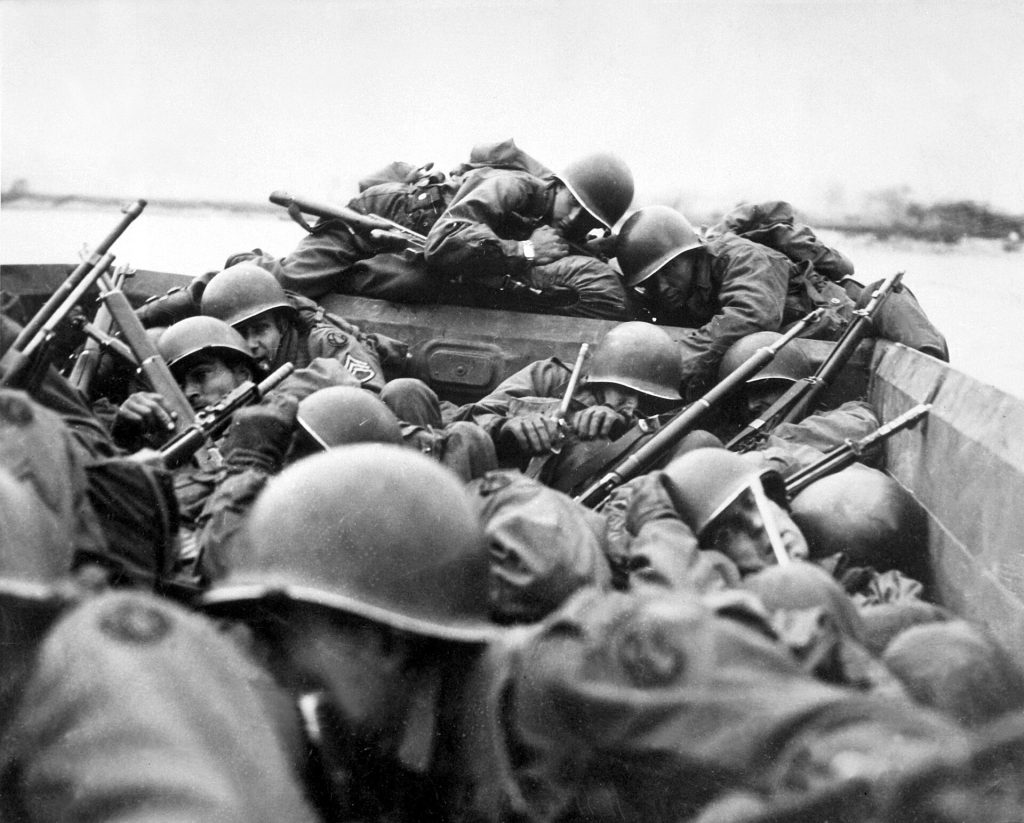
After a thunderous bombardment, Montgomery’s 21st Army Group crosses the Rhine on a broad front at night. The next morning two airborne divisions land on the far bank.
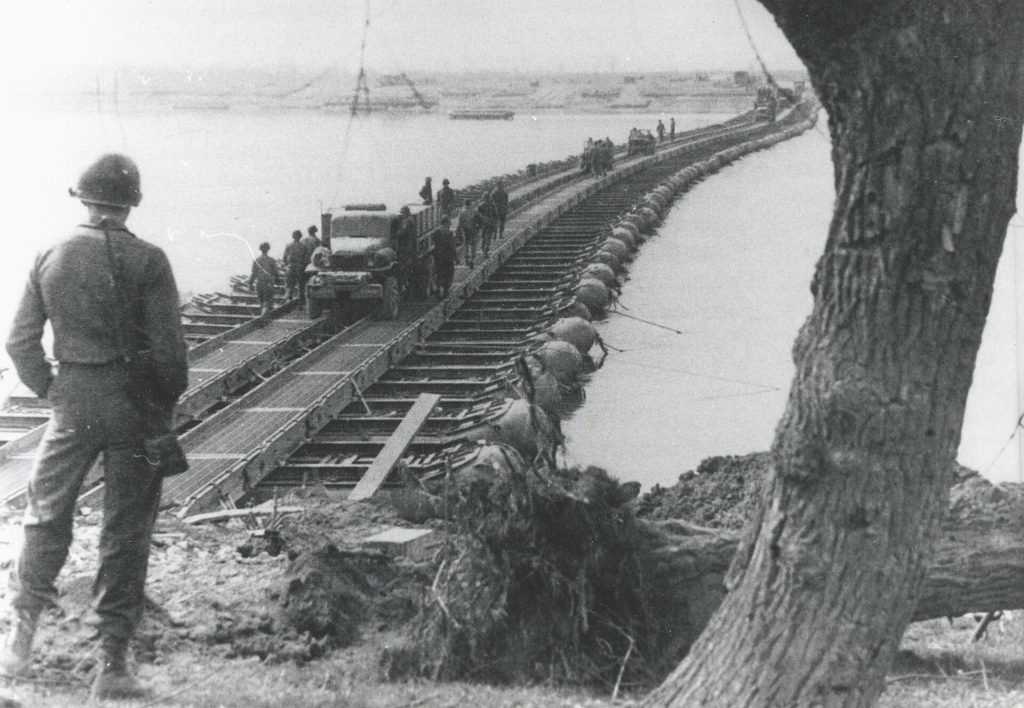
Without a bombardment or an announcement, Patton’s infantry quietly paddle across the Rhine at night. They beat Montgomery’s carefully prepared crossing by a day.
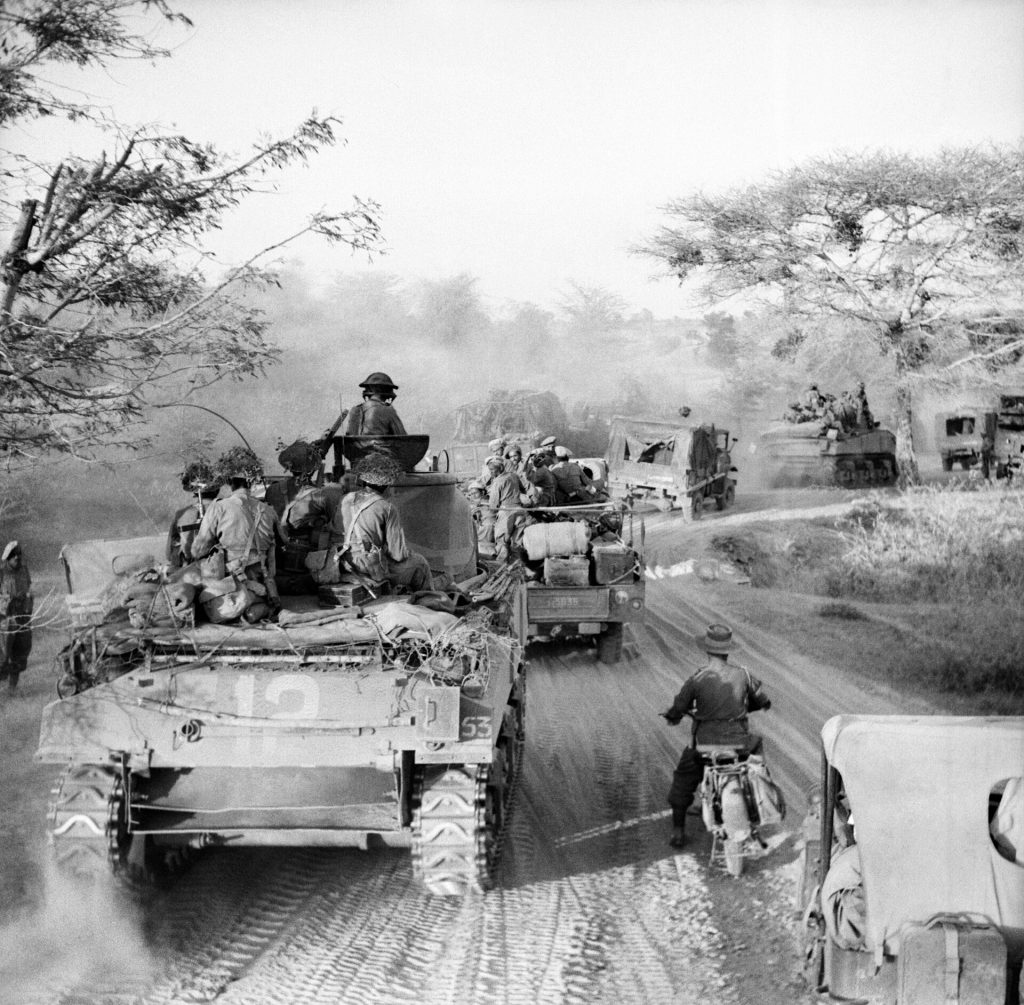
After a siege of more than a week, the Japanese abandon Fort Dufferin. The Fourteenth Army holds Mandalay, the old royal capital of Burma.
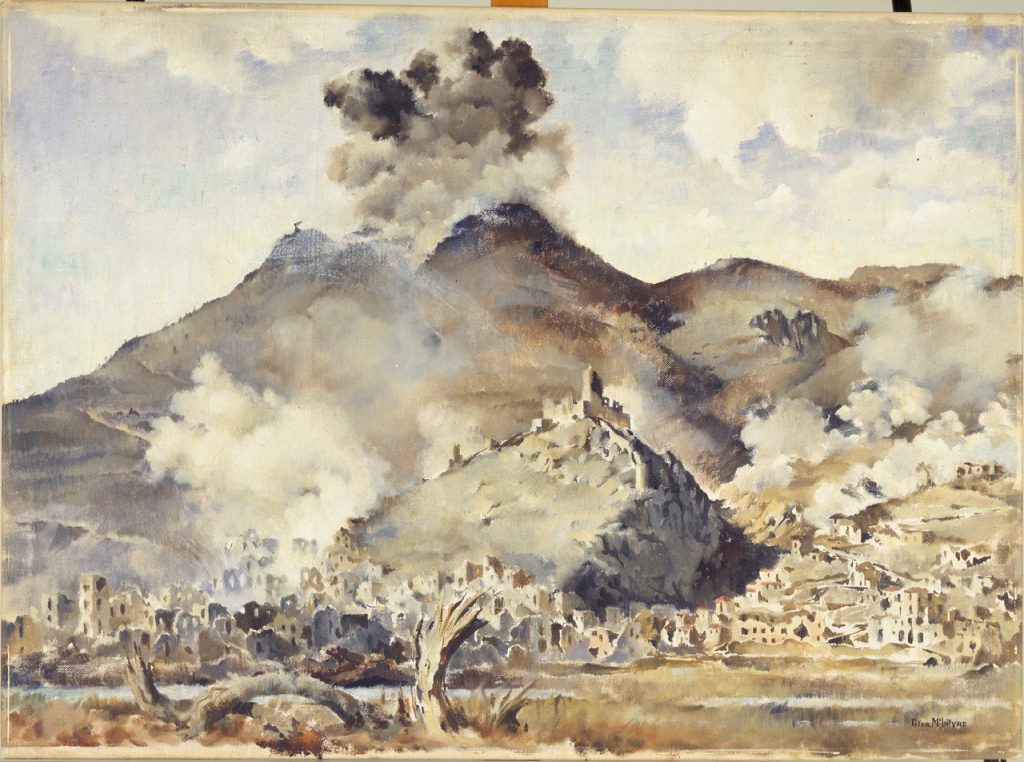
Hundreds of Allied bombers reduce the town of Cassino to rubble. New Zealand and Indian troops go in, but the German paratroopers are still there.

Japanese troops enter an abandoned and burning Rangoon. With its port lost, the British army in Burma begins the longest retreat in its history.
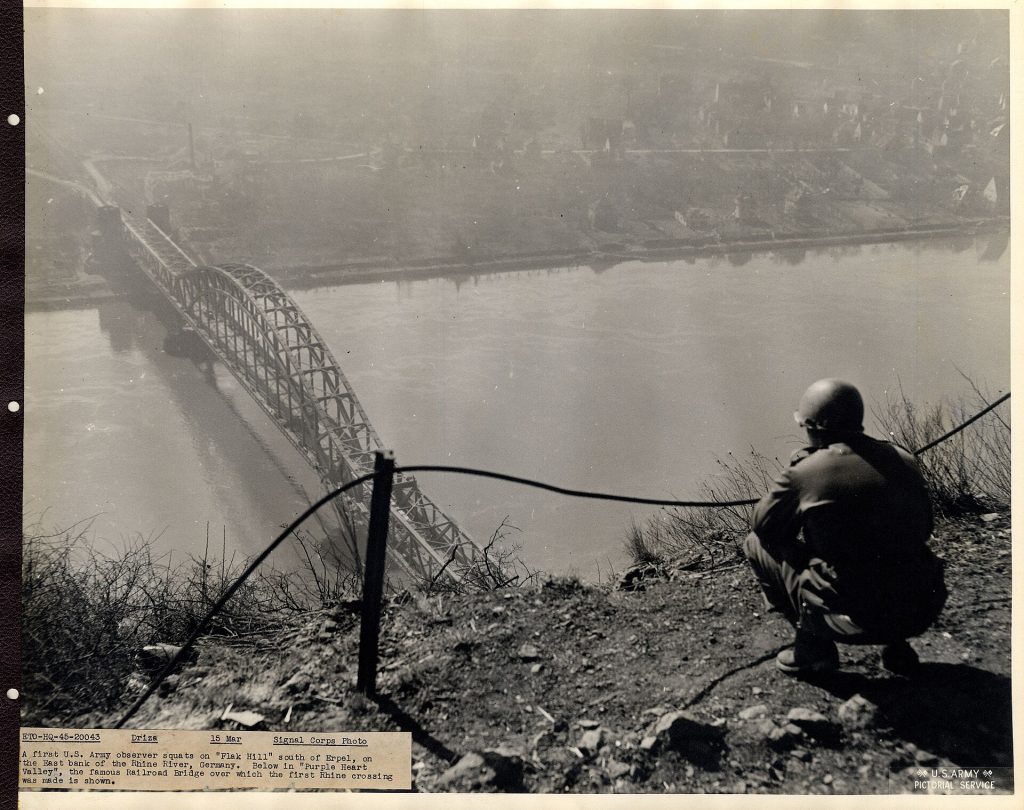
American tanks and infantry reach the Rhine at Remagen and find a railway bridge still standing. A German demolition charge fails, and the first Allied troops cross the river.
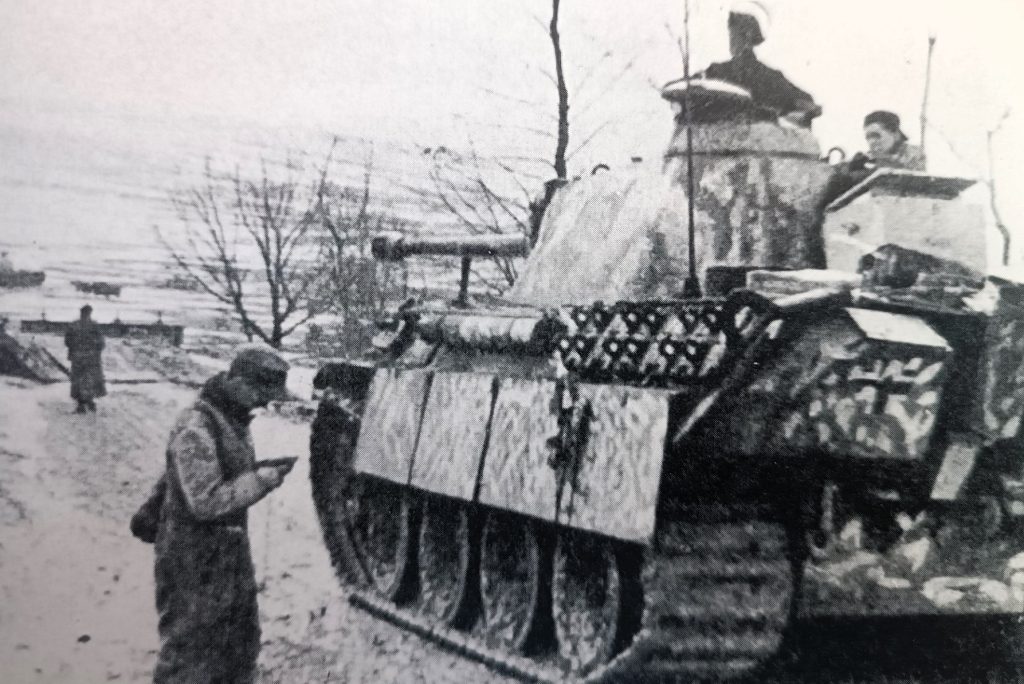
Germany launches its last major offensive of the war, around Lake Balaton in Hungary, to protect its final source of oil. Within ten days it has failed.
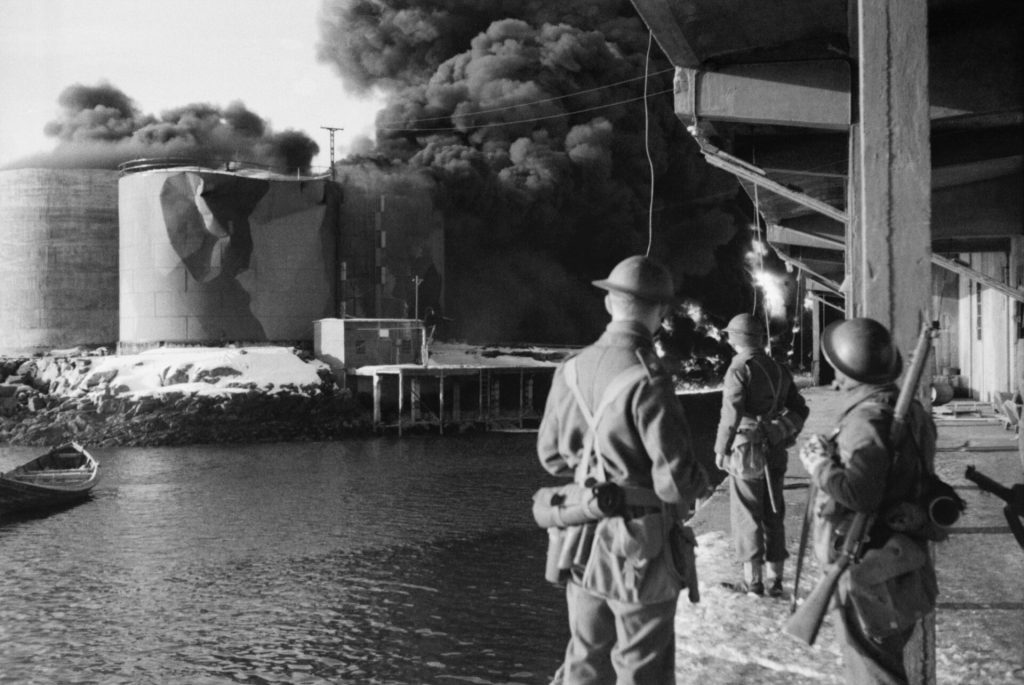
British commandos and Norwegian troops land unopposed in the Lofoten Islands, blow up fish oil factories and sail home with prisoners, volunteers and a secret prize.
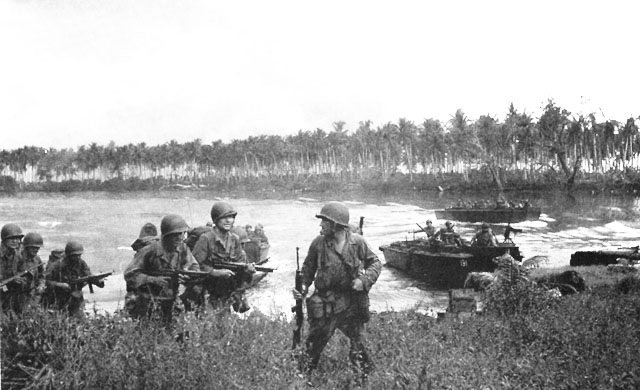
On the war’s last leap day, a thousand American cavalrymen land on Los Negros in a gamble ordered by MacArthur. It seals the fate of Rabaul.
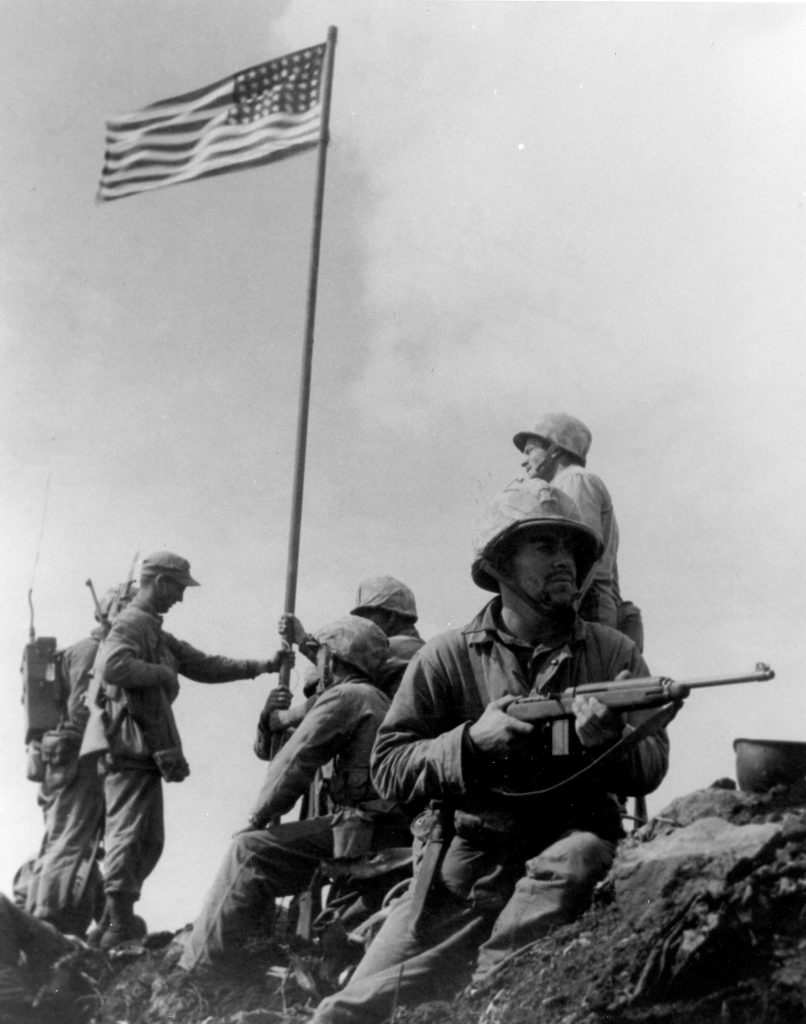
Marines reach the summit of Mount Suribachi and raise the Stars and Stripes. A second, larger flag raised hours later becomes the most famous photograph of the war.
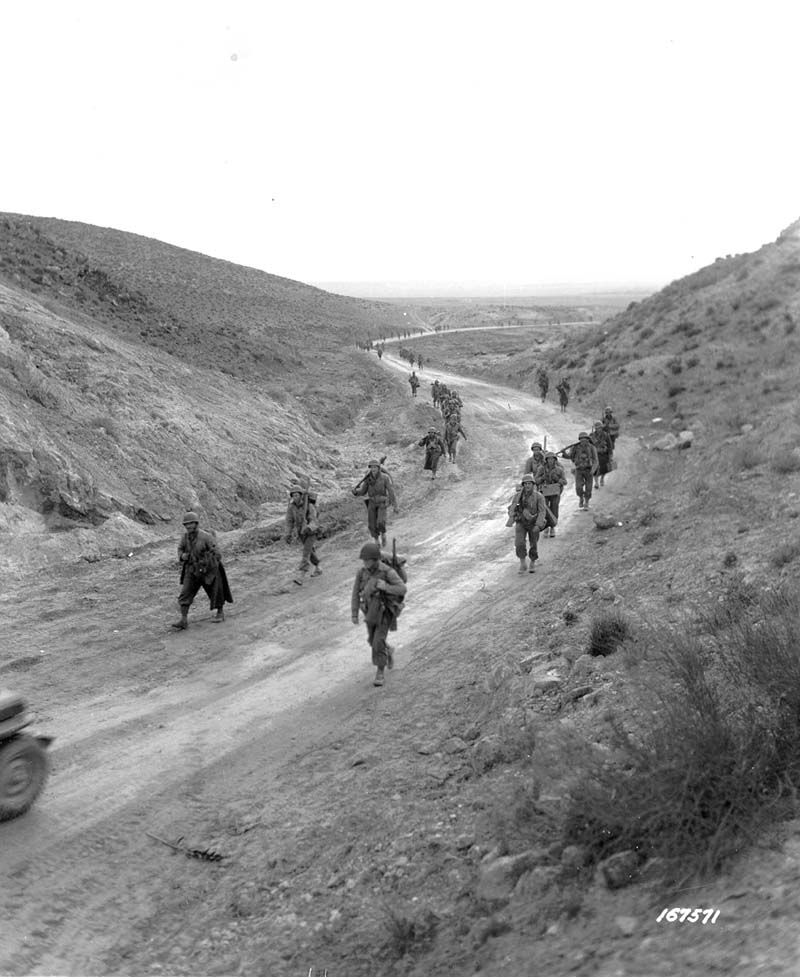
German panzer divisions strike the inexperienced US II Corps in central Tunisia. Within days the Americans are driven back through the Kasserine Pass.
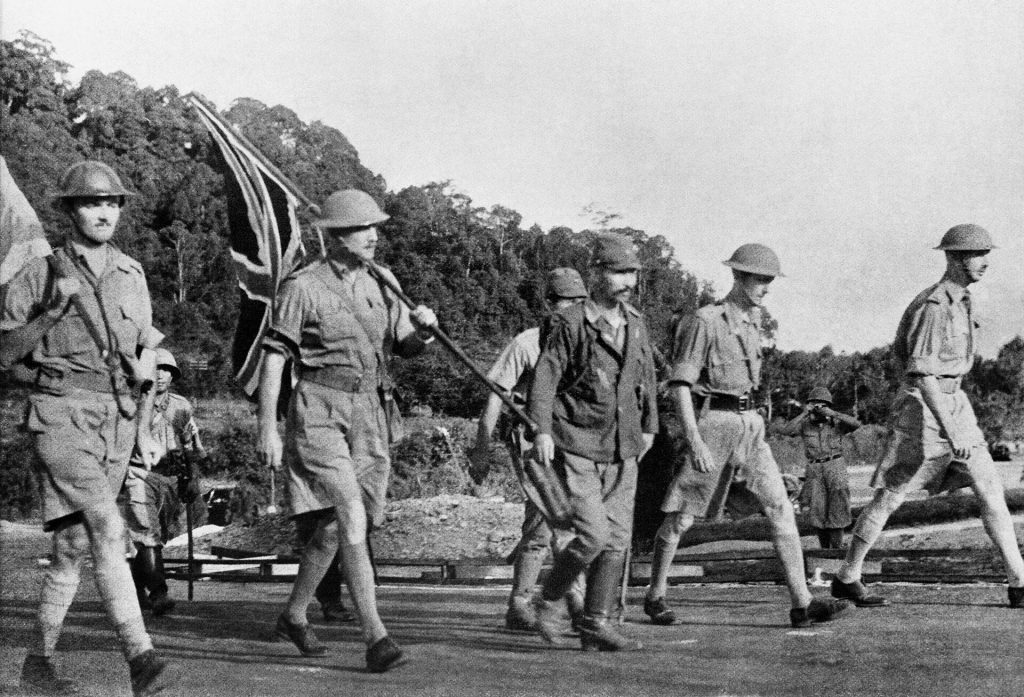
A week after Japanese troops cross the Johor Strait, Lieutenant-General Percival surrenders the fortress of Singapore. It is the largest capitulation in British history.
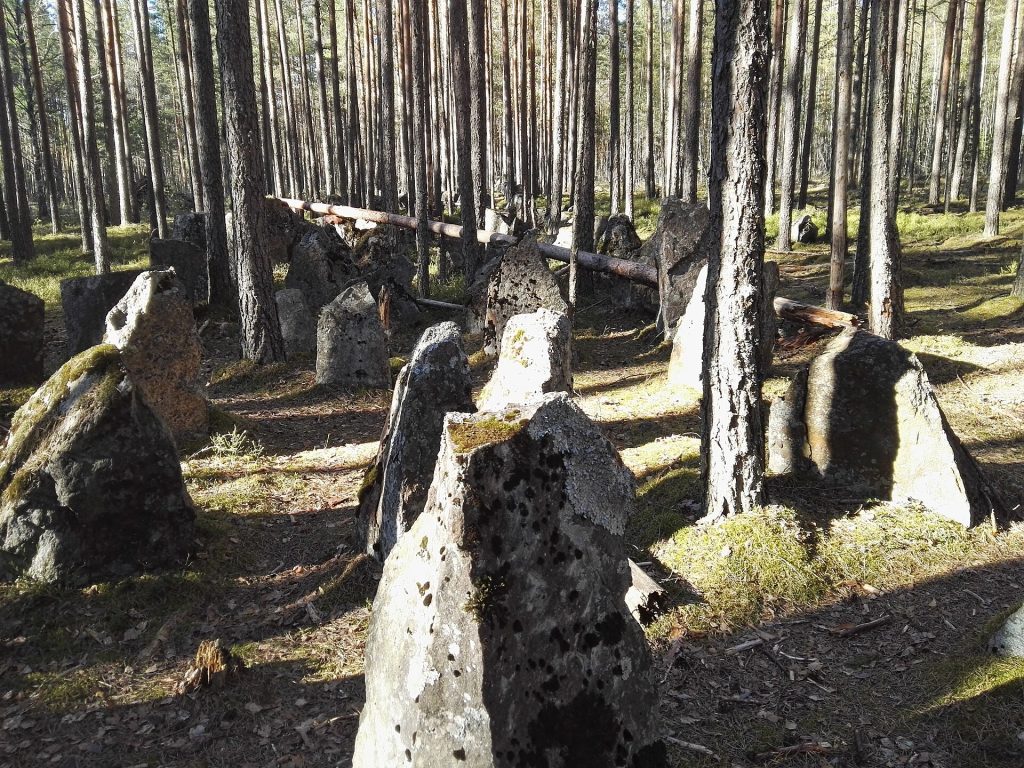
After weeks of bombardment, the Red Army launches its main assault on the Karelian Isthmus. At Summa the Finnish defences finally give way.
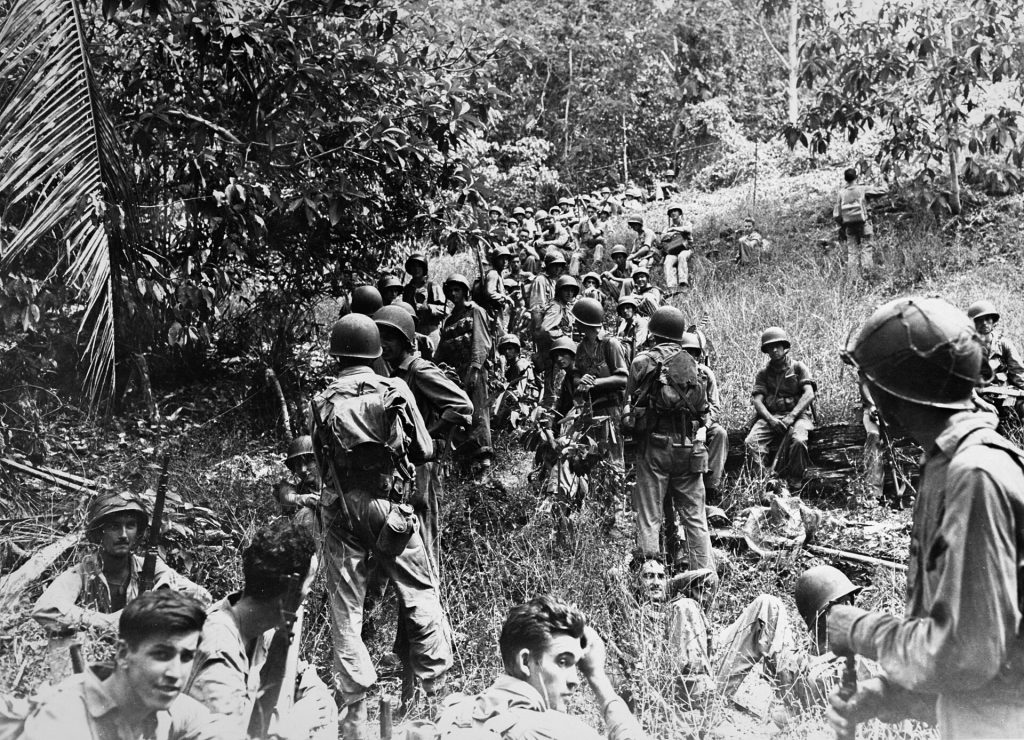
Six months after the Marines landed, the American commander on Guadalcanal reports that organised Japanese resistance has ended. The enemy has slipped away by night.
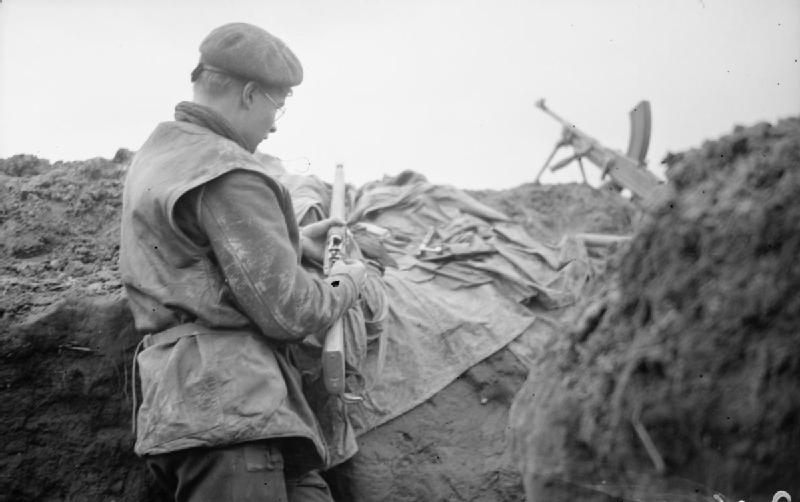
After a massive bombardment, the First Canadian Army attacks into the Reichswald forest, the start of the battle to clear the last ground west of the Rhine.
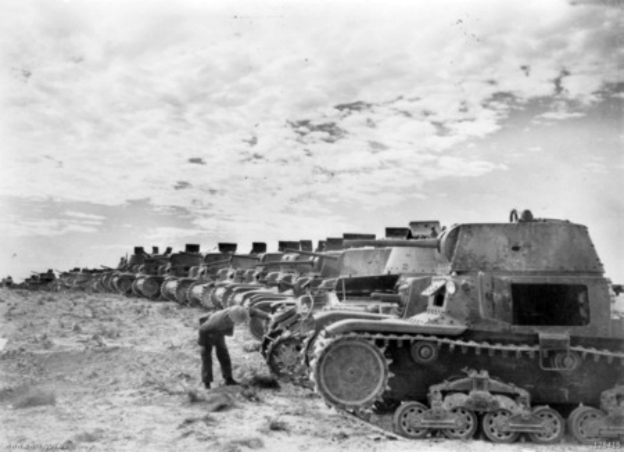
A small British force races across the desert and blocks the coast road south of Benghazi. The retreating Italian Tenth Army is trapped and surrenders.

Japanese troops sweep around the 7th Indian Division in the Arakan, expecting it to retreat. Instead, supplied from the air, it stands and fights.
 United Kingdom
 United States
 Soviet Union
 Germany
 Japan
 France
 Poland
 South Africa