Pacific · Land Battles · Japan vs Britain, Australia and India
The Fall of Singapore
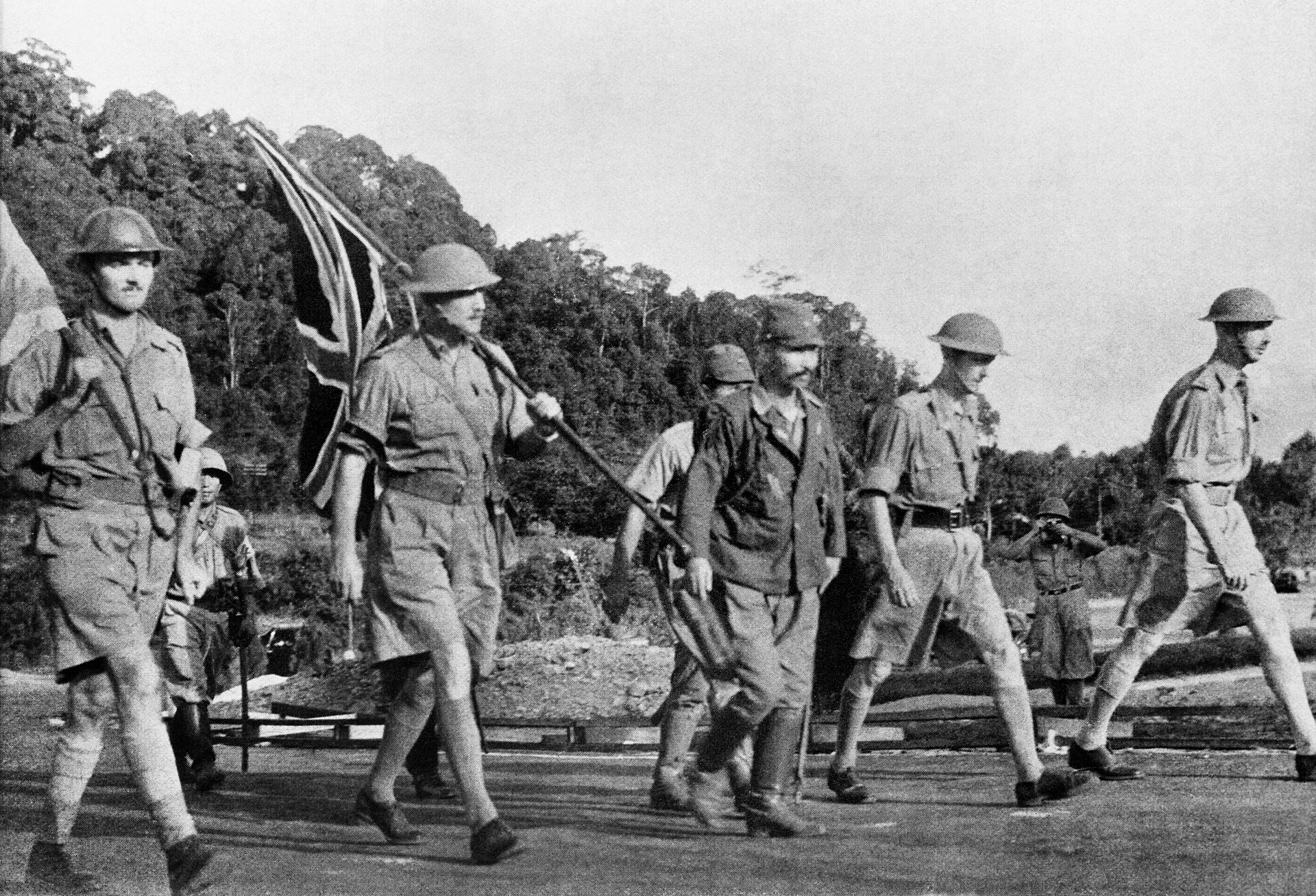
A week after Japanese troops cross the Johor Strait, Lieutenant-General Percival surrenders the fortress of Singapore. It is the largest capitulation in British history.
- Location
- Singapore, British Malaya
- British commander
- Lt Gen Arthur Percival
- Japanese commander
- Lt Gen Tomoyuki Yamashita, 25th Army
- Allied prisoners
- Around 80,000 at Singapore
- War clock
- Day 899 of 2,194
Singapore was the centrepiece of British power in the Far East, with a great naval base built between the wars. But its defences assumed an attack from the sea, and there was no main fleet to send. In December 1941 Japanese forces landed in northern Malaya and drove south down the peninsula in a fast campaign, using bicycles, tanks and repeated outflanking moves.
The island
By the end of January 1942 the British, Australian and Indian forces had withdrawn across the causeway onto Singapore Island. On the night of 8 February Japanese troops crossed the Johor Strait. Fighting went on across the island for a week. The Japanese captured the reservoirs, and the city, crowded with refugees, was under constant bombardment.
Surrender
On 15 February Percival met Yamashita at the Ford factory at Bukit Timah and agreed to unconditional surrender. The Japanese army had been outnumbered by the defenders but was better led and had control of the air. Churchill called the defeat the worst disaster in British military history.
Sources and further reading
Lead image: Lieutenant-General Percival and his party under a flag of truce, Singapore. Unknown photographer, Imperial War Museum, Public domain, via Wikimedia Commons. See our sources and image policy.
 United Kingdom
 United States
 Soviet Union
 Germany
 Japan
 France
 Poland
 South Africa