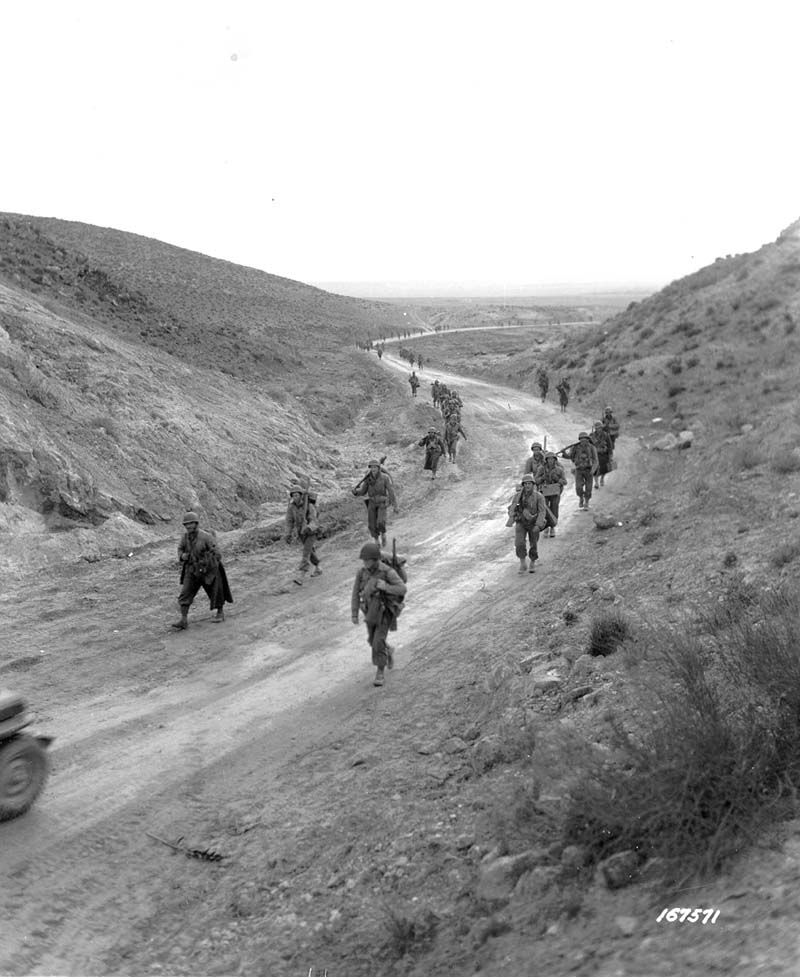
14 February 1943: Sidi Bou Zid
German panzer divisions strike the inexperienced US II Corps in central Tunisia. Within days the Americans are driven back through the Kasserine Pass.
The desert war, Malta, the Balkans, Sicily and the long campaign in Italy.
German panzer divisions strike the inexperienced US II Corps in central Tunisia. Within days the Americans are driven back through the Kasserine Pass.
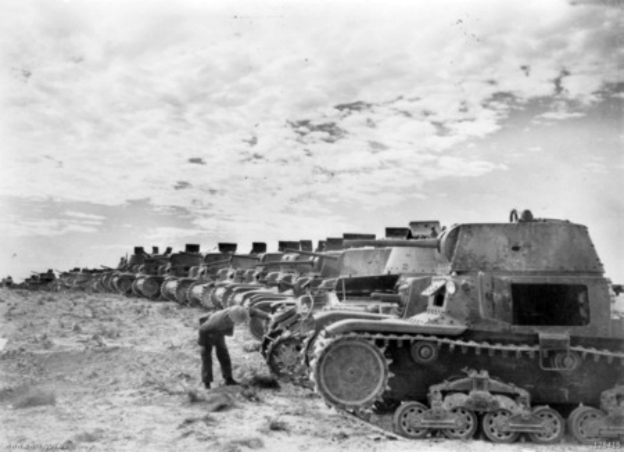
A small British force races across the desert and blocks the coast road south of Benghazi. The retreating Italian Tenth Army is trapped and surrenders.
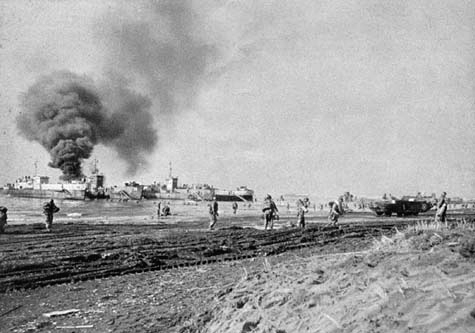
Allied troops land behind the Gustav Line, almost unopposed, within reach of Rome. Instead of a quick breakthrough, they face four months of siege.
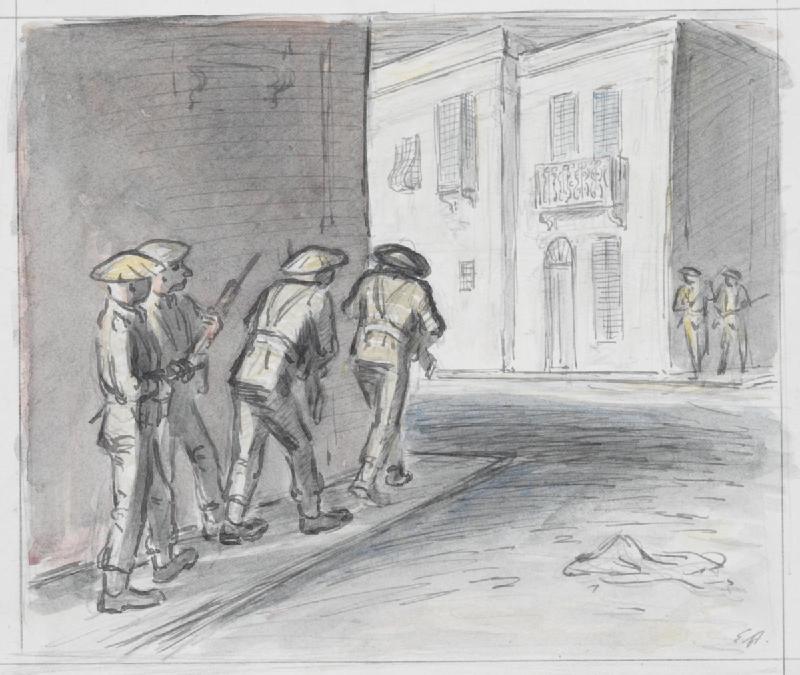
Three months after El Alamein, Montgomery’s Eighth Army enters the capital of Italian Libya. Mussolini’s North African empire is gone.
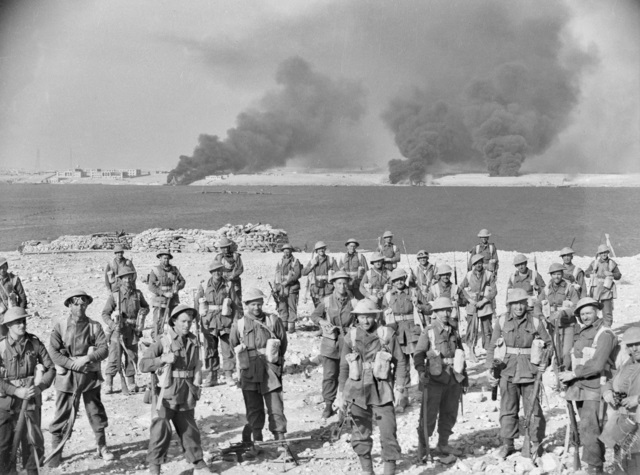
Fresh from victory at Bardia, the 6th Australian Division storms the fortress of Tobruk. By the next afternoon its harbour is in Allied hands.
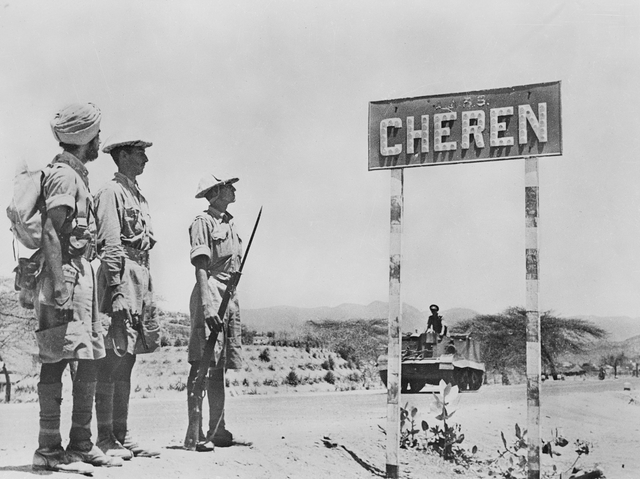
British and Indian troops cross from the Sudan into Italian Eritrea. The campaign that follows will end Mussolini’s empire in East Africa.
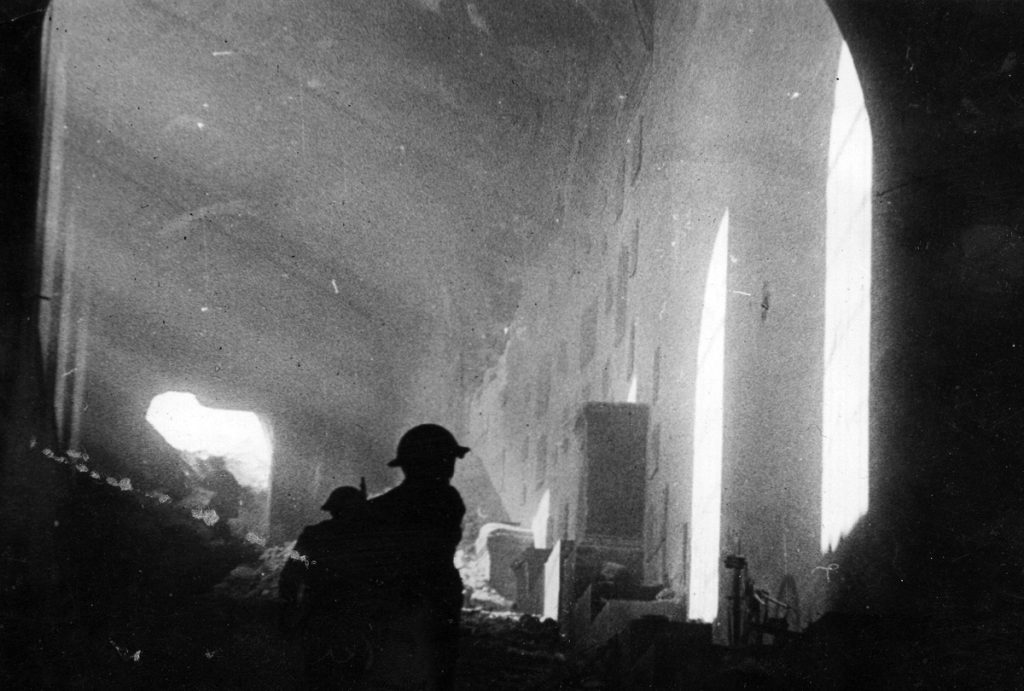
British troops cross the Garigliano to open the first of four bloody battles for the Gustav Line, the German barrier blocking the road to Rome.
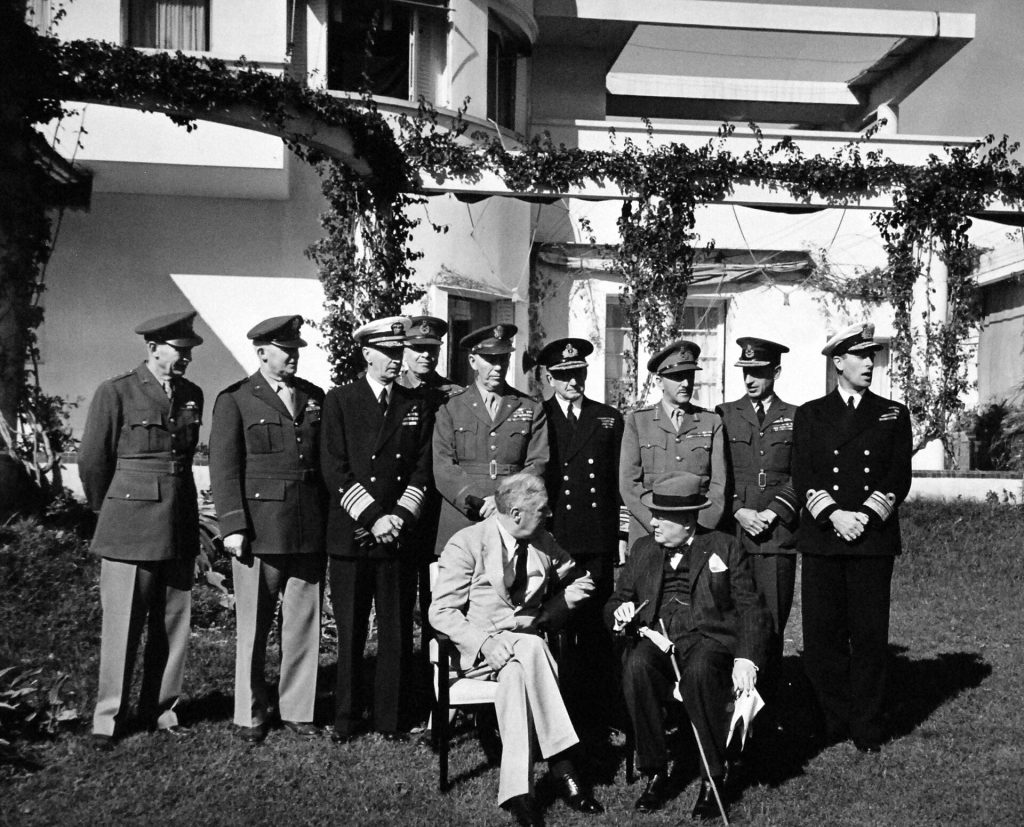
Roosevelt and Churchill meet in liberated Morocco to plan the next year of the war. They leave with a decision on Sicily and a demand the Axis will hear loud and clear: unconditional surrender.
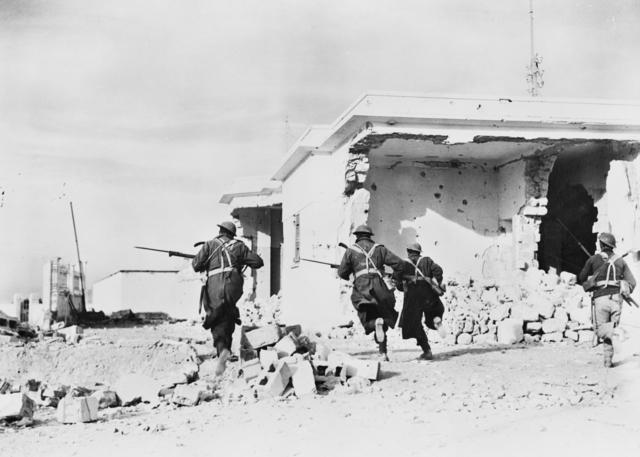
In their first battle of the war, the men of the 6th Australian Division storm the fortified Libyan port of Bardia and take tens of thousands of Italian prisoners.
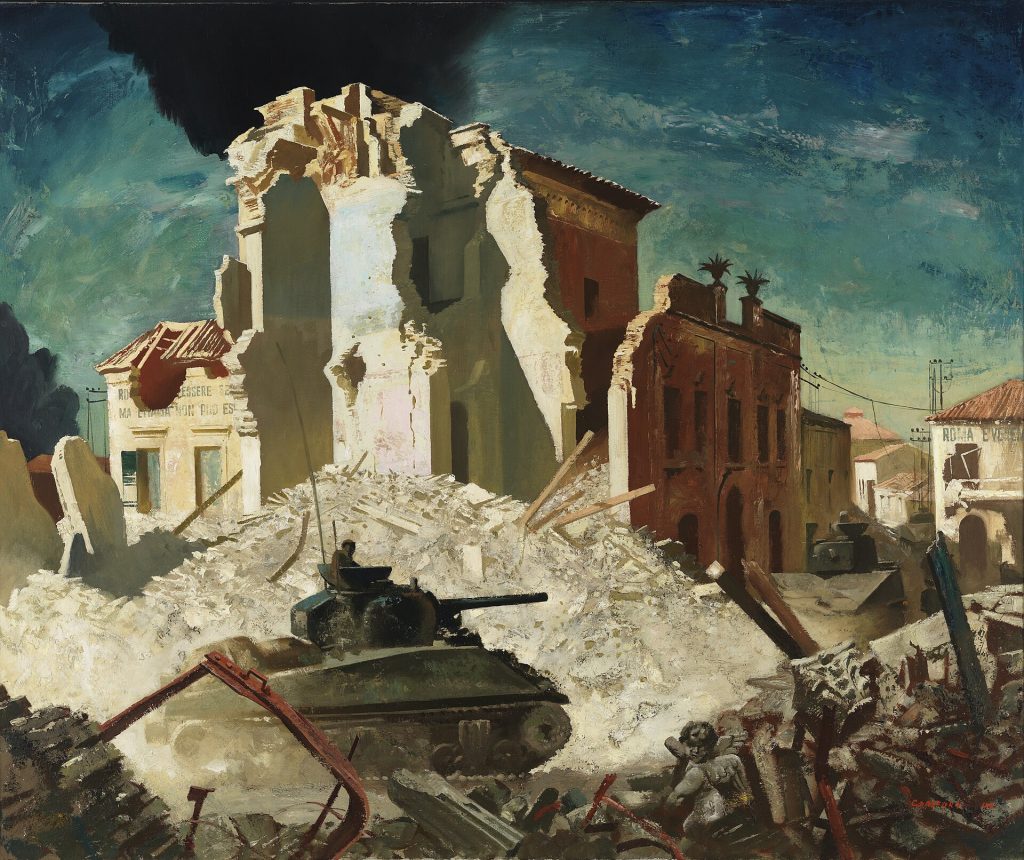
After eight days of house-to-house fighting, German paratroopers pull out of the Adriatic town of Ortona. Canadian soldiers have won one of the hardest urban battles of the Italian campaign.
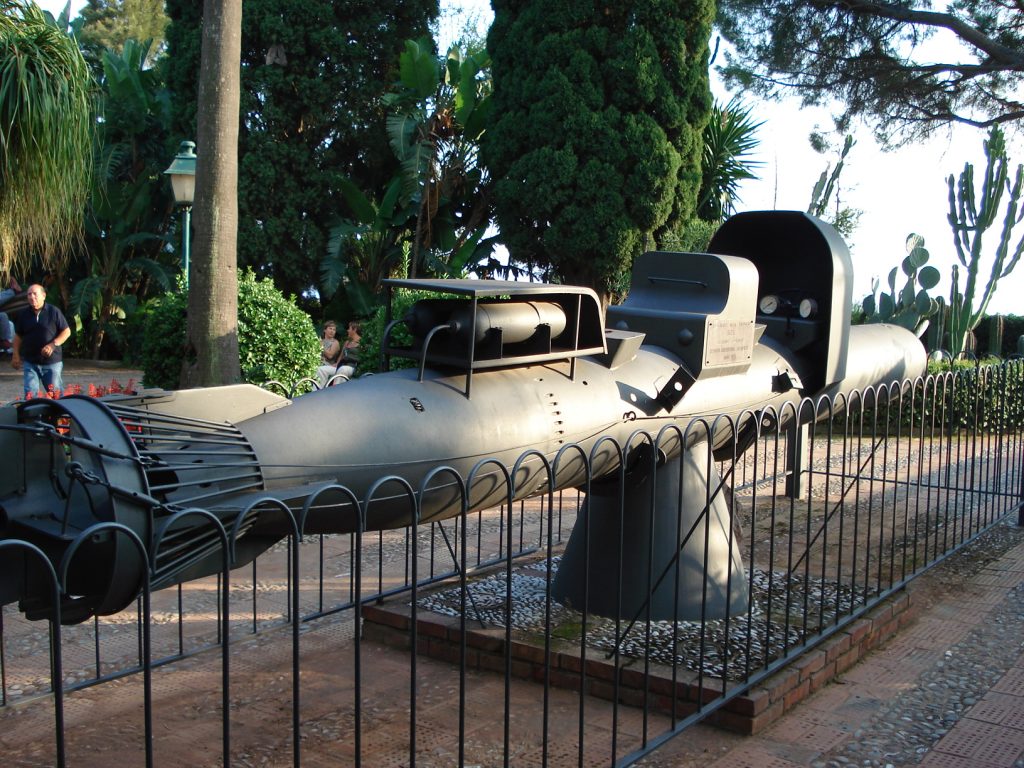
Six Italian frogmen riding human torpedoes slip into Alexandria harbour and sink two British battleships where they lie at anchor.
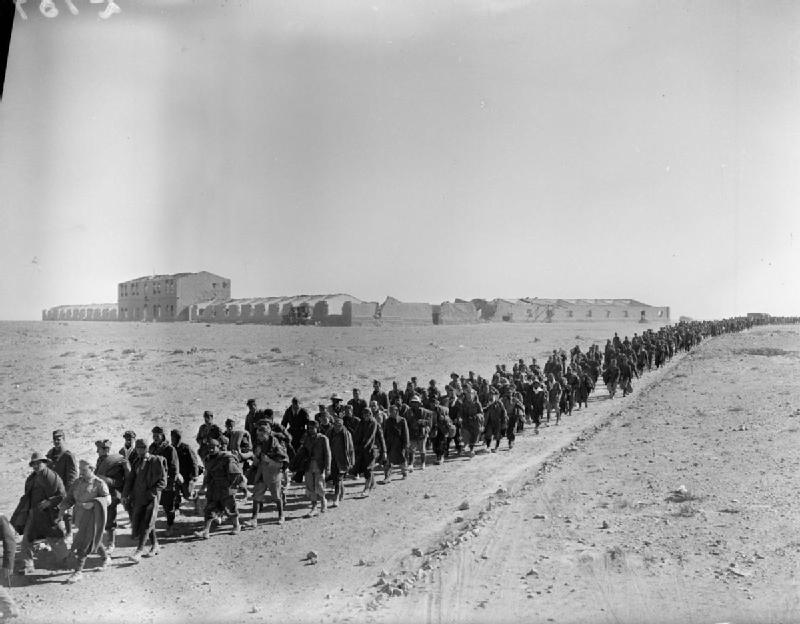
A small British and Indian force strikes the Italian army that has invaded Egypt. Planned as a five-day raid, it becomes a two-month rout that captures well over 100,000 prisoners.
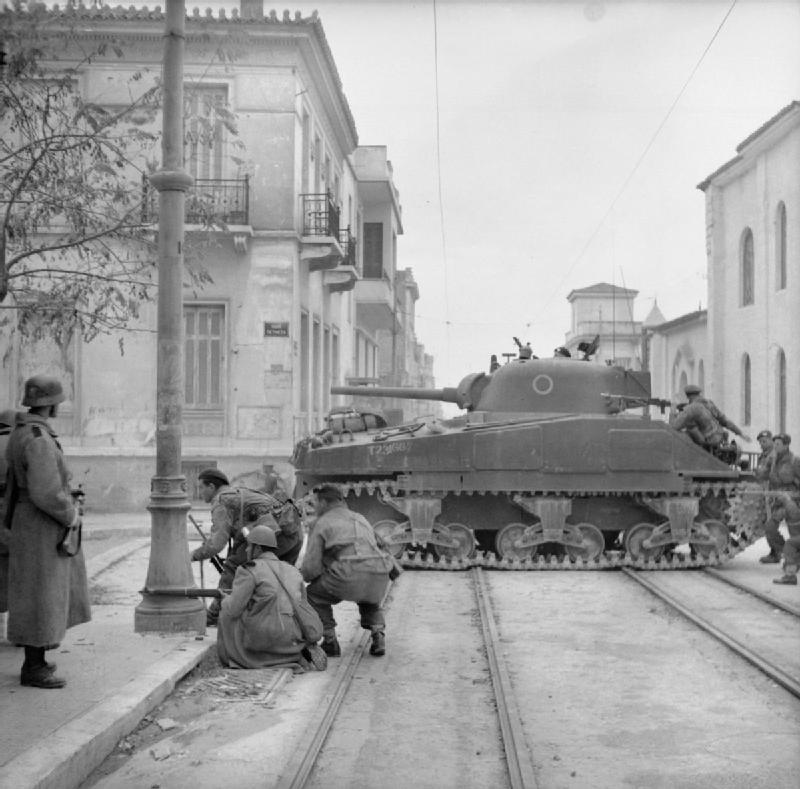
Weeks after the Germans leave Athens, police open fire on a left-wing demonstration in Syntagma Square. British troops and Greek resistance fighters are soon fighting street by street.
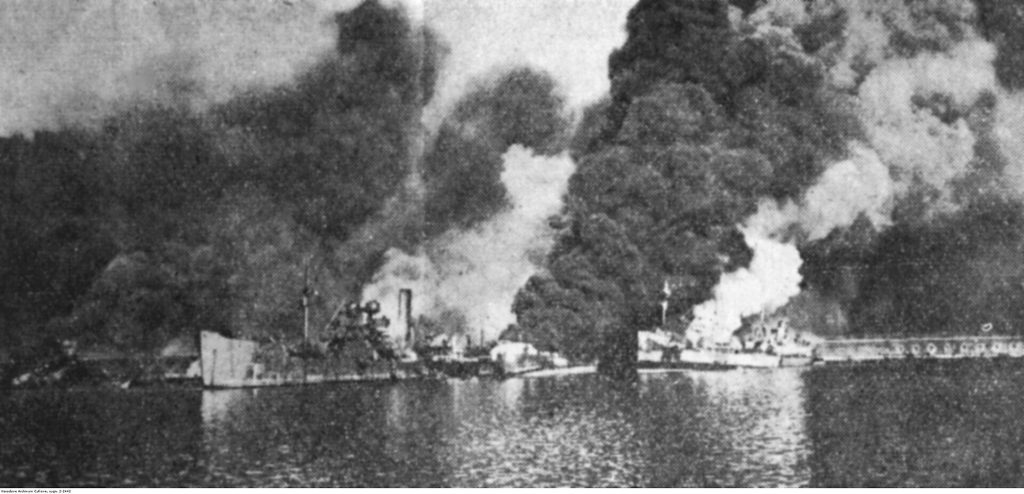
German bombers catch a crowded Allied supply port fully lit at dusk. Among the ships destroyed is an American freighter secretly carrying mustard gas bombs.
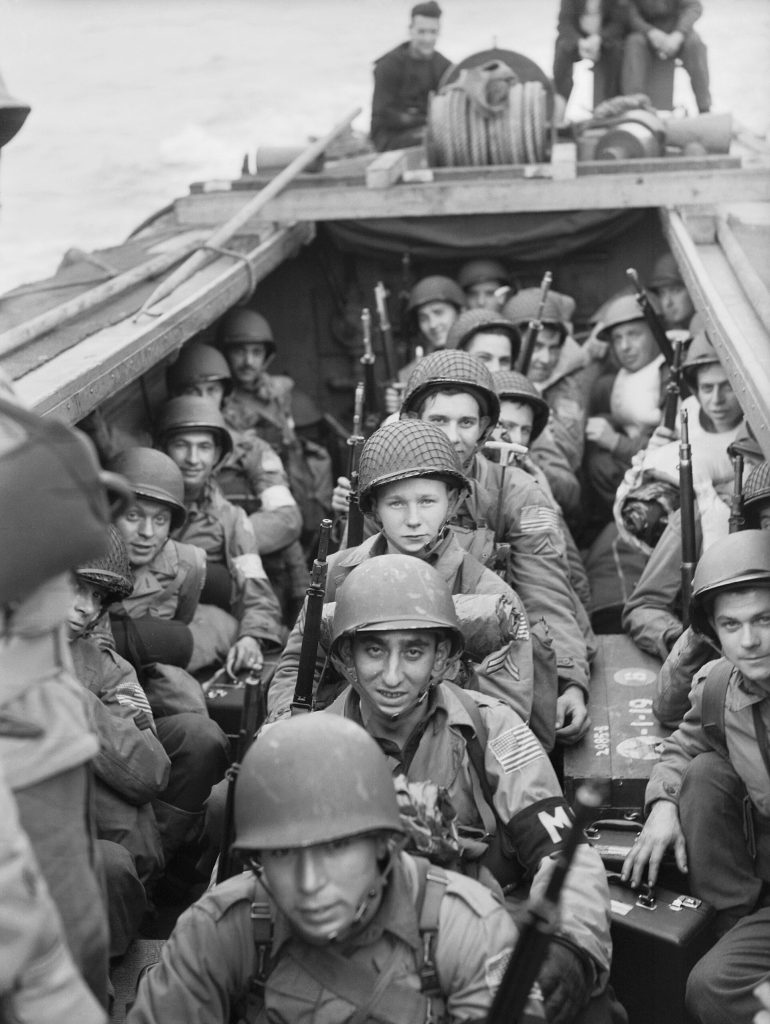
American and British forces land at Casablanca, Oran and Algiers in the first great Anglo-American offensive of the war, under a little-known general named Dwight Eisenhower.
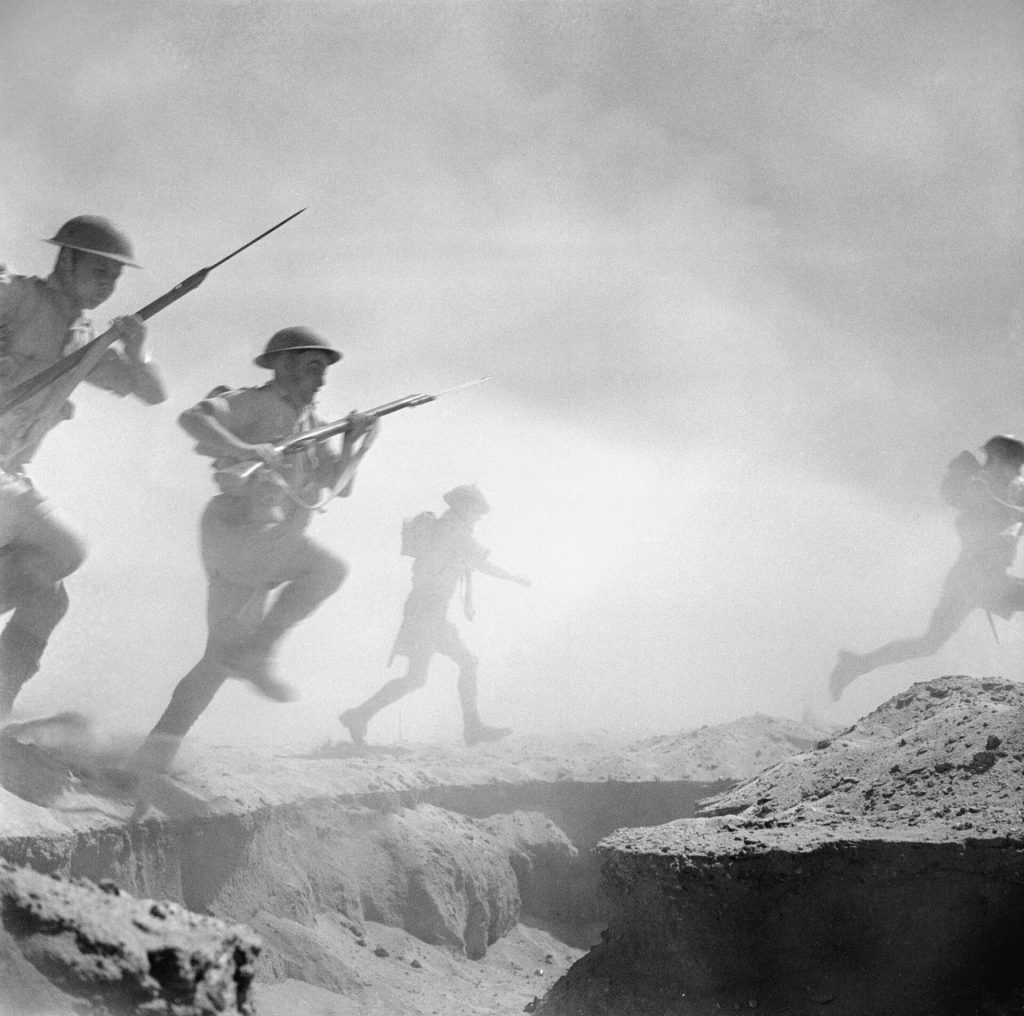
After ten days of grinding attrition at El Alamein, Montgomery launches a final hammer blow. British armour pays a terrible price, but the Axis line finally cracks.
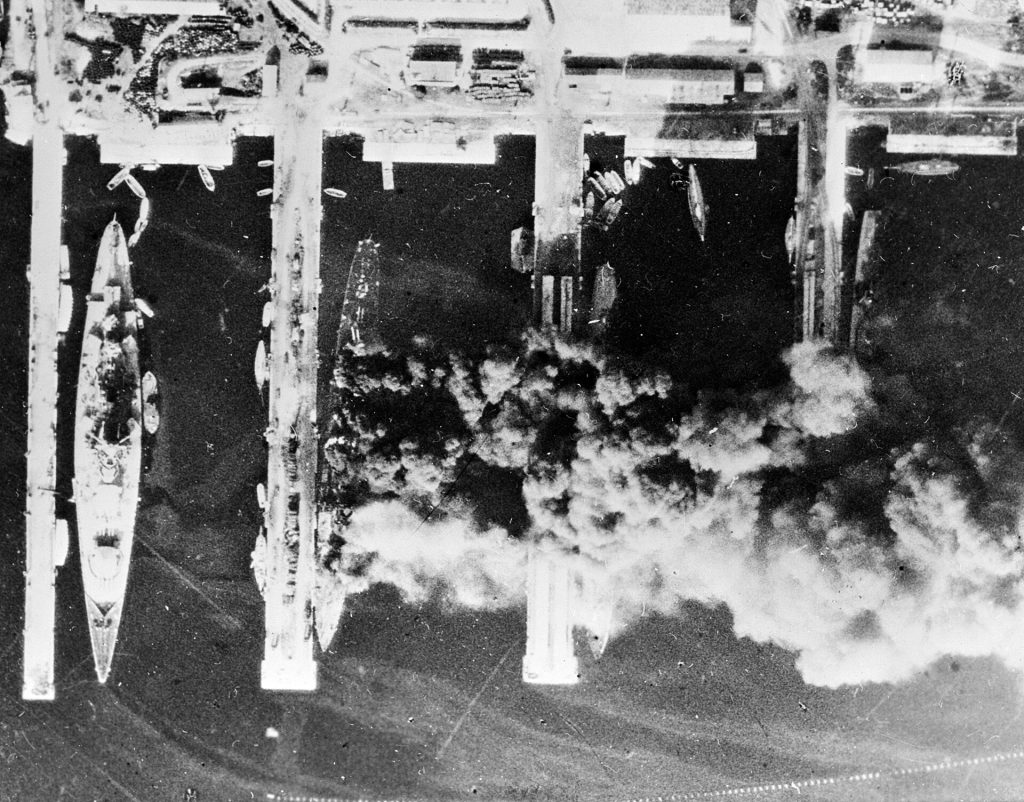
As German troops burst into the naval base, French crews open the sea cocks and set charges. In a few hours most of the French fleet is on the bottom of Toulon harbour.
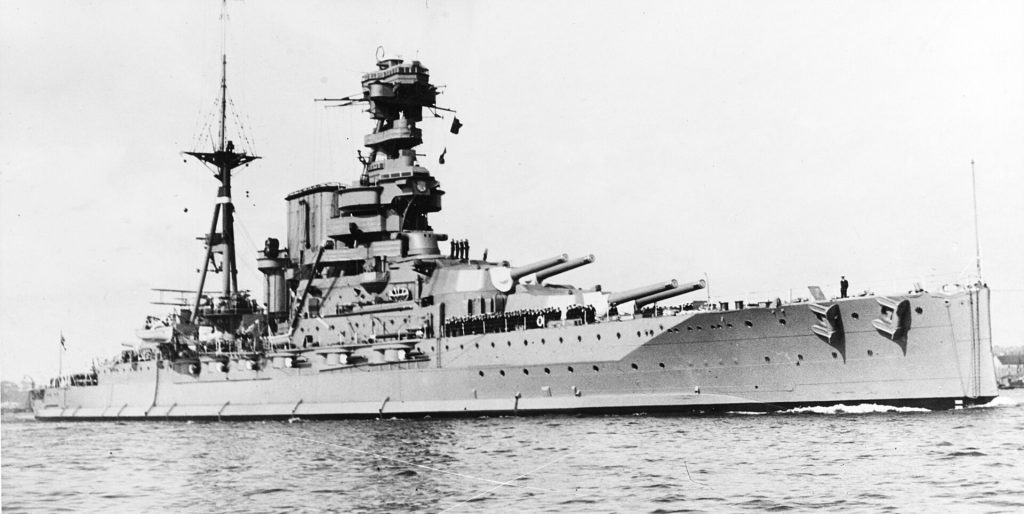
A German U-boat slips through the destroyer screen of the Mediterranean Fleet and torpedoes the battleship Barham. Four minutes later she explodes, in front of a newsreel camera.
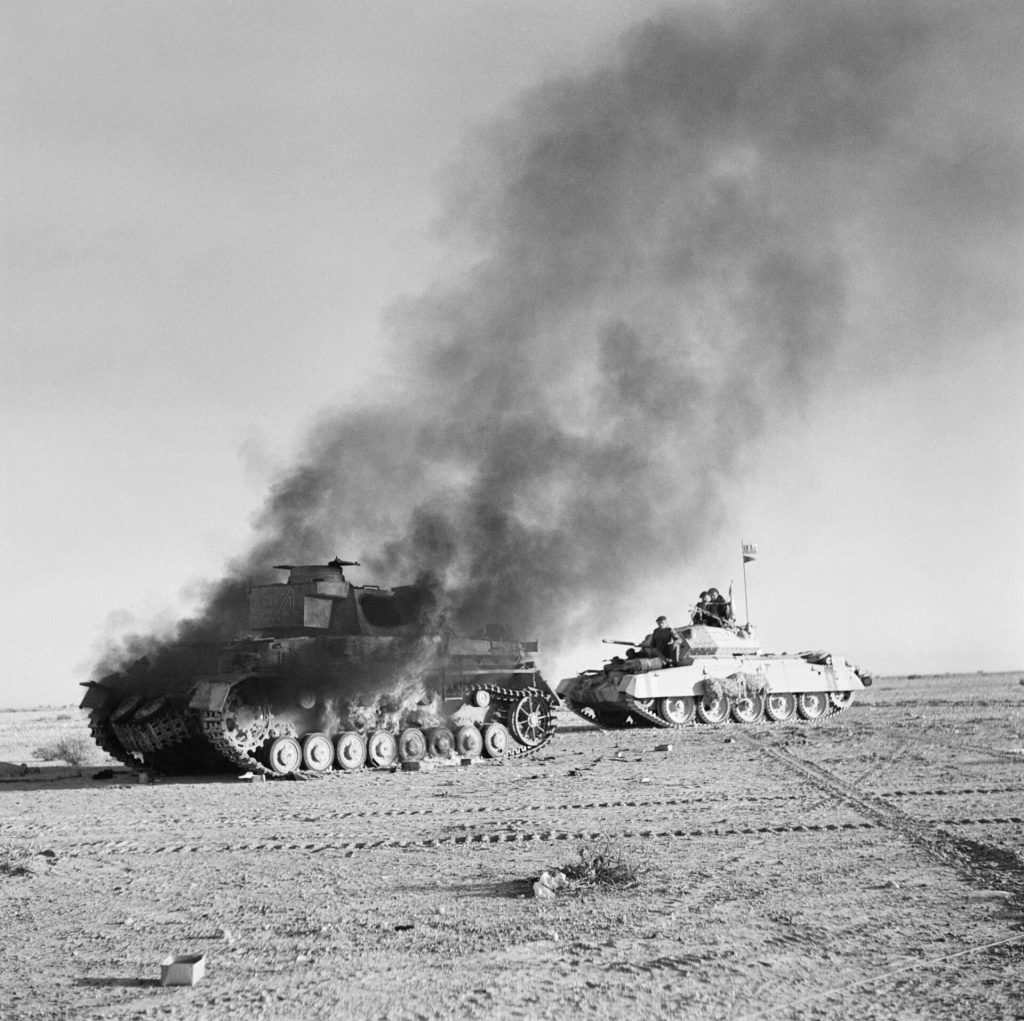
The newly formed British Eighth Army, with South African, New Zealand and Indian divisions in its ranks, strikes into Libya to relieve besieged Tobruk and take on Rommel in the open desert.
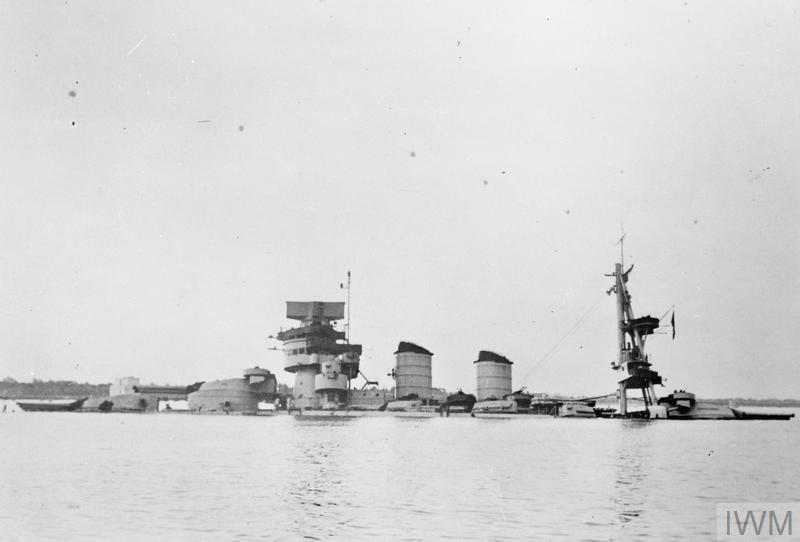
Twenty-one obsolete biplanes from HMS Illustrious cripple half the Italian battle fleet in a single night, and change naval warfare for good.
 United Kingdom
 United States
 Soviet Union
 Germany
 Japan
 France
 Poland
 South Africa