North Africa · Land Battles · United States and United Kingdom vs Vichy France
Operation Torch
American and British forces land at Casablanca, Oran and Algiers in the first great Anglo-American offensive of the war, under a little-known general named Dwight Eisenhower.
- Locations
- Casablanca (Morocco), Oran and Algiers (Algeria)
- Belligerents
- United States and United Kingdom vs Vichy France
- Allied commander
- Lt Gen Dwight D. Eisenhower
- Result
- French North Africa comes over to the Allies within days
- War clock
- Day 1,165 of 2,194
By mid-1942 the United States had been at war for six months and Stalin was demanding a second front. An invasion of France was not yet possible. Roosevelt and Churchill agreed instead on landings in French North Africa, which was controlled by the Vichy regime. If it succeeded, the Allies could trap Rommel’s army between two fronts and clear the southern shore of the Mediterranean.
Three task forces
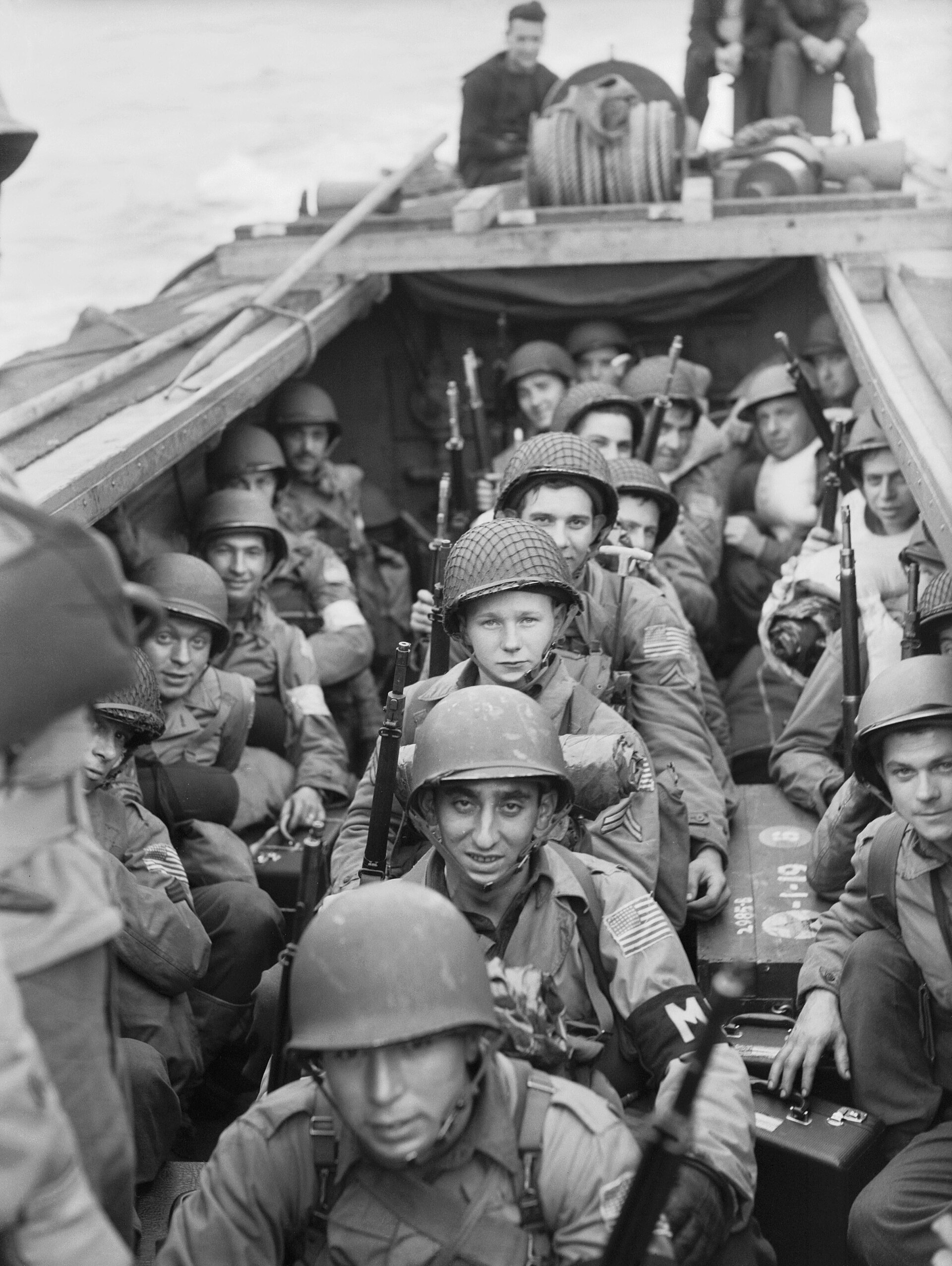
The Western Task Force, under Major General George Patton, sailed directly from the United States and landed on the Atlantic coast of Morocco around Casablanca. The Center Task Force landed around Oran and the Eastern Task Force at Algiers, both carried from Britain. In the early hours of 8 November tens of thousands of troops began to come ashore.
Fighting the French
The Allies hoped the Vichy French forces would not resist. Some did not, but others fought fiercely. Off Casablanca, French warships and the unfinished battleship Jean Bart clashed with the US Navy, and an attempt to rush the harbour at Oran ended in disaster for the two British cutters involved. Admiral François Darlan, the commander of Vichy’s armed forces, happened to be in Algiers, and after two days of negotiations ordered a ceasefire across French North Africa.
Germany responded within hours, flying troops into Tunisia and occupying the rest of France. The race for Tunis that followed would last until May 1943.
Also on 8 November
- 1939A bomb planted by Georg Elser explodes in Munich’s Bürgerbräukeller minutes after Hitler leaves the building.
Sources and further reading
Lead image: American troops in a landing craft heading for the beaches at Oran, November 1942. Hudson, F A (Lt), Royal Navy official photographer, Public domain, via Wikimedia Commons. See our sources and image policy.
 United Kingdom
 United States
 Soviet Union
 Germany
 Japan
 France
 Poland
 South Africa