Western Europe · Air War · United Kingdom vs Germany
Operation Oyster: The Raid on Philips
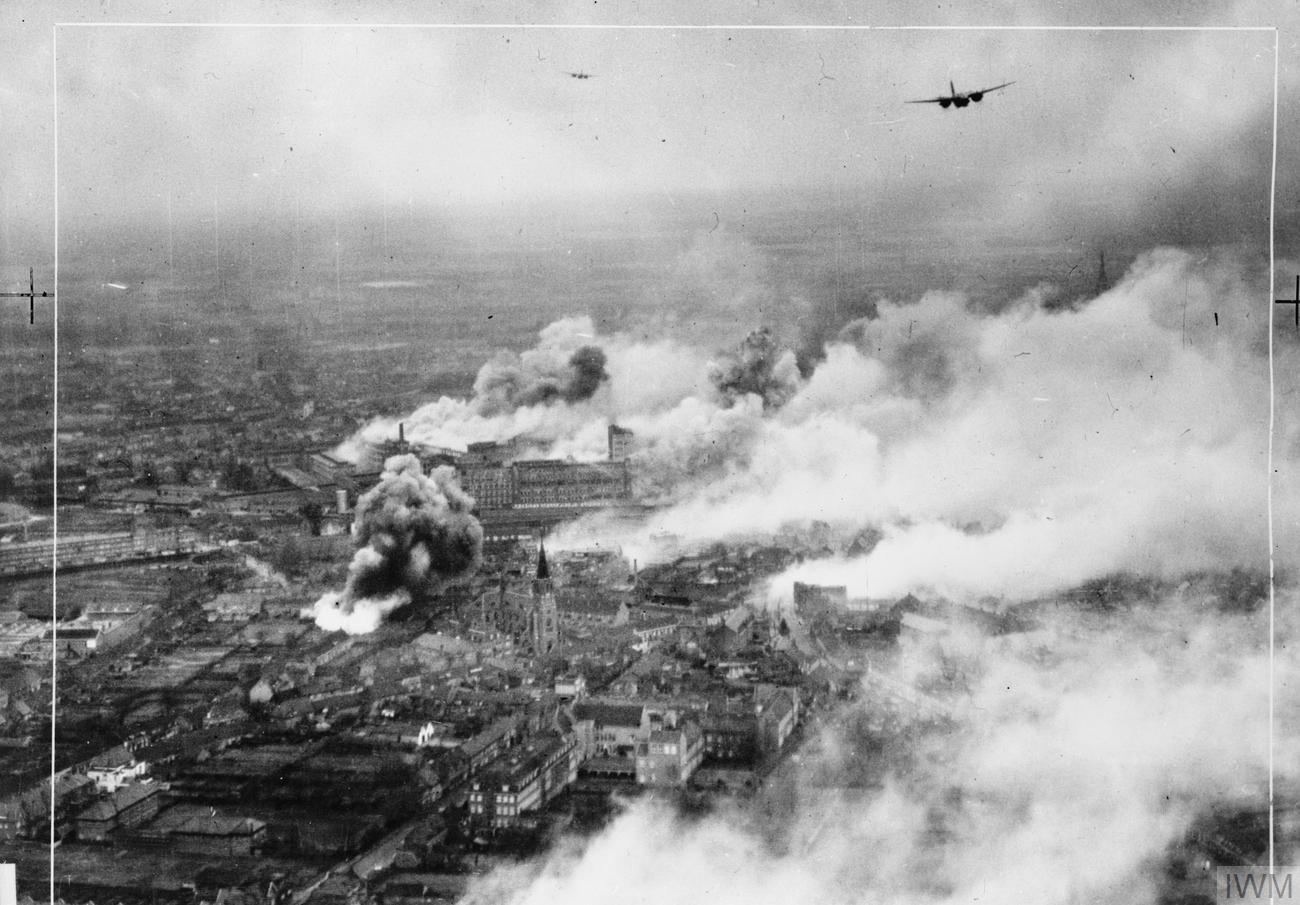
Flying at rooftop height in daylight, RAF light bombers strike the Philips radio and valve works in Eindhoven, which was supplying the German war machine.
- Target
- Philips works, Eindhoven, Netherlands
- Force
- About 93 Venturas, Bostons and Mosquitos of No. 2 Group RAF
- Aircraft lost
- 14
- Aircrew lost
- 62
- Dutch civilians
- About 150 casualties
- War clock
- Day 1,193 of 2,194
The Philips factories in Eindhoven made radio valves and electronic equipment, and under German occupation much of that output went to the German armed forces. Bombing them at night risked hitting the town around them, so No. 2 Group of RAF Bomber Command planned a daylight raid at very low level.
Sunday 6 December
On Sunday 6 December 1942 the bombers came in over the Dutch coast at low altitude: Lockheed Venturas, Douglas Bostons and de Havilland Mosquitos, flying fast and low to stay under the German radar. They struck both the Strijp and Emmasingel plants, and most of the aircraft delivered their bombs, around 60 long tons in all, with high accuracy.
German fighters and flak took their toll. Fourteen aircraft were shot down, nine of them Venturas, and 62 aircrew were lost. Dozens more aircraft came home damaged.
The cost on the ground
Despite the timing, about 150 Dutch civilians were killed or wounded as bombs fell outside the works. Both factory complexes were badly damaged and production stopped; a follow-up raid in March 1943 slowed the recovery, and it took six months to restore output.
Sources and further reading
Lead image: Douglas Bostons fly over the burning Philips works at Eindhoven during Operation Oyster, 6 December 1942. No. 2 Group RAF, Public domain, via Wikimedia Commons. See our sources and image policy.
 United Kingdom
 United States
 Soviet Union
 Germany
 Japan
 France
 Poland
 South Africa