Grand Strategy · Politics · Hungary and Germany
Hungary Joins the Axis
Rewarded with territory taken from its neighbours, Hungary signs the Tripartite Pact, becoming the fourth member of the Axis alliance.
- Country
- Kingdom of Hungary
- Signed
- 20 November 1940
- Signed by
- Prime Minister Pál Teleki
- Regent
- Admiral Miklós Horthy
- Earlier gains
- Southern Slovakia and Ruthenia (1938), northern Transylvania (1940)
- War clock
- Day 447 of 2,194
Hungary had lost two-thirds of its territory after the First World War, and regaining it was the central aim of its politics between the wars. Under the regent, Admiral Miklós Horthy, the country looked to Germany and Italy to undo the post-war settlement, and Hitler was willing to pay for its loyalty.
Rewards from Vienna
The First Vienna Award of November 1938 gave Hungary parts of southern Slovakia and Carpathian Ruthenia, nearly 12,000 square kilometres with almost 870,000 people. The Second Vienna Award of 1940 handed over northern Transylvania from Romania, more than 43,000 square kilometres with 2.5 million inhabitants. Hungary now owed much of its new territory to the Axis powers.
Signing the pact
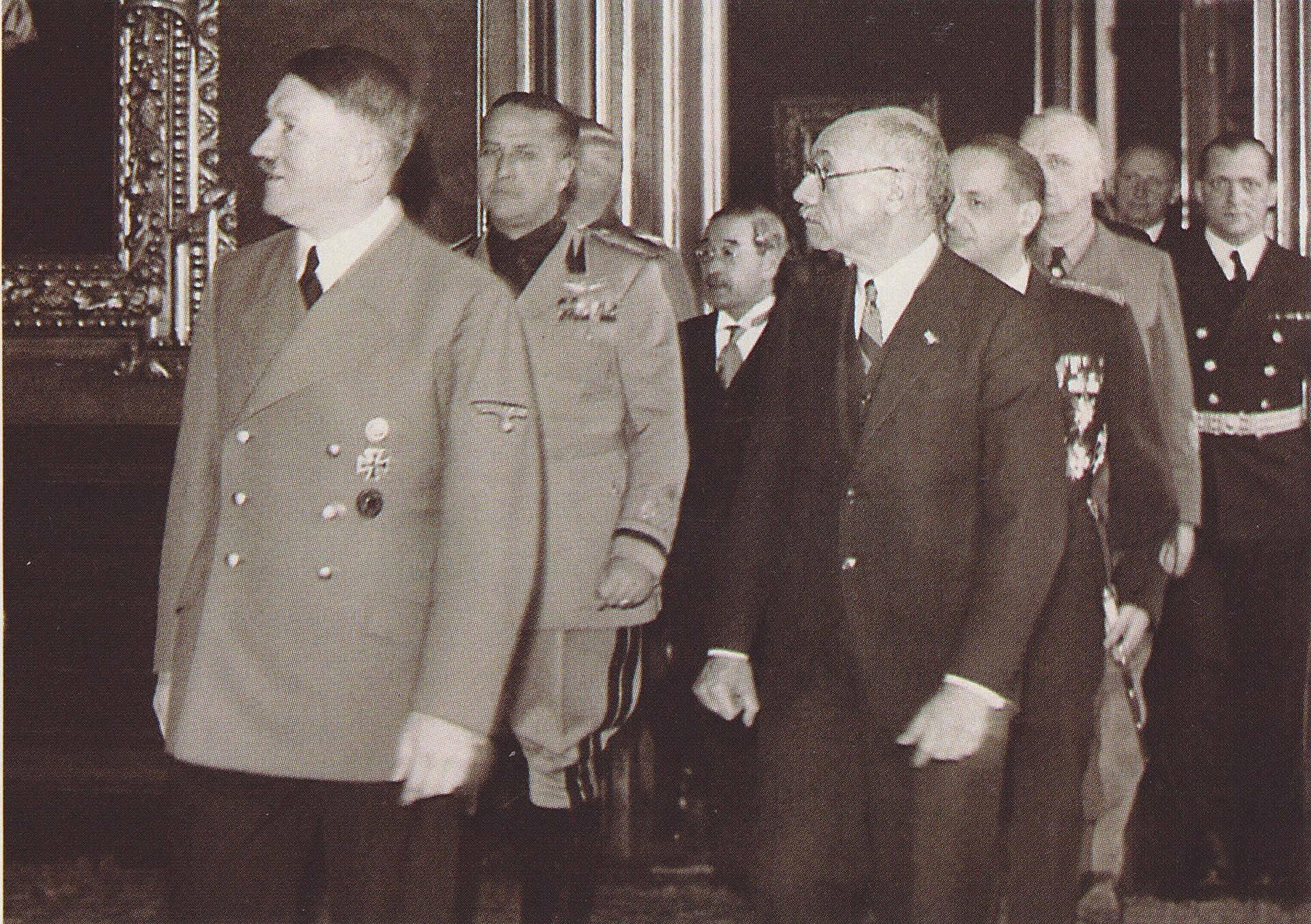
The Tripartite Pact of September 1940 bound Germany, Italy and Japan to help each other against any power that joined the war against them. Under German pressure, Prime Minister Pál Teleki signed Hungary’s accession on 20 November 1940, making it the fourth member of the Axis. Romania followed three days later, and Slovakia the day after that.
Sources and further reading
Lead image: Hungarian Prime Minister Pál Teleki with Hitler at Hungary’s accession to the Tripartite Pact. Unknown author, Public domain, via Wikimedia Commons. See our sources and image policy.
 United Kingdom
 United States
 Soviet Union
 Germany
 Japan
 France
 Poland
 South Africa