Atlantic · War at Sea · Germany vs United States
Operation Drumbeat
A handful of German U-boats arrive off the coast of North America. For months they will sink tankers and freighters within sight of brightly lit seaside towns.
- Location
- East coast of the United States and Canada
- German commander
- Adm Karl Dönitz, commander of U-boats
- First wave
- Five long-range Type IX U-boats
- Known to U-boat crews as
- The second happy time
- War clock
- Day 866 of 2,194
When Germany declared war on the United States in December 1941, Admiral Karl Dönitz saw an opportunity. American coastal shipping was heavy, largely unescorted and unprepared. He could spare only a small number of long-range Type IX submarines for the voyage across the Atlantic, but he expected them to find easy targets.
Paukenschlag
The operation was called Paukenschlag, a drumbeat or roll of the kettledrum. Dönitz set 13 January 1942 as the start date for attacks in American waters. In the early hours of 14 January Reinhard Hardegen’s U-123 sank the Panamanian-registered tanker Norness off Long Island, and the sinkings spread south along the coast towards Florida.
Lit up by the shore
Coastal towns and resorts stayed lit at night, silhouetting ships against the shore for U-boats waiting offshore. Merchant ships sailed alone with their navigation lights on. The US Navy was short of escort vessels and slow to introduce convoys along the coast, partly in the belief that weakly escorted convoys were worse than none.
Sources and further reading
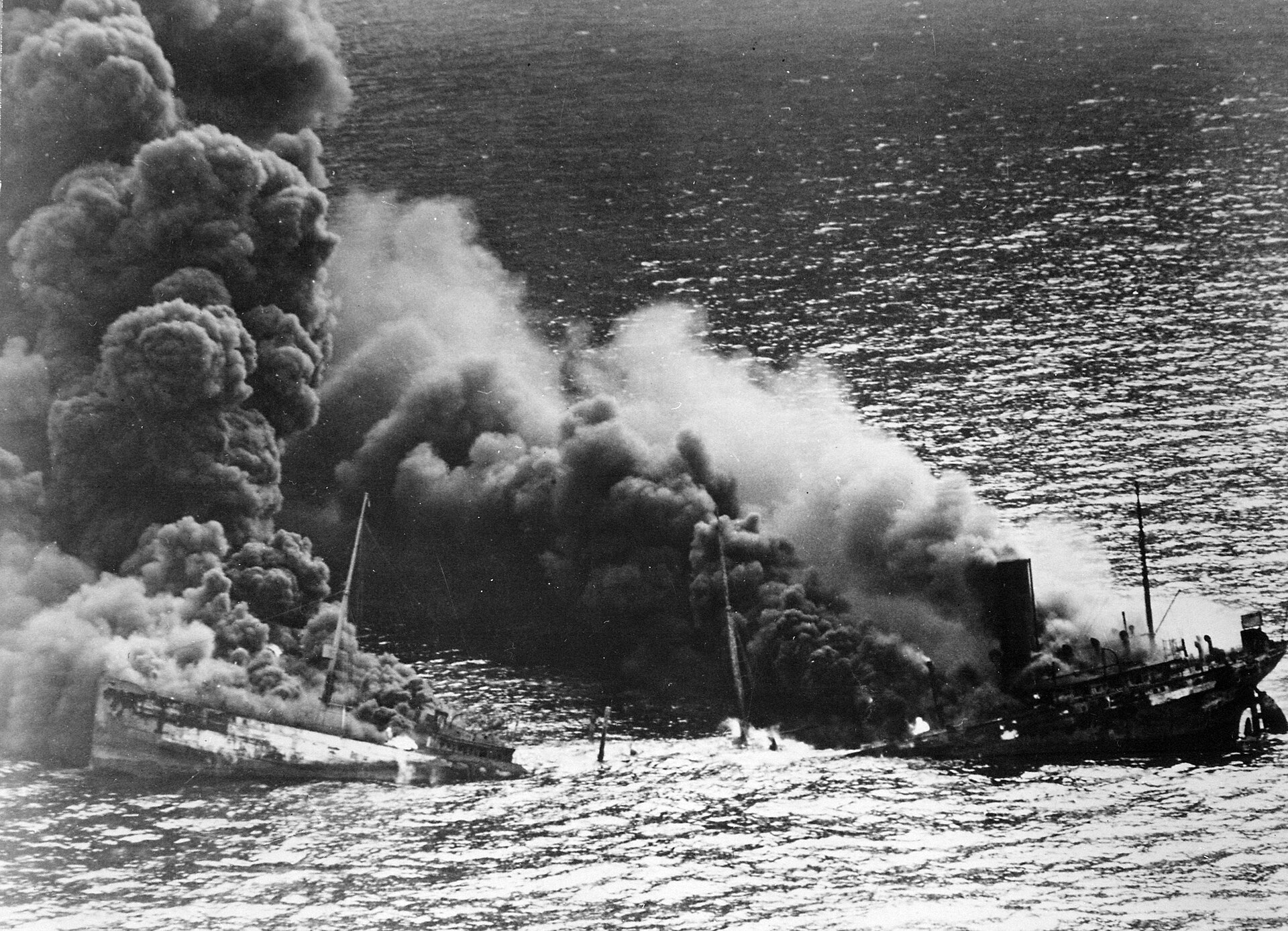
Lead image: An Allied tanker torpedoed off the American coast. US Navy, Public domain, via Wikimedia Commons. See our sources and image policy.
 United Kingdom
 United States
 Soviet Union
 Germany
 Japan
 France
 Poland
 South Africa