Grand Strategy · Leaders and Speeches · United Kingdom
The Death of Neville Chamberlain
Six months after leaving Downing Street, the Prime Minister who declared war on Germany dies of cancer, as the Blitz he did not live to see end rages over London.
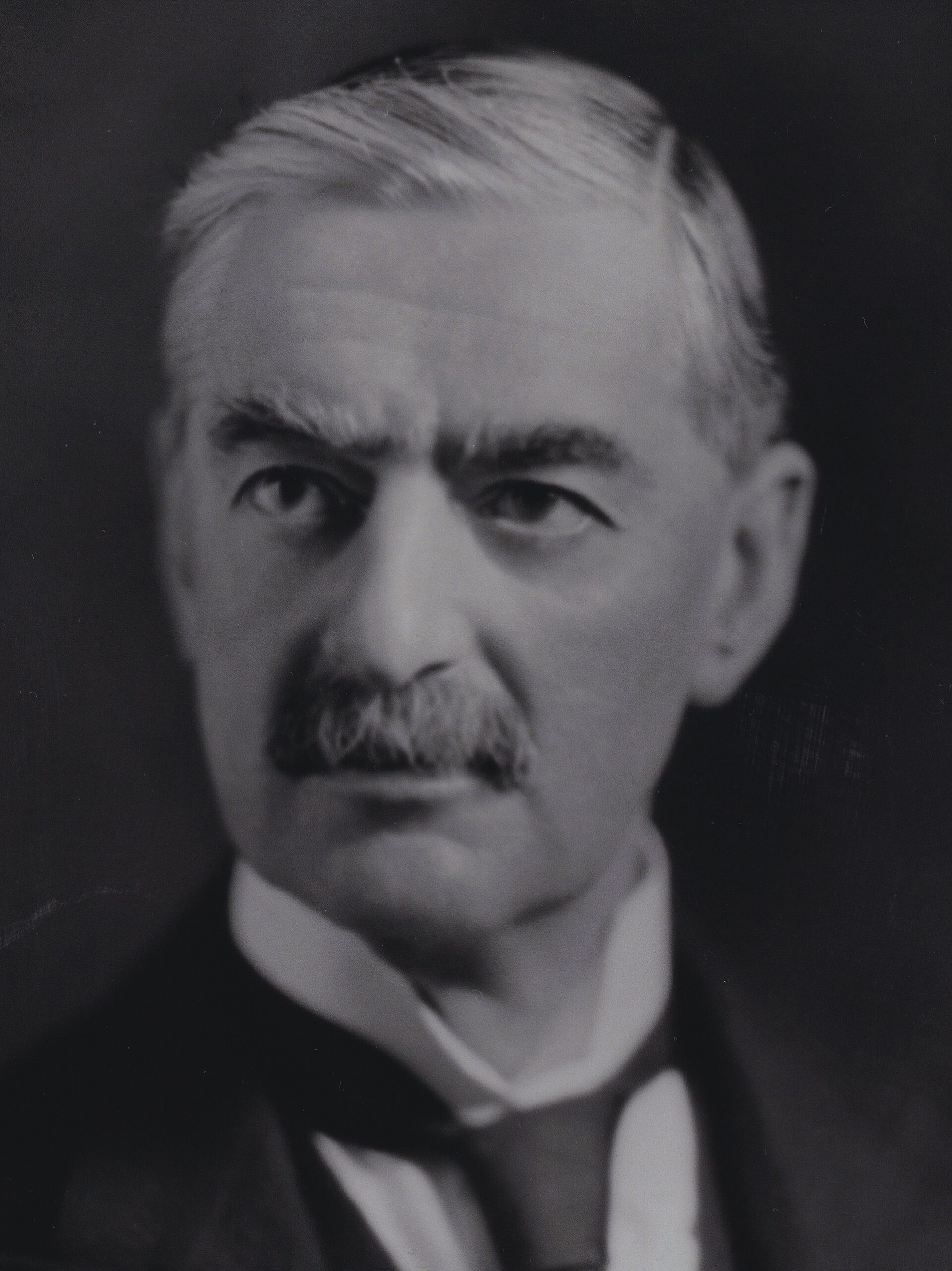
- Died
- 9 November 1940, Heckfield, Hampshire
- Age
- 71
- Prime Minister
- 28 May 1937 to 10 May 1940
- Cause of death
- Bowel cancer
- Funeral
- Westminster Abbey, 14 November 1940
- War clock
- Day 436 of 2,194
Neville Chamberlain’s name will always be tied to the Munich Agreement of 1938 and the policy of appeasement. Yet it was Chamberlain who told the nation by radio on 3 September 1939 that Britain was at war with Germany, and who led the country through the first eight months of the conflict.
From Downing Street to the War Cabinet
The disastrous Norwegian campaign brought him down. After a bruising Commons debate, Chamberlain resigned on 10 May 1940, the day Germany invaded the Low Countries, and Winston Churchill succeeded him. Chamberlain stayed on in the War Cabinet as Lord President of the Council and remained leader of the Conservative Party, and his loyalty helped Churchill through the crisis of May 1940, when some ministers wanted to explore peace terms.
That summer surgeons operated on him and found terminal bowel cancer, a diagnosis they kept from him. He left London for the last time on 19 September and offered his resignation from the government three days later, stepping down as party leader in October.
Churchill’s tribute
Chamberlain died at Heckfield in Hampshire on 9 November 1940, aged 71. Three days later Churchill rose in the House of Commons to pay tribute to the man he had so often opposed.
Neville Chamberlain acted with perfect sincerity according to his lights.Winston Churchill, House of Commons, 12 November 1940
Sources and further reading
Lead image: Neville Chamberlain, Prime Minister of the United Kingdom from 1937 to 1940. Bassano Ltd, Public domain, via Wikimedia Commons. See our sources and image policy.
 United Kingdom
 United States
 Soviet Union
 Germany
 Japan
 France
 Poland
 South Africa