Western Europe · Air War · Germany vs United Kingdom and United States
Operation Bodenplatte
At first light on New Year’s Day, the Luftwaffe throws more than a thousand fighters at Allied airfields in the Low Countries in its last great offensive of the war.
- Targets
- 17 Allied airfields in Belgium, the Netherlands and France
- German aircraft
- 1,035
- First take-offs
- About 08:00, 1 January 1945
- Allied aircraft
- About 305 destroyed and 190 damaged
- German pilots lost
- 143 killed or missing, 70 captured
- War clock
- Day 1,950 of 2,194
By late December 1944 the German offensive in the Ardennes had stalled, and Allied air power was hammering its supply lines. The Luftwaffe planned a single knockout blow: a surprise low-level attack on the forward airfields of the Allied tactical air forces, timed for the morning after New Year’s Eve.
The attack
The Oberkommando der Luftwaffe committed 1,035 Bf 109s and Fw 190s to strike 17 Allied air bases in Belgium, the Netherlands and France, among them Brussels-Evere, Eindhoven, Volkel, Asch and Metz-Frescaty. The first units took off at about 08:00, and the attacks fell over the hours that followed.
Surprise was achieved. On some fields rows of parked aircraft were shot up before they could move; at others, Allied fighters got into the air and fought back. Allied losses came to about 305 aircraft destroyed and 190 damaged, the great majority of them on the ground.
The cost
The price for Germany was far higher. Secrecy had been so tight that some German anti-aircraft units were not told of the operation, and about a quarter of the fighter units lost aircraft to their own guns on the way in. In all the Luftwaffe lost 143 pilots killed or missing, 70 captured and 21 wounded, its heaviest loss on any single day of the war.
Sources and further reading
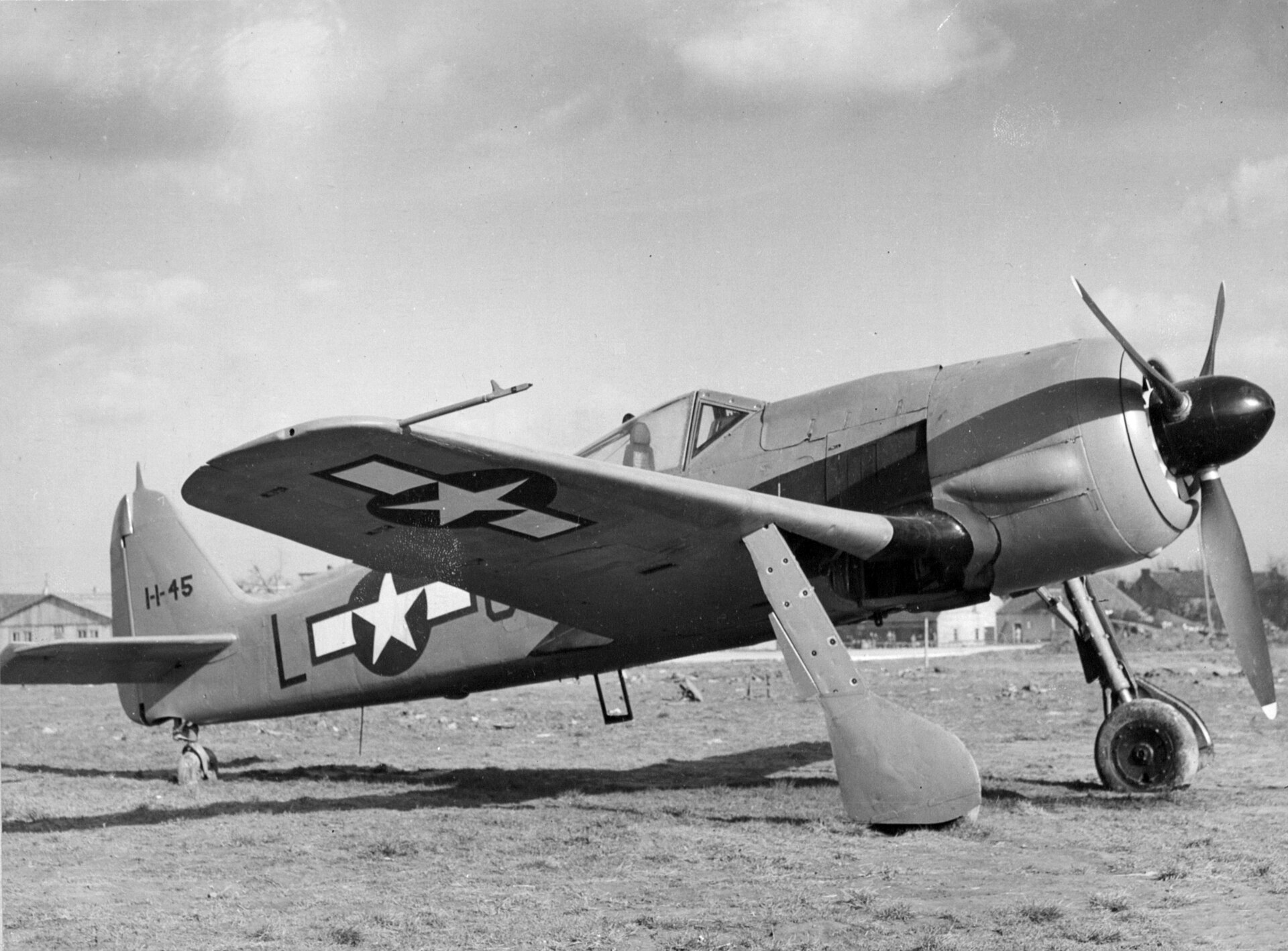
Lead image: A German Fw 190 that crash-landed at Sint-Truiden airfield in Belgium during Operation Bodenplatte. US Army Air Forces, Public domain, via Wikimedia Commons. See our sources and image policy.
 United Kingdom
 United States
 Soviet Union
 Germany
 Japan
 France
 Poland
 South Africa