Pacific · War at Sea · Japan vs Canada
The Shelling of Estevan Point
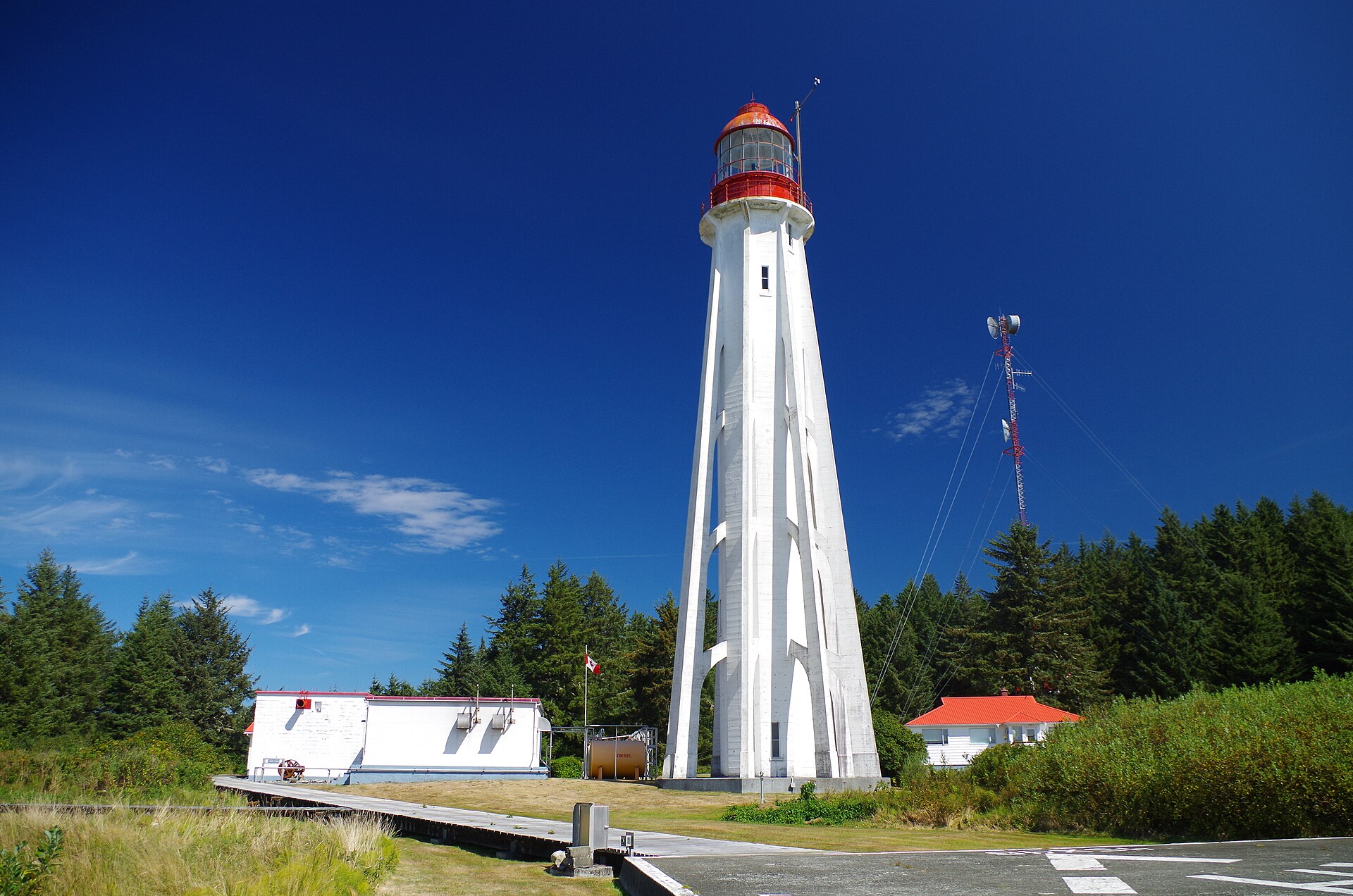
A Japanese submarine surfaces off Vancouver Island and fires on a remote lighthouse. It is the first enemy attack on Canadian soil since the War of 1812.
- Location
- Estevan Point, Vancouver Island, British Columbia
- Attacker
- Submarine I-26
- Casualties
- None
- The next night
- I-25 shells Fort Stevens, Oregon
- War clock
- Day 1,024 of 2,194
In June 1942, as part of the operations around the Aleutians, Japanese submarines patrolled off the west coast of North America. On 20 June the submarine I-26 had already sunk a freighter near Cape Flattery.
The attack
On the evening of 20 June 1942, I-26 surfaced off Estevan Point on the west coast of Vancouver Island and fired its deck gun at the lighthouse and wireless station. Around 25 shells were fired. None hit the lighthouse, and no one was hurt. The keepers turned out the light, and the submarine slipped away.
Alarm on the coast
The next night another submarine, I-25, shelled Fort Stevens at the mouth of the Columbia River in Oregon. The attacks caused alarm along the Pacific coast. In British Columbia, lighthouses were darkened and coastal defences strengthened.
Also on 20 June
- 1943Racial violence breaks out in Detroit, a key war production city; federal troops are sent in to restore order after 34 deaths.
Sources and further reading
Lead image: Estevan Point lighthouse on Vancouver Island. Tim Gage, CC BY-SA 2.0 (licence), via Wikimedia Commons. See our sources and image policy.
 United Kingdom
 United States
 Soviet Union
 Germany
 Japan
 France
 Poland
 South Africa