Grand Strategy · Diplomacy · United States
The Lend-Lease Act
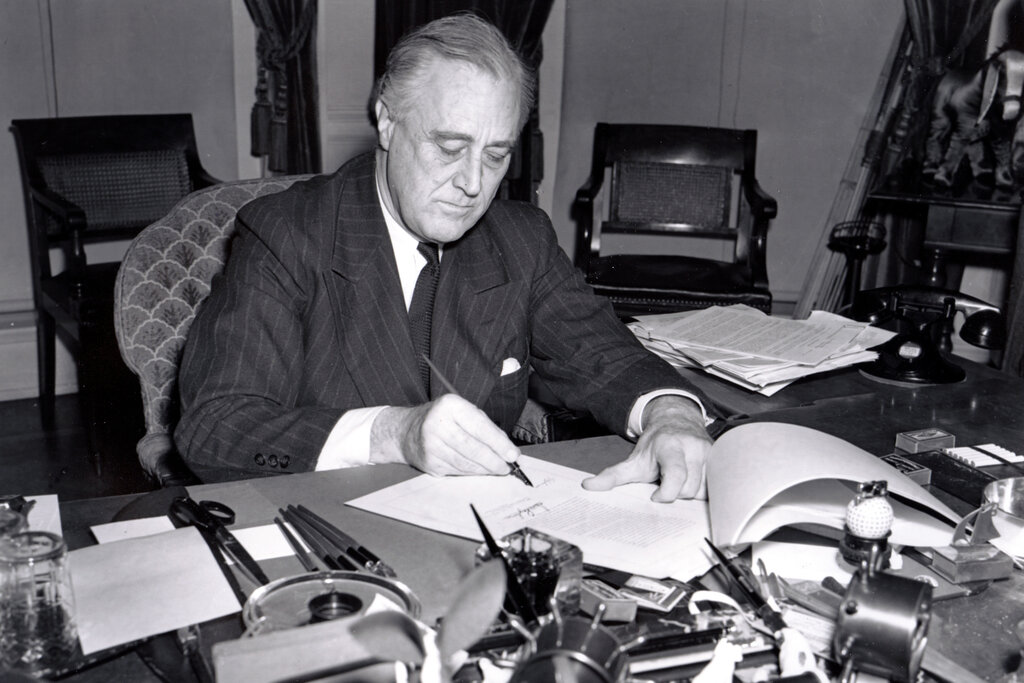
Roosevelt signs into law a bill allowing the United States to send weapons and supplies to nations fighting the Axis without immediate payment. America becomes the arsenal of democracy.
- Official title
- An Act to Further Promote the Defense of the United States
- House bill number
- H.R. 1776
- Signed
- 11 March 1941
- Total aid
- Around 50 billion US dollars by 1945
- War clock
- Day 558 of 2,194
By the end of 1940 Britain had almost exhausted its ability to pay for American arms. Under the existing cash-and-carry rules, it had to pay in full. Roosevelt proposed instead that the United States lend or lease equipment, comparing it to lending a garden hose to a neighbour whose house was on fire.
The debate
The bill was introduced in January 1941 and fiercely debated. Isolationists argued it would drag the United States into war. Supporters argued that helping Britain was the best way to keep America safe. Congress passed it by clear majorities, and Roosevelt signed it on 11 March 1941.
Supplies for the world
Aid began flowing at once. After Germany invaded the Soviet Union in June 1941, Lend-Lease was extended to it, supplying trucks, aircraft, food, rail equipment and much else. China, Free France and many other countries also received aid. Allies supplied goods and services to American forces in return, known as reverse Lend-Lease.
Sources and further reading
Lead image: President Franklin D. Roosevelt in 1941. Library of Congress, Public domain, via Wikimedia Commons. See our sources and image policy.
 United Kingdom
 United States
 Soviet Union
 Germany
 Japan
 France
 Poland
 South Africa