Pacific · Land Battles · Japan vs the Netherlands
The Invasion of the Dutch East Indies
Japan strikes at the oil of the Dutch colonies, landing on Tarakan off Borneo and dropping paratroopers on Celebes. The resources it went to war for are now within reach.
- Location
- Tarakan (Borneo) and Manado (Celebes)
- Belligerents
- Japan vs the Netherlands
- Prize
- Oil fields and refineries
- Outcome
- Dutch garrisons overrun within days
- War clock
- Day 864 of 2,194
Japan’s decision to go to war in 1941 was driven above all by oil. The American embargo had cut off most of its supply, and the nearest large sources lay in the Dutch East Indies, today Indonesia. The Netherlands, occupied by Germany since 1940, declared war on Japan after Pearl Harbor, and its colonial army and navy prepared to defend the islands.
Tarakan and Manado
On 11 January 1942 Japanese troops landed on Tarakan, a small island off the coast of Borneo with productive oil wells. The Dutch garrison destroyed the oil installations before surrendering the next day. The same day, Japanese forces landed at Manado on the northern tip of Celebes. Japanese naval paratroopers were dropped on the nearby airfield in their first airborne operation of the war.
The road to Java
These were the first steps in a campaign that moved rapidly south through Borneo, Celebes, Sumatra and the islands towards Java. The Allied commands in the region, combined into ABDA, could not stop it.
Sources and further reading
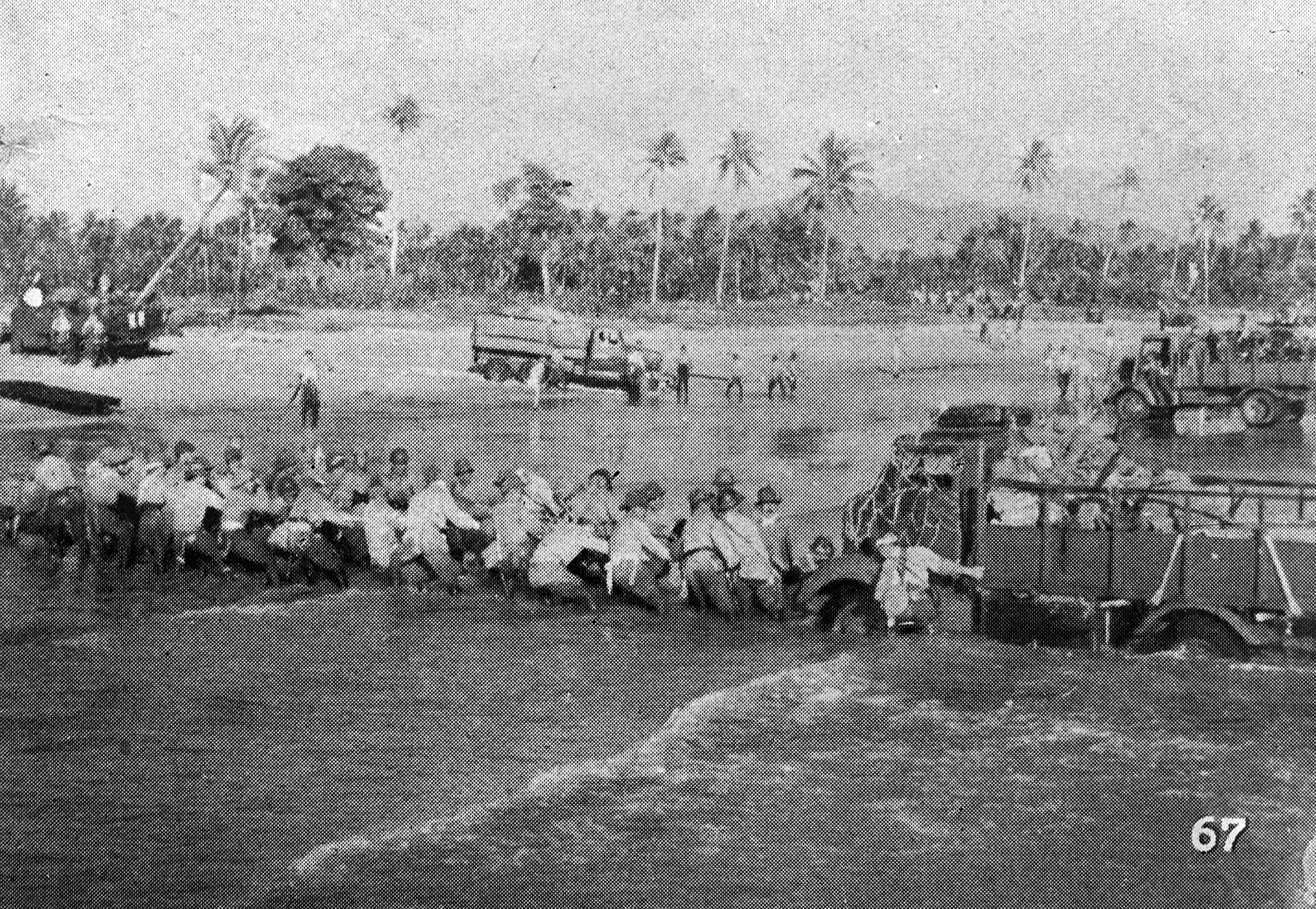
Lead image: Japanese troops during the invasion of the Dutch East Indies, 1942. Unknown photographer, Tropenmuseum collection, CC BY-SA 3.0 (licence), via Wikimedia Commons. See our sources and image policy.
 United Kingdom
 United States
 Soviet Union
 Germany
 Japan
 France
 Poland
 South Africa