Mediterranean · War at Sea · Italy vs United Kingdom
The Raid on Alexandria
Six Italian frogmen riding human torpedoes slip into Alexandria harbour and sink two British battleships where they lie at anchor.
- Location
- Alexandria harbour, Egypt
- Attackers
- Six frogmen of the Decima MAS, from the submarine Scirè
- Damaged
- HMS Queen Elizabeth, HMS Valiant and a tanker
- Result
- Both battleships out of action for months
- War clock
- Day 841 of 2,194
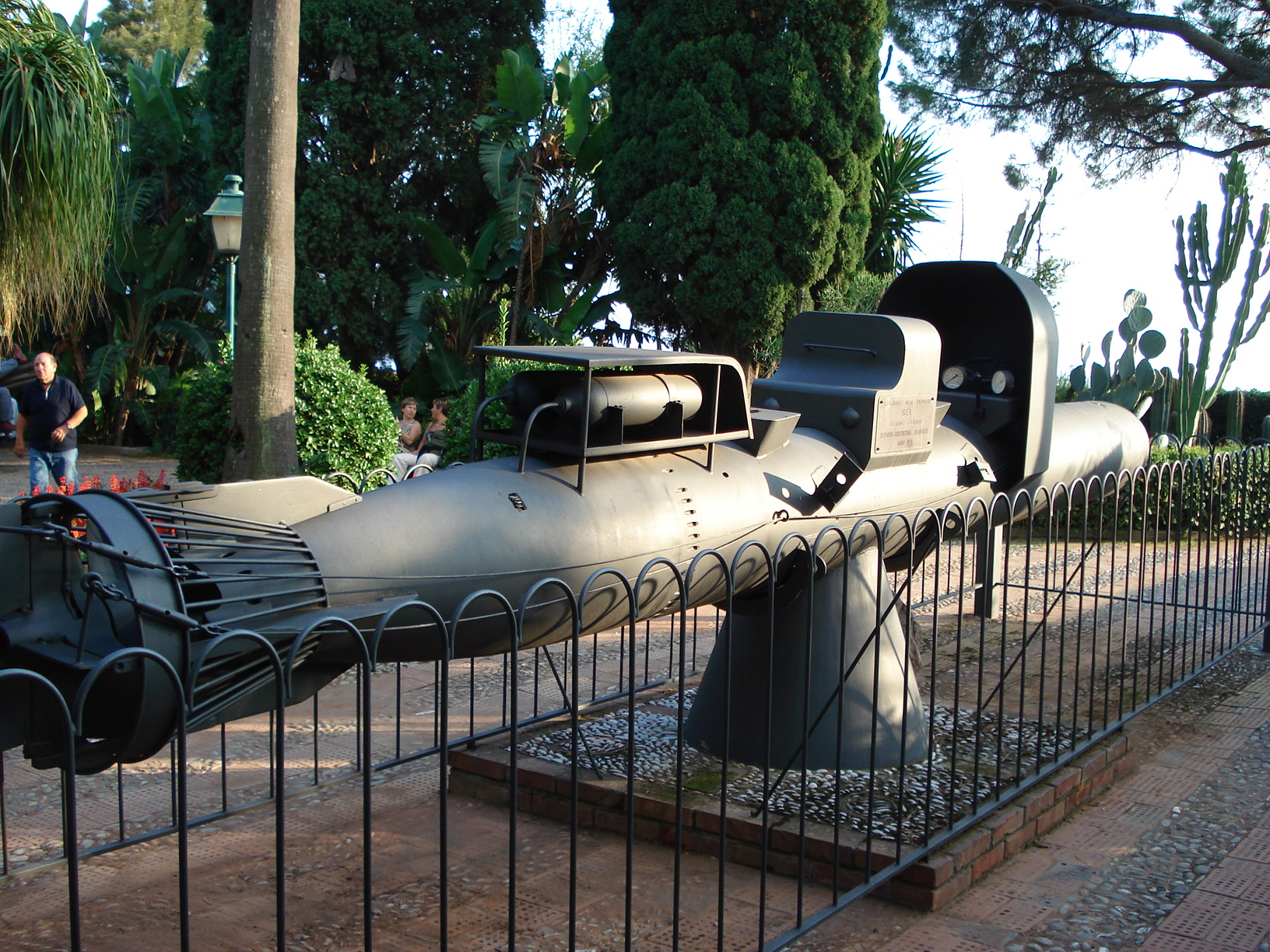
Italy’s navy had developed a remarkable secret weapon: the slow-running torpedo, a small electric craft ridden by two divers in breathing sets, nicknamed the maiale, or pig. The crew steered it into an enemy harbour, detached its explosive warhead and fixed it beneath a ship’s hull.
Into the harbour
On the night of 18 to 19 December 1941, the submarine Scirè, commanded by Prince Junio Valerio Borghese, released three human torpedoes off Alexandria, the main base of the British Mediterranean Fleet. By chance, the harbour boom was opened to let British destroyers in, and the Italian crews slipped through behind them.
Lieutenant Luigi Durand de la Penne and his partner reached the battleship Valiant. When their craft broke down, de la Penne dragged the warhead along the harbour floor and set it beneath the ship. The other teams placed charges under Queen Elizabeth and a large tanker. All six men were captured. De la Penne and his partner were held aboard Valiant itself, and shortly before the charges were due to explode he warned the captain to get his crew out.
Sitting on the bottom
The explosions holed both battleships, which settled on the shallow harbour floor. Because they sat upright, the British kept up appearances, and Italian intelligence did not at first realise the extent of the damage. Coming weeks after the losses of Barham, Prince of Wales and Repulse, it left the Royal Navy without an operational battleship in the eastern Mediterranean.
Also on 19 December
- 1941Hitler dismisses the army’s commander-in-chief, Walther von Brauchitsch, and takes personal command of the German army.
Sources and further reading
Lead image: An Italian human torpedo of the type used at Alexandria, now on display in Taormina. Giovanni Dall’Orto, Attribution, via Wikimedia Commons. See our sources and image policy.
 United Kingdom
 United States
 Soviet Union
 Germany
 Japan
 France
 Poland
 South Africa