China, Burma and India · Air War · United States and China vs Japan
The Flying Tigers Strike
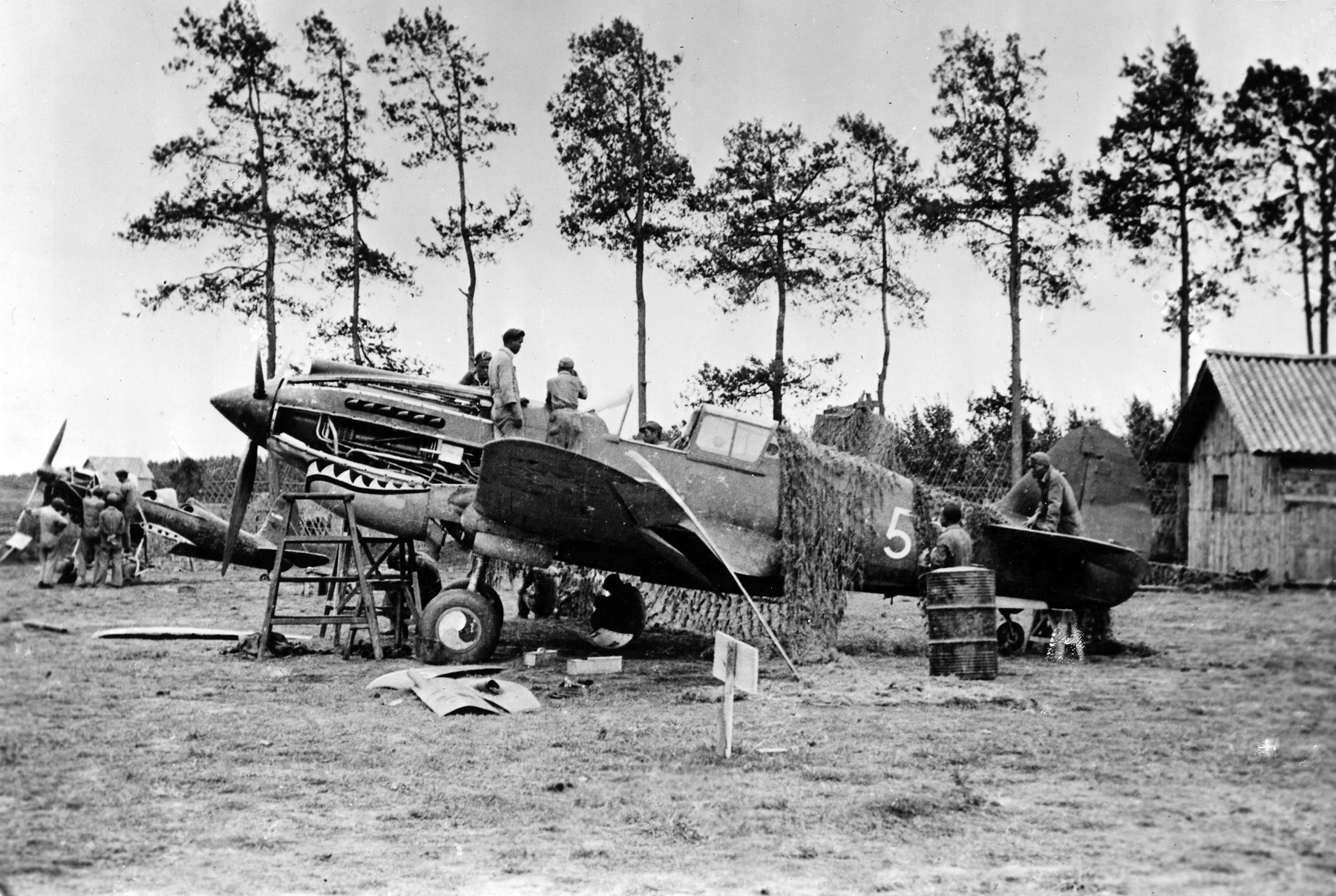
Shark-mouthed P-40 fighters of the American Volunteer Group intercept a Japanese bombing raid over Kunming, their first combat in defence of China.
- Location
- Kunming, Yunnan, China
- Unit
- 1st American Volunteer Group (Flying Tigers)
- Commander
- Claire L. Chennault
- Result
- Japanese raid broken up; no AVG pilots lost
- War clock
- Day 842 of 2,194
In 1941, before the United States entered the war, China’s government recruited American pilots and ground crew to defend China against Japanese air raids. With quiet approval from Washington, around 100 pilots resigned from the US armed forces and signed up as civilian volunteers. Their leader was Claire Chennault, a retired US Army Air Corps officer who had advised the Chinese air force since 1937.
Training in Burma
The American Volunteer Group trained in Burma on Curtiss P-40 fighters, which they painted with shark’s-mouth noses. Chennault drilled his pilots in tactics suited to the rugged P-40 against nimbler Japanese fighters: dive, strike and climb away rather than dogfight.
20 December 1941
Two weeks after Pearl Harbor, part of the group moved to Kunming, the Chinese end of the Burma Road, which had been suffering regular Japanese bombing raids. On 20 December a warning network reported a formation of Japanese bombers heading for the city. The P-40s intercepted them, shot down several and sent the survivors fleeing. No American pilots were lost. Newspapers at home, desperate for good news, made the Flying Tigers famous.
The AVG went on to fight in the defence of Rangoon and over Burma and China until July 1942, when it was absorbed into the US Army Air Forces.
Also on 20 December
- 1941Japanese troops land on Mindanao in the southern Philippines.
Sources and further reading
Lead image: A Flying Tigers P-40 fighter at Kunming, China. USAF, Public domain, via Wikimedia Commons. See our sources and image policy.
 United Kingdom
 United States
 Soviet Union
 Germany
 Japan
 France
 Poland
 South Africa