Grand Strategy · Diplomacy · United States and United Kingdom
The Arcadia Conference Opens
Two weeks after Pearl Harbor, Churchill arrives in Washington to plan a joint war with Roosevelt. Their first decision is the most important of all: Germany first.
- Location
- Washington, D.C.
- Dates
- 22 December 1941 to 14 January 1942
- Leaders
- Franklin D. Roosevelt and Winston Churchill
- Key decisions
- Europe first; Combined Chiefs of Staff; ABDA Command
- Also agreed
- Declaration by United Nations, 1 January 1942
- War clock
- Day 844 of 2,194
Within days of Pearl Harbor, Churchill crossed the Atlantic aboard the battleship Duke of York. He feared that an America enraged by Japan might turn its full strength against the Pacific and leave Britain to face Germany alone. On 22 December 1941 he arrived in Washington, where he would stay for more than three weeks.
Germany first
Meeting with Roosevelt and their military chiefs, among them General George Marshall, Admiral Ernest King, Field Marshal Sir John Dill and Admiral Sir Dudley Pound, Churchill found his fears unfounded. The Americans confirmed the strategy their staffs had discussed earlier in 1941: Germany, the more dangerous enemy, would be defeated first, while the Allies held Japan in check.
A joint machine for war
The conference set up the Combined Chiefs of Staff, based in Washington, to direct British and American military strategy together. In the Far East it created the American-British-Dutch-Australian Command, ABDA, which soon collapsed under the Japanese onslaught. The leaders also agreed the Declaration by United Nations, signed on 1 January 1942, committing the Allies to make no separate peace.
Sources and further reading
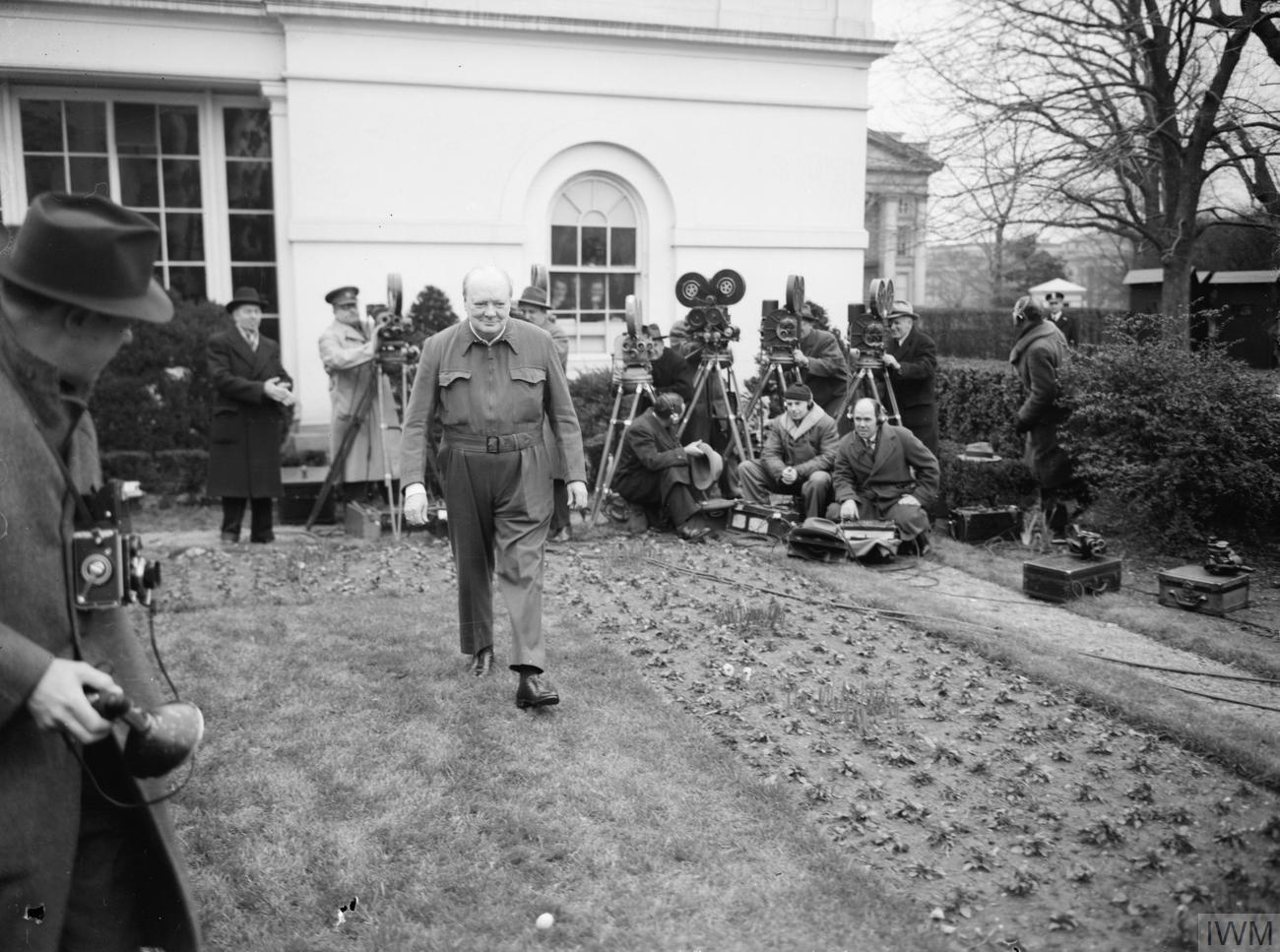
Lead image: Winston Churchill in Washington during his visit to America, winter 1941 to 1942. Royal Navy official photographer, Ware, C J, Public domain, via Wikimedia Commons. See our sources and image policy.
 United Kingdom
 United States
 Soviet Union
 Germany
 Japan
 France
 Poland
 South Africa