Mediterranean · War at Sea · United States and United Kingdom vs Germany
The Sinking of HMT Rohna
Off the coast of Algeria, a German radio-guided glide bomb strikes a British troopship carrying 2,000 American soldiers. More than 1,000 of them die in a disaster kept secret for decades.
- Location
- Off Bougie (now Béjaïa), Algeria
- Convoy
- KMF 26
- Weapon
- Henschel Hs 293 glide bomb from an He 177 bomber
- Killed
- 1,138, including 1,015 US troops
- Survivors landed
- 819 at Philippeville
- War clock
- Day 1,548 of 2,194
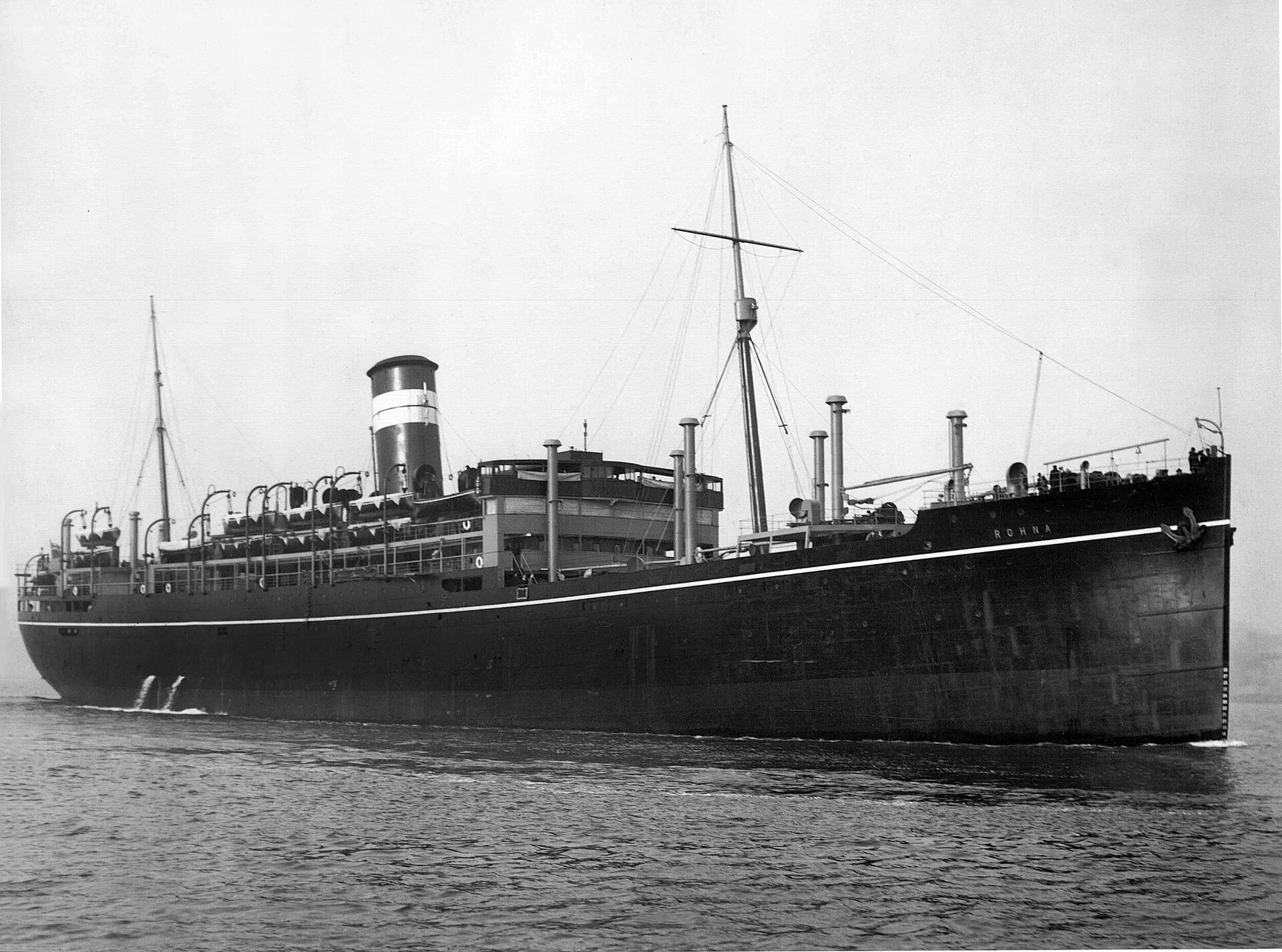
HMT Rohna was a British India liner pressed into service as a troopship. On 25 November 1943 she sailed from Oran in Algeria carrying about 2,000 American soldiers and joined Convoy KMF 26, bound from Britain for Alexandria.
The glider bomb
Late in the afternoon of 26 November, off Bougie on the Algerian coast, about 14 German He 177 bombers, escorted by Ju 88s, attacked the convoy. They carried the Henschel Hs 293, a rocket-boosted glide bomb steered by radio from the aircraft. At about 17:15 one of them, released by the pilot Hans Dochtermann, struck Rohna, which was crowded with troops.
Night in the water
Rohna sank as darkness fell. Many lifeboats could not be launched, and men jumped into a rough sea. The minesweeper USS Pioneer picked up more than 600 survivors, and other ships joined the rescue, which went on until 02:15 the next morning. In all 1,138 men died: 1,015 American soldiers and more than 120 of the ship’s crew, with 35 more Americans dying later of their wounds.
Sources and further reading
Lead image: The troopship HMT Rohna. Unknown author, Public domain, via Wikimedia Commons. See our sources and image policy.
 United Kingdom
 United States
 Soviet Union
 Germany
 Japan
 France
 Poland
 South Africa