Eastern Front · Land Battles · Soviet Union vs Germany
Stalingrad Falls Silent
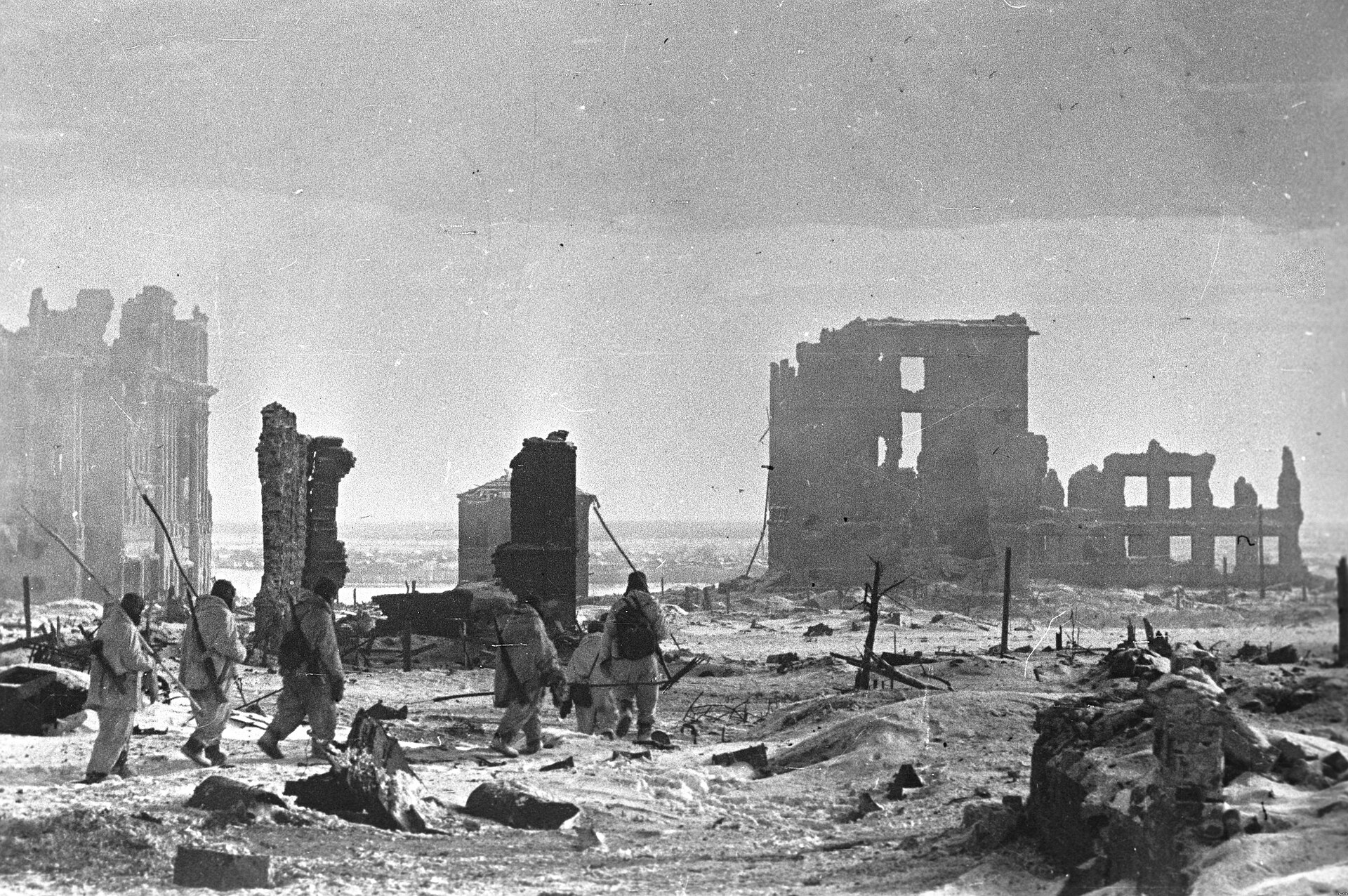
The last German troops in the northern ruins of Stalingrad lay down their arms. After more than five months, one of the most destructive battles in history is over.
- Location
- Stalingrad (now Volgograd), Soviet Union
- Battle dates
- August 1942 to 2 February 1943
- Final surrender
- German XI Corps under Gen Karl Strecker
- Axis armies destroyed
- German Sixth Army; Romanian, Italian and Hungarian armies badly mauled
- War clock
- Day 1,251 of 2,194
Two days after Field Marshal Paulus was taken prisoner in the southern pocket, the troops of General Karl Strecker’s XI Corps still held out in the factory district in the north of the city. Short of food, ammunition and medical care, they were overwhelmed by Soviet artillery and infantry. On the morning of 2 February 1943 they surrendered, and the fighting at Stalingrad came to an end.
From the steppe to the Volga
The battle had begun in the summer of 1942, when the German army drove towards the Volga and the oil of the Caucasus. In late August a massive air raid set much of Stalingrad ablaze. The Soviet 62nd Army under Vasily Chuikov clung to a narrow strip along the river, fighting for every building, factory and cellar. Strongpoints such as Pavlov’s House became famous.
The trap
In November 1942 Operation Uranus smashed the Romanian armies on the flanks and encircled the Sixth Army. Relief failed, the airlift failed, and the trapped army was slowly destroyed. Germany declared a period of national mourning when the news was announced.
Sources and further reading
Lead image: Soviet ZiS-3 field gun crew firing in Stalingrad. Unknown Soviet photographer, Public domain, via Wikimedia Commons. See our sources and image policy.
 United Kingdom
 United States
 Soviet Union
 Germany
 Japan
 France
 Poland
 South Africa