Western Europe · Air War · United Kingdom vs Germany
Bomber Command’s Battle of Berlin Begins
Hundreds of Lancasters head for the German capital, opening a winter offensive that Arthur Harris believes can wreck Berlin from end to end and cost Germany the war.
- Target
- Berlin, Germany
- First raid
- Night of 18 to 19 November 1943, 440 Lancasters
- First raid losses
- 9 Lancasters
- Campaign
- 18 November 1943 to 31 March 1944, 16 major raids on Berlin
- Bomber Command losses
- 1,117 aircraft and 2,690 aircrew killed in the whole campaign
- War clock
- Day 1,540 of 2,194
By the autumn of 1943 RAF Bomber Command had devastated Hamburg and battered the Ruhr. Its commander, Air Chief Marshal Sir Arthur Harris, now turned to the biggest prize of all. He believed he could wreck Berlin from end to end if the American air forces joined in, at a cost of 400 to 500 aircraft, and that it would cost Germany the war.
The first raid
On the night of 18 to 19 November 1943, 440 Lancasters set out for Berlin, with four Mosquitos dropping spoof flares to mislead the German night fighters. The city was under cloud and the damage was not severe. Nine Lancasters were lost, with 43 crew killed and 20 taken prisoner; four more men evaded capture.
Over the following months the Main Force attacked Berlin sixteen times, flying long routes over Germany through the worst of the winter weather. The capital was a huge, spread-out target, often hidden by cloud and defended by searchlights, flak and increasingly deadly night fighters.
A costly winter
Between 18 November 1943 and 31 March 1944, Bomber Command flew 24,449 night sorties and lost 1,117 aircraft. Some 2,690 aircrew were killed and about 1,000 taken prisoner. In Berlin, thousands of people were killed and hundreds of thousands made homeless.
Sources and further reading
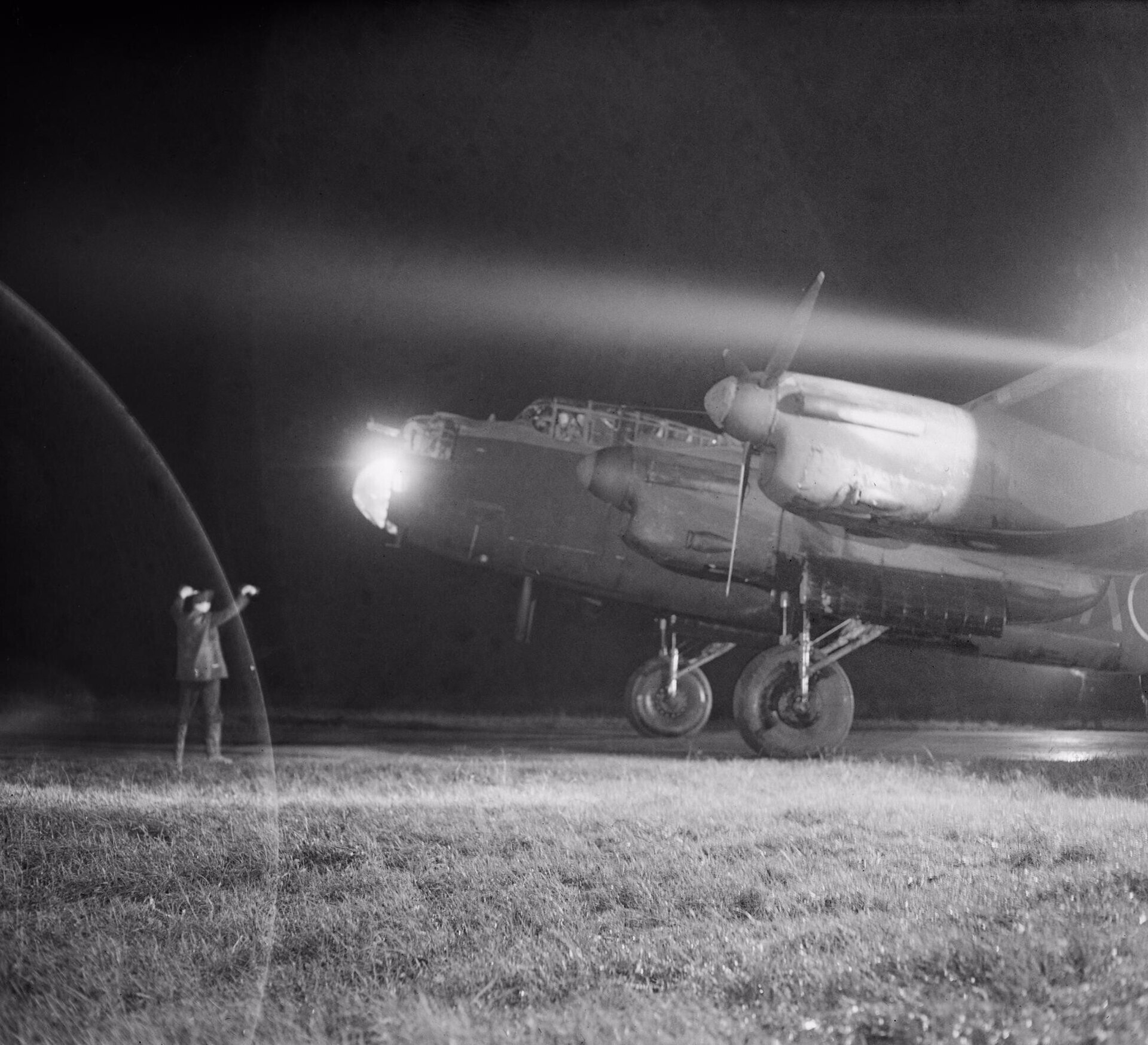
Lead image: A Lancaster of No. 49 Squadron RAF is guided to dispersal after a raid on Berlin, 22 November 1943. Miller F/O, Royal Air Force official photographer, Public domain, via Wikimedia Commons. See our sources and image policy.
 United Kingdom
 United States
 Soviet Union
 Germany
 Japan
 France
 Poland
 South Africa