Grand Strategy · Diplomacy · United States and Latin America
The Americas Meet at Rio
Foreign ministers of the 21 American republics gather in Rio de Janeiro to decide how the hemisphere will answer Pearl Harbor.
- Meeting
- Third Meeting of Foreign Ministers of the American Republics
- Dates
- 15 to 28 January 1942
- Host
- Rio de Janeiro, Brazil
- Outcome
- A recommendation to break relations with the Axis
- Holdouts
- Argentina and Chile
- War clock
- Day 868 of 2,194
The Japanese attack on Pearl Harbor brought the United States into the war and put a question to the whole hemisphere: would the Latin American republics stand with Washington? Several Central American and Caribbean states had already declared war on the Axis, and Mexico, Colombia and Venezuela had broken off relations.
The conference
The foreign ministers of the 21 American republics met in Rio de Janeiro from 15 to 28 January 1942, hosted by Brazil’s foreign minister, Oswaldo Aranha. The United States, represented by Under Secretary of State Sumner Welles, wanted every republic to break with Germany, Italy and Japan together.
Argentina and Chile would not be bound. The compromise, adopted unanimously, was a resolution that recommended a break in diplomatic and economic relations with the Axis rather than requiring one.
The break
Most governments acted at once. Brazil, Uruguay, Peru, Paraguay, Ecuador and Bolivia severed relations with the Axis during or soon after the conference, leaving Argentina and Chile as the only holdouts. Chile broke with the Axis in January 1943 and Argentina in January 1944.
Sources and further reading
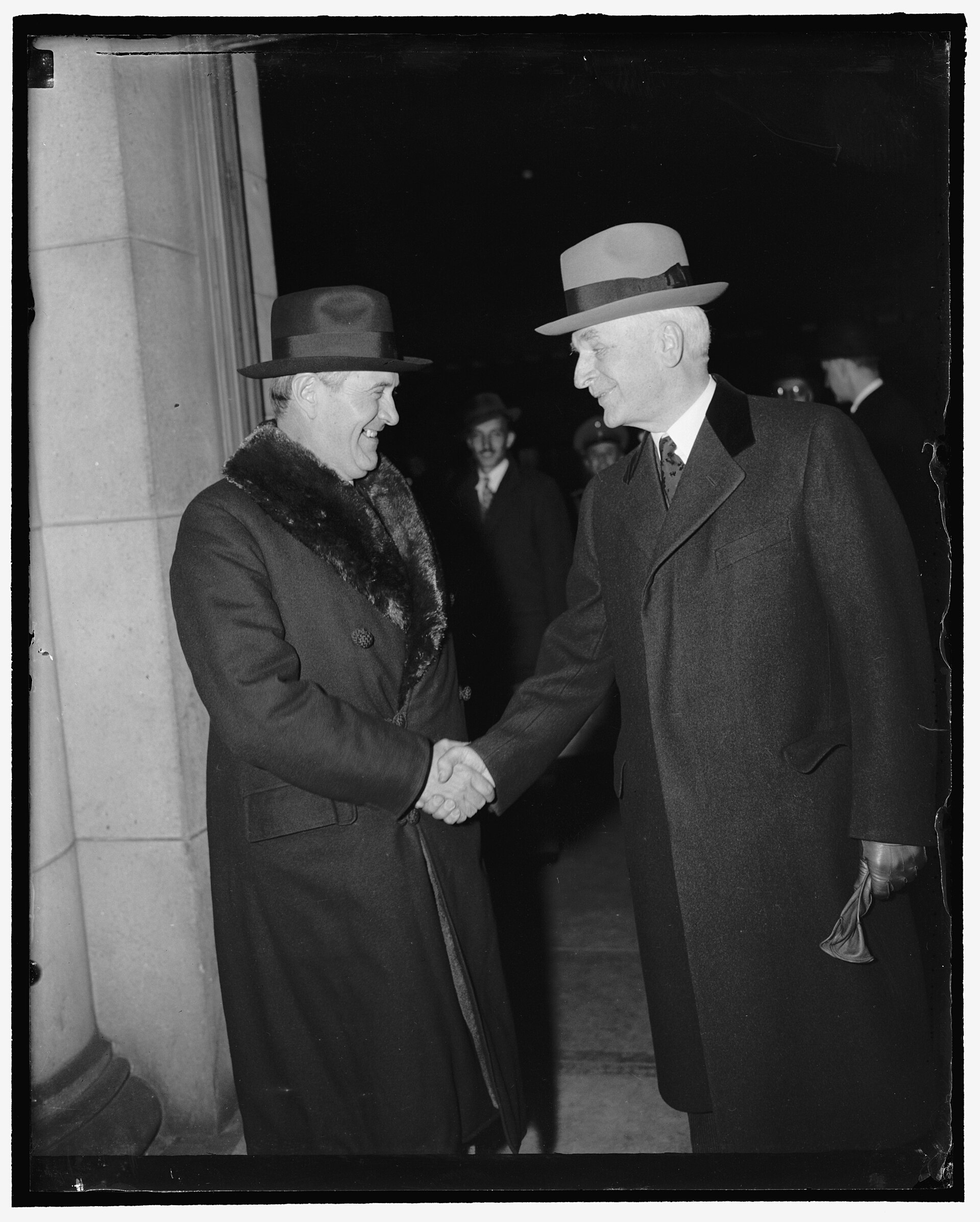
Lead image: Brazil’s foreign minister Oswaldo Aranha, host of the Rio conference, with Cordell Hull in Washington in 1939. Harris & Ewing, photographer, Public domain, via Wikimedia Commons. See our sources and image policy.
 United Kingdom
 United States
 Soviet Union
 Germany
 Japan
 France
 Poland
 South Africa