Western Europe · Air War · Home Front
The Coventry Blitz
Guided by radio beams and lit by a full moon, around 500 German bombers devastate the heart of an English industrial city, and give the war a new word for total destruction.
- Location
- Coventry, England
- Belligerents
- Germany vs United Kingdom
- German codename
- Operation Moonlight Sonata (Mondscheinsonate)
- Toll
- About 568 killed; St Michael’s Cathedral destroyed
- War clock
- Day 441 of 2,194
Coventry was a medieval city with a modern purpose. By 1940 its factories built aircraft engines, vehicles, machine tools and components for the RAF, many of them in small workshops tucked among terraced houses close to the old centre. That mixture made it a prime target, and made what happened on the night of 14 November so devastating for civilians.
Moonlight Sonata
At around 19:20 the first aircraft of Kampfgruppe 100 arrived overhead. This specialist pathfinder unit flew along a radio beam system known as X-Gerät and marked the city with incendiaries. Behind them came wave after wave of bombers, around 500 in all, dropping roughly 500 tonnes of high explosive along with tens of thousands of incendiary bombs. The raid went on for some eleven hours.
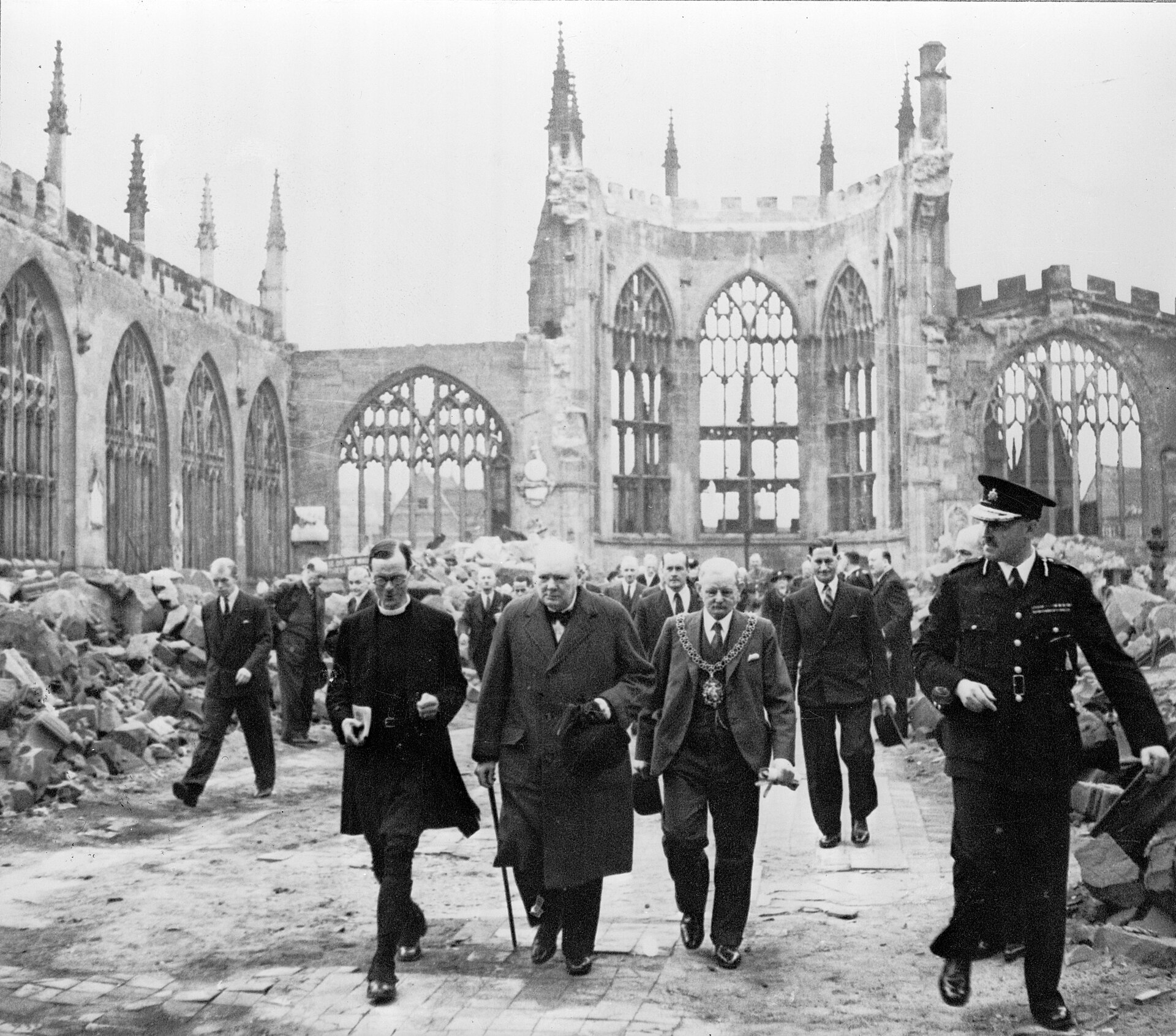
Fires merged across the centre, and water mains broken by high explosive left firefighters without pressure. The medieval Cathedral Church of St Michael burned to a shell, leaving only its tower, spire and outer walls standing. More than 4,000 homes were destroyed and around two-thirds of the city’s buildings damaged. The official death toll was about 568, with hundreds more seriously injured.
A new word
German propaganda celebrated the raid and coined the verb coventrieren, to coventrate, meaning to raze a city. In Britain the attack became a symbol of endurance. King George VI walked through the ruins two days later, and the decision was taken to keep the shell of the old cathedral and to build a new one beside it after the war.
Factory output, though badly disrupted, recovered within weeks, a pattern repeated across the Blitz. The raid also showed how concentrated attacks led by pathfinders could overwhelm a city’s defences, a lesson RAF Bomber Command would later apply to Germany on a far greater scale.
Also on 14 November
- 1940Greece launches a general counter-offensive that drives the invading Italian army back into Albania.
- 1941HMS Ark Royal, torpedoed the day before, sinks off Gibraltar while under tow.
Sources and further reading
Lead image: Winston Churchill in the ruins of Coventry Cathedral. William George Horton, Public domain, via Wikimedia Commons. See our sources and image policy.
 United Kingdom
 United States
 Soviet Union
 Germany
 Japan
 France
 Poland
 South Africa