Eastern Front · Land Battles · Soviet Union vs Germany and Hungary
The Siege of Budapest Ends
After seven weeks of siege and a desperate, doomed breakout from Buda, the last German and Hungarian defenders of the Hungarian capital surrender.
- Siege
- 26 December 1944 to 13 February 1945
- Breakout
- Night of 11 February, about 28,000 troops
- Reached German lines
- Only 600 to 700
- Civilian deaths
- About 38,000
- Buildings destroyed or damaged
- More than 80 per cent
- War clock
- Day 1,993 of 2,194
By 26 December 1944 Soviet forces had encircled Budapest. Hitler ordered the city held at all costs, trapping German and Hungarian troops inside with hundreds of thousands of civilians.
Pest and Buda
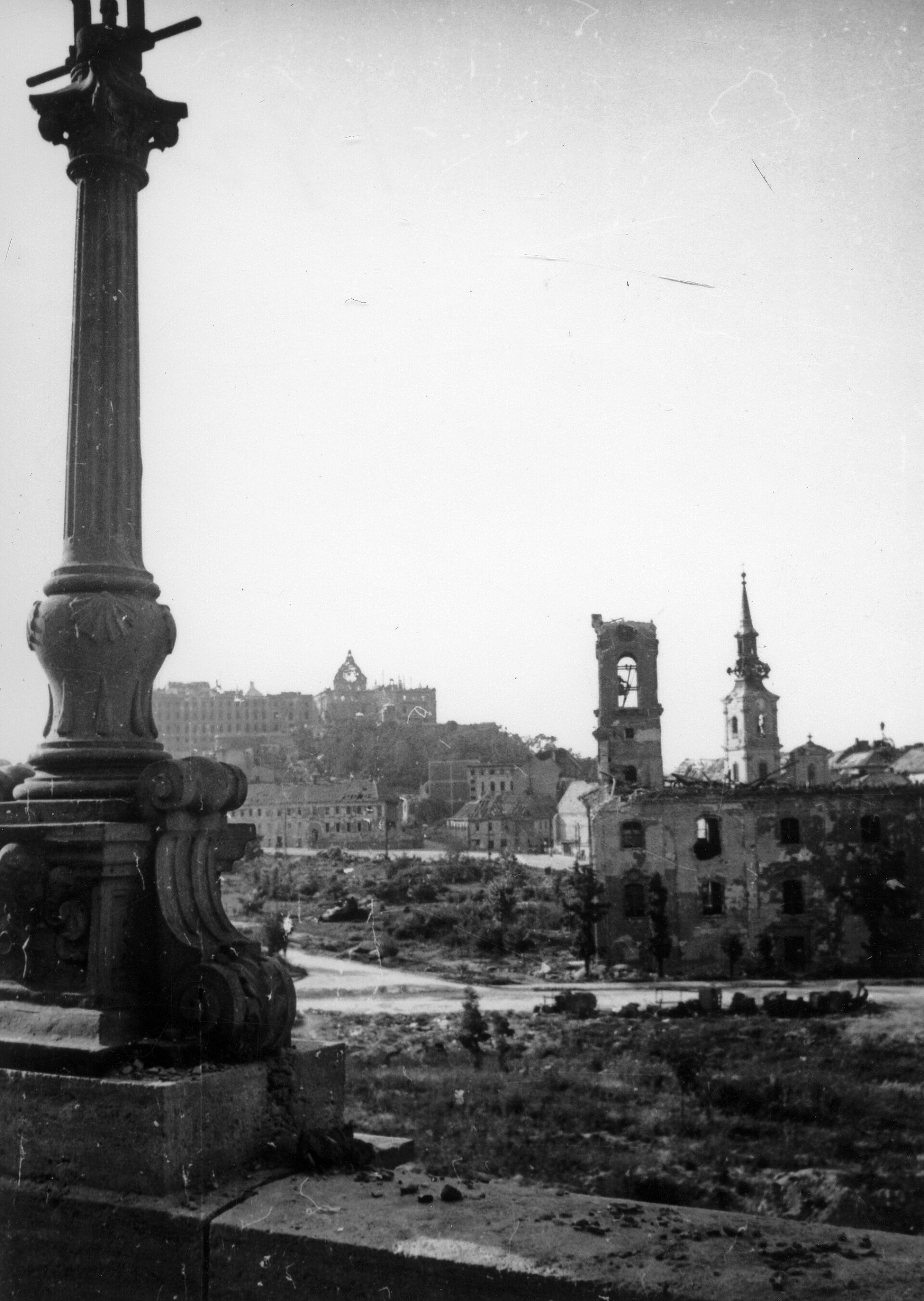
The fighting went street by street. In mid-January the defenders gave up Pest, on the east bank of the Danube, and withdrew to Buda, blowing up the bridges behind them. All seven of Budapest’s bridges over the Danube, among them the Chain Bridge of 1849, were destroyed. Inside the city, Arrow Cross militias murdered thousands of Jews.
The breakout
On the night of 11 February, with food and ammunition all but gone, some 28,000 German and Hungarian troops tried to break out from Castle Hill, with thousands of civilians among them. They ran into prepared Soviet positions and were cut down by artillery and rocket fire. Only 600 to 700 soldiers reached the German lines. The remaining defenders surrendered on 13 February.
Sources and further reading
Lead image: The ruins of the Tabán district and the Royal Palace in Budapest after the siege, 1945. János Kunszt (Fortepan), CC BY-SA 3.0 (licence), via Wikimedia Commons. See our sources and image policy.
 United Kingdom
 United States
 Soviet Union
 Germany
 Japan
 France
 Poland
 South Africa