Occupied Europe · Resistance · Slovakia vs Germany
The Slovak National Uprising
As German troops move into Slovakia, units of the Slovak army and partisans rise against the pro-Nazi regime. Their centre is the town of Banská Bystrica.
- Centre
- Banská Bystrica
- Insurgents
- Slovak army units and partisans
- Regime opposed
- Jozef Tiso’s Slovak State
- Banská Bystrica fell
- 27 October 1944
- War clock
- Day 1,825 of 2,194
The Slovak State, led by Jozef Tiso, was a German ally. By 1944 an underground Slovak National Council, joined by army officers, was preparing an uprising to coincide with the arrival of the Red Army.
The uprising
When German troops entered Slovakia to counter growing partisan activity, the uprising was declared on 29 August 1944. Insurgents took control of much of central Slovakia. But the two army divisions in eastern Slovakia, meant to open the Carpathian passes to the Red Army, were disarmed by the Germans.
Defeat
The Soviet attempt to break through the Dukla Pass was slow and costly. German forces gradually crushed the uprising, and Banská Bystrica fell on 27 October. The fighters retreated into the mountains. Reprisals followed, including mass killings, and many Slovak Jews were deported.
Sources and further reading
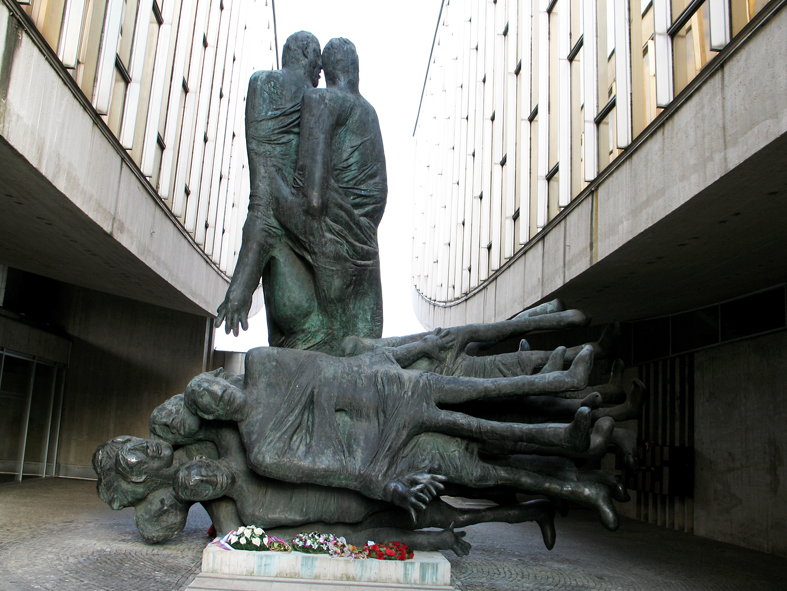
Lead image: Memorial to the victims of the Slovak National Uprising, Banská Bystrica. Unknown photographer, Public domain, via Wikimedia Commons. See our sources and image policy.
 United Kingdom
 United States
 Soviet Union
 Germany
 Japan
 France
 Poland
 South Africa