Pacific · Diplomacy · Japan
Japan Offers to Surrender
After a deadlocked night meeting, Emperor Hirohito breaks the tie. Japan tells the Allies it will accept the Potsdam Declaration, on one condition: the Emperor’s position must be preserved.
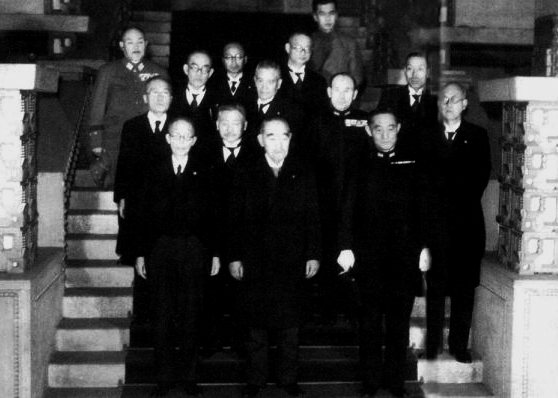
- Imperial conference
- Night of 9 to 10 August 1945
- Prime minister
- Admiral Kantaro Suzuki
- Message sent through
- Switzerland and Sweden
- Allied reply
- The Byrnes Note, 11 August
- War clock
- Day 2,171 of 2,194
Japan’s Supreme Council for the Direction of the War was split. Prime Minister Suzuki, Foreign Minister Togo and the navy minister were willing to accept the Potsdam terms with the single condition of preserving the imperial institution. The army minister and the chiefs of staff demanded further conditions, including no occupation.
The sacred decision
At an imperial conference that ran past midnight into 10 August, Suzuki took the unprecedented step of asking the Emperor to decide. Hirohito said he agreed with the foreign minister. The cabinet accepted his decision, and messages were sent through neutral Switzerland and Sweden.
The Byrnes Note
The US reply, written by Secretary of State James Byrnes, did not directly accept the condition. It said the Emperor’s authority would be subject to the Supreme Commander of the Allied Powers and that Japan’s form of government would be decided by the freely expressed will of the people.
Sources and further reading
Lead image: Prime Minister Kantarō Suzuki’s cabinet, 1945. Unknown photographer, Public domain, via Wikimedia Commons. See our sources and image policy.
 United Kingdom
 United States
 Soviet Union
 Germany
 Japan
 France
 Poland
 South Africa