Western Europe · Leaders and Speeches · France
The Appeal of 18 June
In a BBC studio in London, a little-known French general speaks to his country: France has lost a battle, but it must not give up. Few hear him. History will remember.
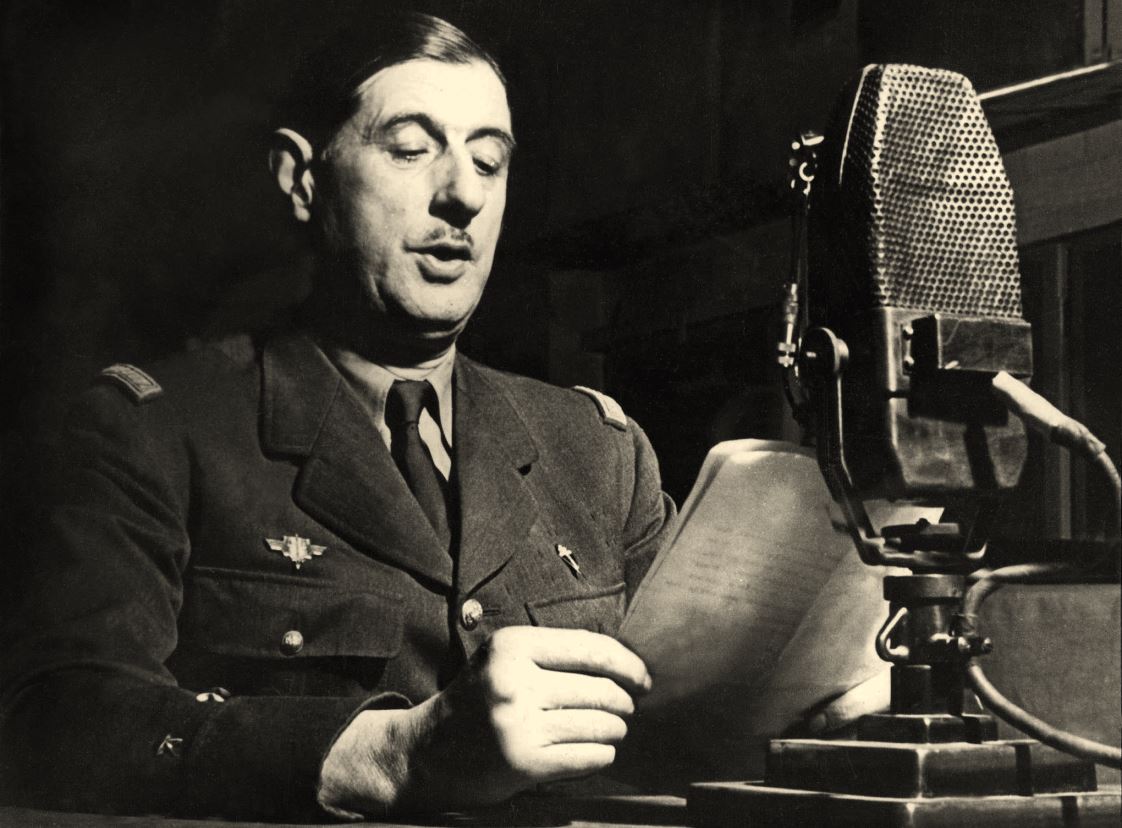
- Speaker
- General Charles de Gaulle
- Broadcast
- BBC, London, evening of 18 June 1940
- Message
- Resistance must continue
- Same day
- Churchill’s “finest hour” speech
- War clock
- Day 292 of 2,194
Charles de Gaulle had been a tank commander and, briefly, a junior minister in Reynaud’s government. When Pétain sought an armistice, de Gaulle flew to London on 17 June, determined to continue the fight. Churchill agreed to let him speak on the BBC.
The appeal
On the evening of 18 June 1940 de Gaulle spoke to France. He argued that France had lost a battle but not the war, that it had a vast empire, the support of Britain and the industrial power of the United States behind it. He called on French soldiers, engineers and workers in Britain to join him, and declared that the flame of French resistance must not go out.
Free France
Few people in France heard the broadcast at the time. But de Gaulle kept speaking, the message spread, and the Free French movement grew around him. That same day, Churchill told Parliament that if the British Empire lasted a thousand years, people would say this was its finest hour.
Sources and further reading
Lead image: General Charles de Gaulle at a BBC microphone. Unknown photographer, Public domain, via Wikimedia Commons. See our sources and image policy.
 United Kingdom
 United States
 Soviet Union
 Germany
 Japan
 France
 Poland
 South Africa