Home Front · United States
Rosie the Riveter
A muscular woman in overalls, with a rivet gun on her lap, appears on the cover of the Saturday Evening Post. Rosie the Riveter becomes the face of millions of women in war work.
- Cover artist
- Norman Rockwell
- Published
- Saturday Evening Post, 29 May 1943
- Inspired by
- A popular song of 1942, Rosie the Riveter
- Later icon
- The We Can Do It! poster, rediscovered in the 1980s
- War clock
- Day 1,367 of 2,194
As American men left for the armed forces, war industries faced a desperate shortage of labour. The government and employers called on women to take jobs in aircraft factories, shipyards and munitions plants that had been seen as men’s work. Millions answered.
Rosie
In 1942 a popular song celebrated a fictional riveter named Rosie, working overtime on the assembly line. On 29 May 1943 the Saturday Evening Post published Norman Rockwell’s cover painting of a strong, confident woman worker eating her lunch, rivet gun across her lap and a copy of Mein Kampf under her feet. The name and image spread across the country.
Women at work
Women welded ships, built bombers and ran machinery, often for lower pay than men. In Britain, women were conscripted for war work or the auxiliary services from 1941. After the war many were pushed out of their jobs, but the experience changed expectations for generations.
Sources and further reading
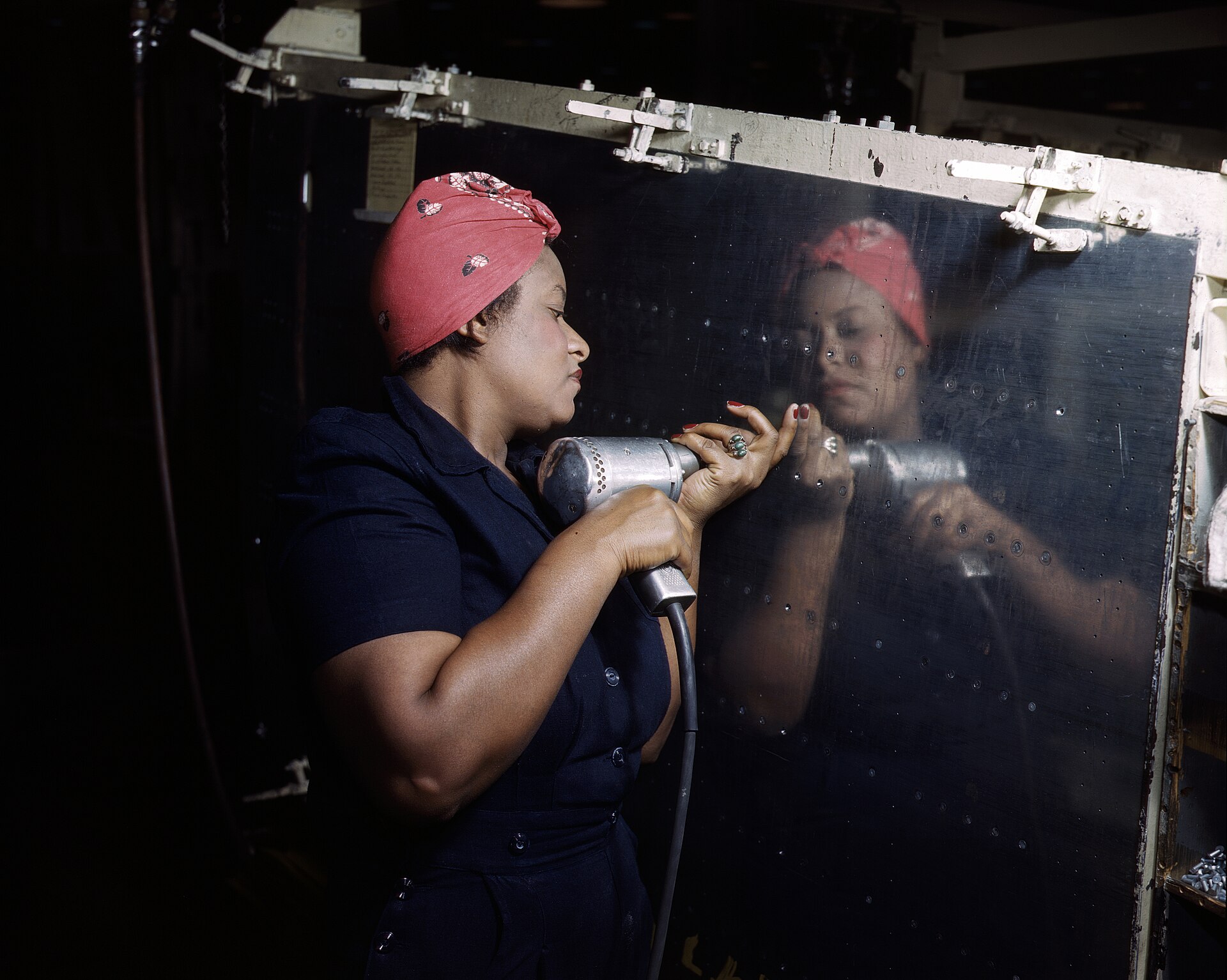
Lead image: A woman riveter at the Vultee aircraft plant, 1942. Alfred T. Palmer, Public domain, via Wikimedia Commons. See our sources and image policy.
 United Kingdom
 United States
 Soviet Union
 Germany
 Japan
 France
 Poland
 South Africa