Western Europe · Land Battles · Netherlands and Germany
The Netherlands Capitulates
Five days after the invasion, General Winkelman signs the surrender of the Dutch army. In Paris, the French prime minister telephones Churchill with stark news.
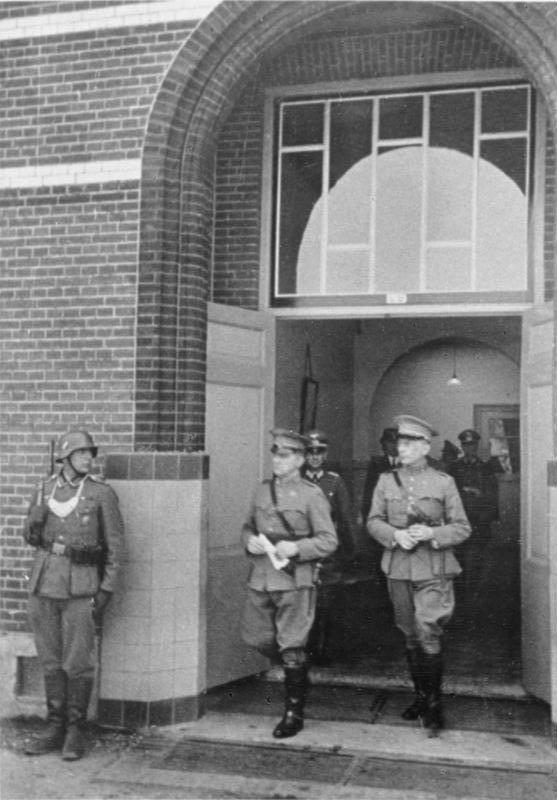
- Signed
- Rijsoord, near Rotterdam
- Dutch commander
- Gen Henri Winkelman
- Government
- Queen Wilhelmina and ministers in London since 13 May
- Fighting continued
- In Zeeland until 17 May
- War clock
- Day 258 of 2,194
The Dutch army had expected to hold the core of the country, Fortress Holland, behind its water defences. German airborne landings, the rapid advance across the south, and finally the bombing of Rotterdam made that impossible. Queen Wilhelmina and the government left for London on 13 May to carry on the war from exile.
The signing
On 15 May General Henri Winkelman met the German commanders at the village school in Rijsoord and signed the capitulation of the Dutch armed forces. Dutch and French troops in the province of Zeeland, in the south-west, fought on for two more days.
Beaten
That morning, the French prime minister Paul Reynaud telephoned Churchill to tell him that France had been beaten. German armour had broken through at Sedan and was pouring westward. Churchill flew to Paris the next day and found the French high command preparing to burn its files.
Sources and further reading
Lead image: The Dutch capitulation, May 1940. Hausen, v, CC BY-SA 3.0 de (licence), via Wikimedia Commons. See our sources and image policy.
 United Kingdom
 United States
 Soviet Union
 Germany
 Japan
 France
 Poland
 South Africa