Western Europe · Air War · Britain vs Germany
The Nuremberg Raid
Under a bright moon and without the expected cloud, RAF Bomber Command flies a long, straight route into Germany. German night fighters are waiting.
- Target
- Nuremberg, Germany
- Night
- 30 to 31 March 1944
- Bombers dispatched
- 795
- Bombers lost
- 95, the heaviest loss of the war
- War clock
- Day 1,673 of 2,194
By the spring of 1944 RAF Bomber Command had been waging the Battle of Berlin through the winter with mounting losses. German night fighters had become skilled at intercepting the bomber streams. On 30 March Bomber Command ordered a major raid on Nuremberg, expecting cloud cover along the route.
A clear night
The cloud did not appear. The moon was bright, and in the cold air the bombers left condensation trails. The route included a long straight leg across Germany, and it passed close to radio beacons where German night fighters were assembling. They found the bomber stream early and attacked it for hundreds of kilometres.
The losses
Ninety-five bombers failed to return, more than in any other Bomber Command raid. Hundreds of airmen, including many Canadians and Australians, were killed. Strong winds scattered the rest, and Nuremberg itself suffered relatively little damage. Pilot Officer Cyril Barton was awarded a posthumous Victoria Cross for flying his crippled Halifax home.
Sources and further reading
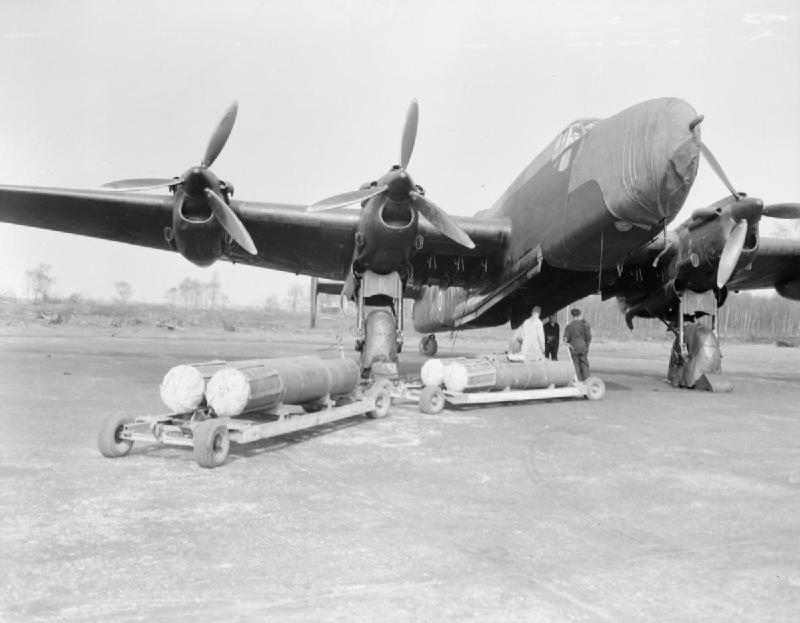
Lead image: A Handley Page Halifax of RAF Bomber Command. Royal Air Force official photographer, Public domain, via Wikimedia Commons. See our sources and image policy.
 United Kingdom
 United States
 Soviet Union
 Germany
 Japan
 France
 Poland
 South Africa