Grand Strategy · Diplomacy · Yugoslavia and Germany
Yugoslavia Signs the Pact
Under heavy German pressure, Yugoslavia’s government signs the Tripartite Pact in Vienna. Within two days, the decision will bring it down.
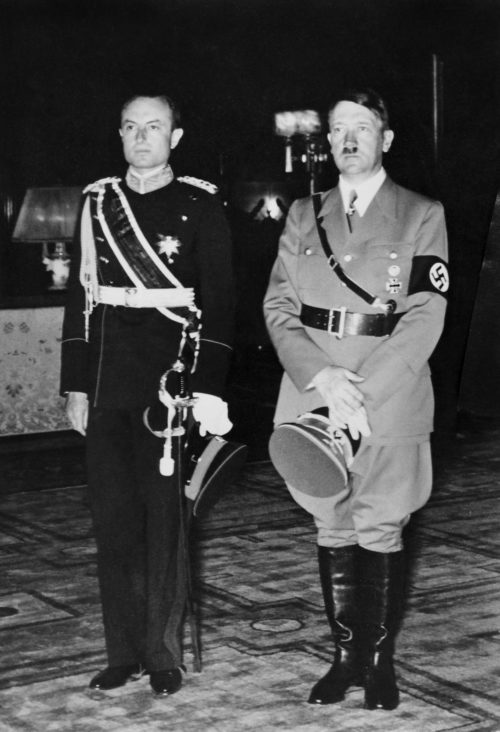
- Location
- Belvedere Palace, Vienna
- Signatories
- PM Dragiša Cvetković and Foreign Minister Aleksandar Cincar-Marković
- Regent
- Prince Paul of Yugoslavia
- Overturned
- By the coup of 27 March 1941
- War clock
- Day 572 of 2,194
By March 1941 Yugoslavia was surrounded. Germany controlled Austria and had troops in Hungary, Romania and now Bulgaria; Italy held Albania. Hitler needed a secure southern flank for his attack on Greece and, beyond it, on the Soviet Union. He pressed the regent, Prince Paul, to join the Axis.
The terms
Prince Paul, personally sympathetic to Britain, believed his country could not resist. After hard bargaining, Germany offered unusually lenient terms: no Axis troops would cross Yugoslav territory and no military help would be demanded. On 25 March 1941 Prime Minister Dragiša Cvetković and Foreign Minister Aleksandar Cincar-Marković signed the pact in Vienna.
Anger at home
The news provoked protests in Belgrade and other Serbian cities. Many officers saw the pact as a betrayal, and Britain encouraged opposition to it. A group of air force officers was already planning to act.
Sources and further reading
Lead image: Prince Paul of Yugoslavia with Hitler. Unknown photographer, Public domain, via Wikimedia Commons. See our sources and image policy.
 United Kingdom
 United States
 Soviet Union
 Germany
 Japan
 France
 Poland
 South Africa