Occupied Europe · Occupation · Soviet Union and Poland
The First Deportations
Before dawn, in bitter frost, Soviet security troops begin rounding up Polish families in the occupied east. They are loaded onto freight trains bound for Siberia and the far north.
- Location
- Soviet-occupied eastern Poland
- Carried out by
- NKVD (Soviet security police)
- Main targets
- Military settlers, forestry workers, officials and their families
- Destinations
- Northern Russia, Siberia and Kazakhstan
- War clock
- Day 163 of 2,194
In September 1939, under the secret terms of the Nazi-Soviet Pact, the Red Army occupied eastern Poland. The Soviet authorities annexed the region and set about removing people they considered hostile: officers, officials, police, landowners and community leaders.
10 February 1940
The first mass deportation began on the night of 10 February 1940. Its main targets were the osadnicy, veterans who had been given land in the east after the Polish-Soviet war of 1920, along with forestry workers and local officials, and their entire families. Given little time to pack, they were loaded into unheated freight wagons in temperatures far below freezing. Estimates of the numbers deported in this first wave start at around 140,000.
In exile
The deportees were sent to labour settlements in the forests of northern Russia, Siberia and Kazakhstan, where many died of cold, hunger and disease. Further mass deportations followed in April and June 1940 and in June 1941.
Sources and further reading
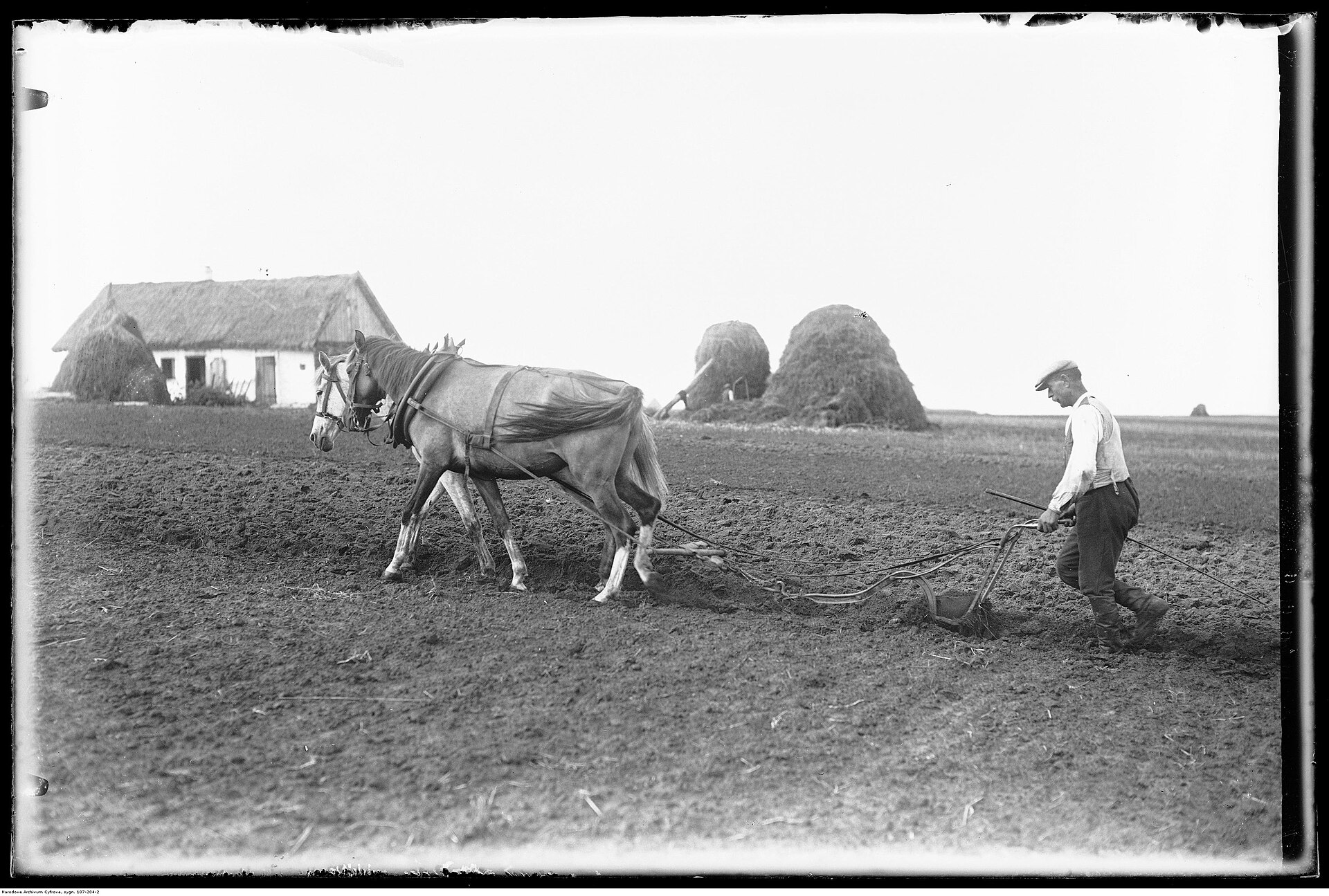
Lead image: Daily life in a Polish military settlers’ colony in Volhynia before the war. Narcyz Witczak-Witaczyński, Public domain, via Wikimedia Commons. See our sources and image policy.
 United Kingdom
 United States
 Soviet Union
 Germany
 Japan
 France
 Poland
 South Africa