Grand Strategy · Leaders and Speeches · United States
The Four Freedoms
In his State of the Union address, Roosevelt sets out four freedoms that he says every person in the world should enjoy, and asks Congress to arm the nations defending them.
- Speaker
- President Franklin D. Roosevelt
- Occasion
- Annual Message to Congress (State of the Union)
- The freedoms
- Speech and expression; worship; from want; from fear
- Policy goal
- Support for Lend-Lease aid to Britain
- War clock
- Day 494 of 2,194
In January 1941 Britain stood almost alone against Germany and was running out of money to pay for American weapons. Roosevelt, freshly re-elected for a third term, wanted to move the United States from neutrality to open support for Britain, while still persuading a wary public that this was the best way to keep America out of the war.
The speech
Most of the State of the Union address on 6 January 1941 dealt with defence and with the case for supplying the democracies. Near the end, Roosevelt turned to the kind of world he hoped would follow. He named four essential freedoms: freedom of speech and expression, freedom of every person to worship God in their own way, freedom from want and freedom from fear, the last to be secured by a worldwide reduction in armaments. Each, he said, should apply everywhere in the world.
From words to Lend-Lease
Days later the Lend-Lease bill was introduced in Congress, allowing the President to lend or lease war materials to any nation whose defence was vital to the United States. It became law in March 1941. In 1943 the artist Norman Rockwell painted a famous series of illustrations of the four freedoms, used to sell war bonds.
Sources and further reading
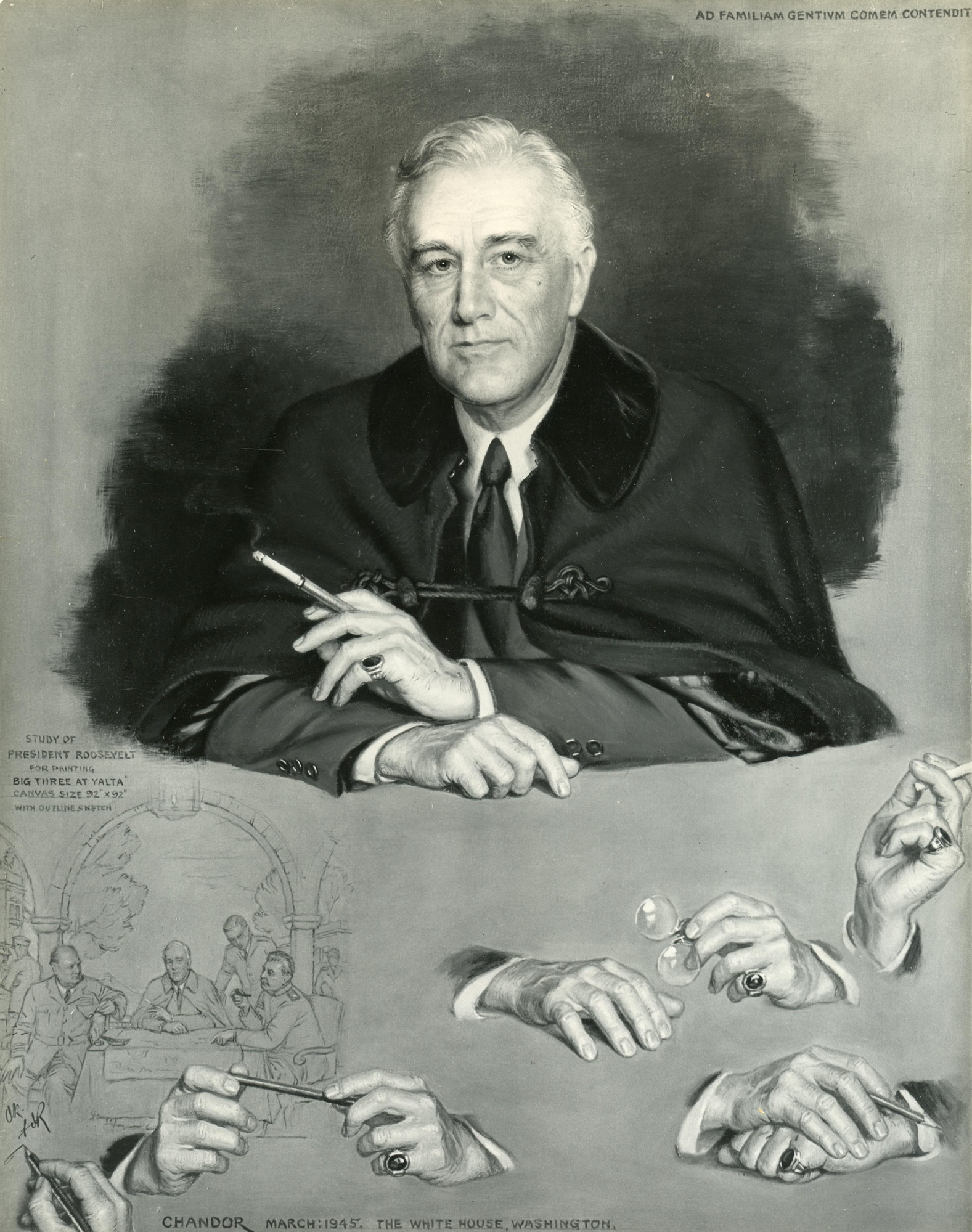
Lead image: President Franklin D. Roosevelt. Douglas Chandor, Public domain, via Wikimedia Commons. See our sources and image policy.
 United Kingdom
 United States
 Soviet Union
 Germany
 Japan
 France
 Poland
 South Africa