Mediterranean · Air War · Germany vs the Allies
The Air Raid on Bari
German bombers catch a crowded Allied supply port fully lit at dusk. Among the ships destroyed is an American freighter secretly carrying mustard gas bombs.
- Location
- Bari, southern Italy
- Attackers
- Around 100 Luftwaffe Ju 88 bombers
- Losses
- More than 20 Allied ships sunk
- Hidden cargo
- Mustard gas bombs aboard SS John Harvey
- War clock
- Day 1,554 of 2,194
By December 1943 Bari, on Italy’s Adriatic coast, was a vital supply port for the Allied armies fighting their way north. Its harbour was packed with ships unloading fuel, ammunition and supplies. Confident that the Luftwaffe was a spent force in Italy, the Allies worked the docks at night under full lights, and anti-aircraft defences were thin.
Twenty minutes
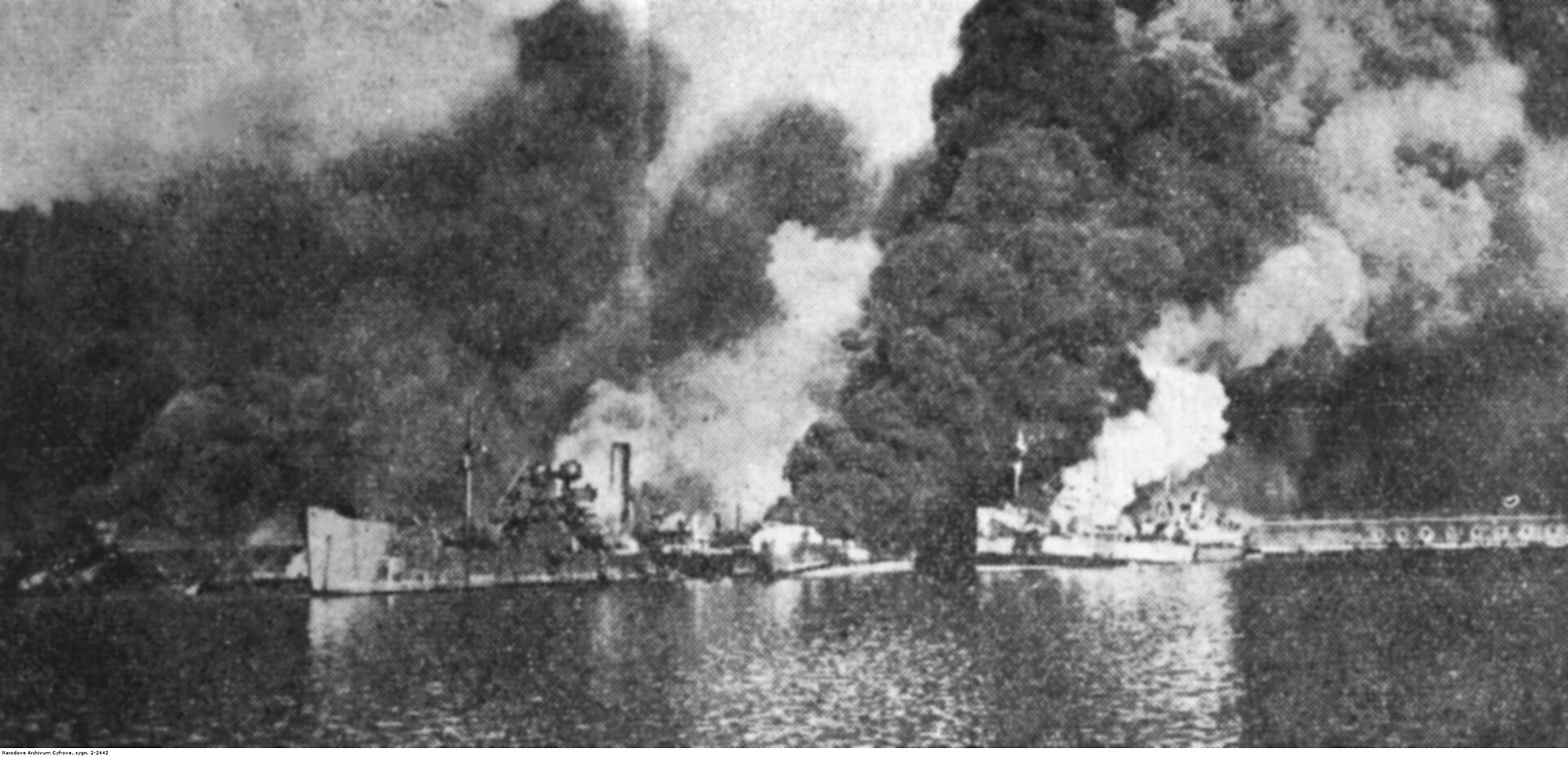
On the evening of 2 December around 100 German Ju 88 bombers attacked from low level, guided in by aircraft dropping strips of radar-jamming foil. The raid lasted about twenty minutes. Bombs struck ammunition ships and a fuel pipeline, and burning oil spread across the harbour. More than 20 ships were sunk or destroyed, and the port was put out of action for weeks. It was one of the most damaging air attacks on Allied shipping of the war.
The secret cargo
One of the ships hit was the American Liberty ship John Harvey, carrying a secret cargo of mustard gas bombs, sent to Italy so that the Allies could retaliate if Germany used chemical weapons first. When she blew up, mustard agent mixed with the oil on the water and drifted over the town in a cloud. Hundreds of sailors and civilians were affected. Because the cargo was secret, doctors at first did not know what they were treating, and many casualties were not washed or treated in time.
A US Army medical officer, Lieutenant Colonel Stewart Alexander, investigated and identified the cause. His observation that the gas had sharply reduced victims’ white blood cells later contributed to research into the first chemotherapy drugs for cancer.
Also on 2 December
- 1942Scientists led by Enrico Fermi achieve the first controlled nuclear chain reaction, in a reactor beneath a Chicago stadium.
Sources and further reading
Lead image: Ships burning in Bari harbour after the German air raid, December 1943. Unknown photographer, Public domain, via Wikimedia Commons. See our sources and image policy.
 United Kingdom
 United States
 Soviet Union
 Germany
 Japan
 France
 Poland
 South Africa