Eastern Front · Land Battles · Soviet Union vs Germany
The Liberation of Kyiv
Two years and two months after it fell, the Red Army retakes the Ukrainian capital, on the eve of the anniversary of the October Revolution.
- Location
- Kyiv (Kiev), Ukrainian SSR
- Belligerents
- Soviet Union vs Germany
- Soviet commander
- General Nikolai Vatutin, 1st Ukrainian Front
- Result
- City liberated; bridgehead west of the Dnieper secured
- War clock
- Day 1,528 of 2,194
Kyiv had fallen to the Germans in September 1941 after one of the largest encirclements in military history. Within days of the occupation, German units murdered more than 33,000 Jews at the ravine of Babyn Yar on the edge of the city, and the killings there continued for the rest of the occupation. By 1943 the city had been plundered, starved and partly emptied of its people.
The race to the Dnieper
After the German defeat at Kursk in July 1943, the Red Army drove west across Ukraine towards the Dnieper, which Hitler hoped to hold as an eastern wall. Soviet troops seized small bridgeheads across the wide river in September, but attacks from the Bukrin bridgehead south of Kyiv failed against strong defences.
A switch to the north
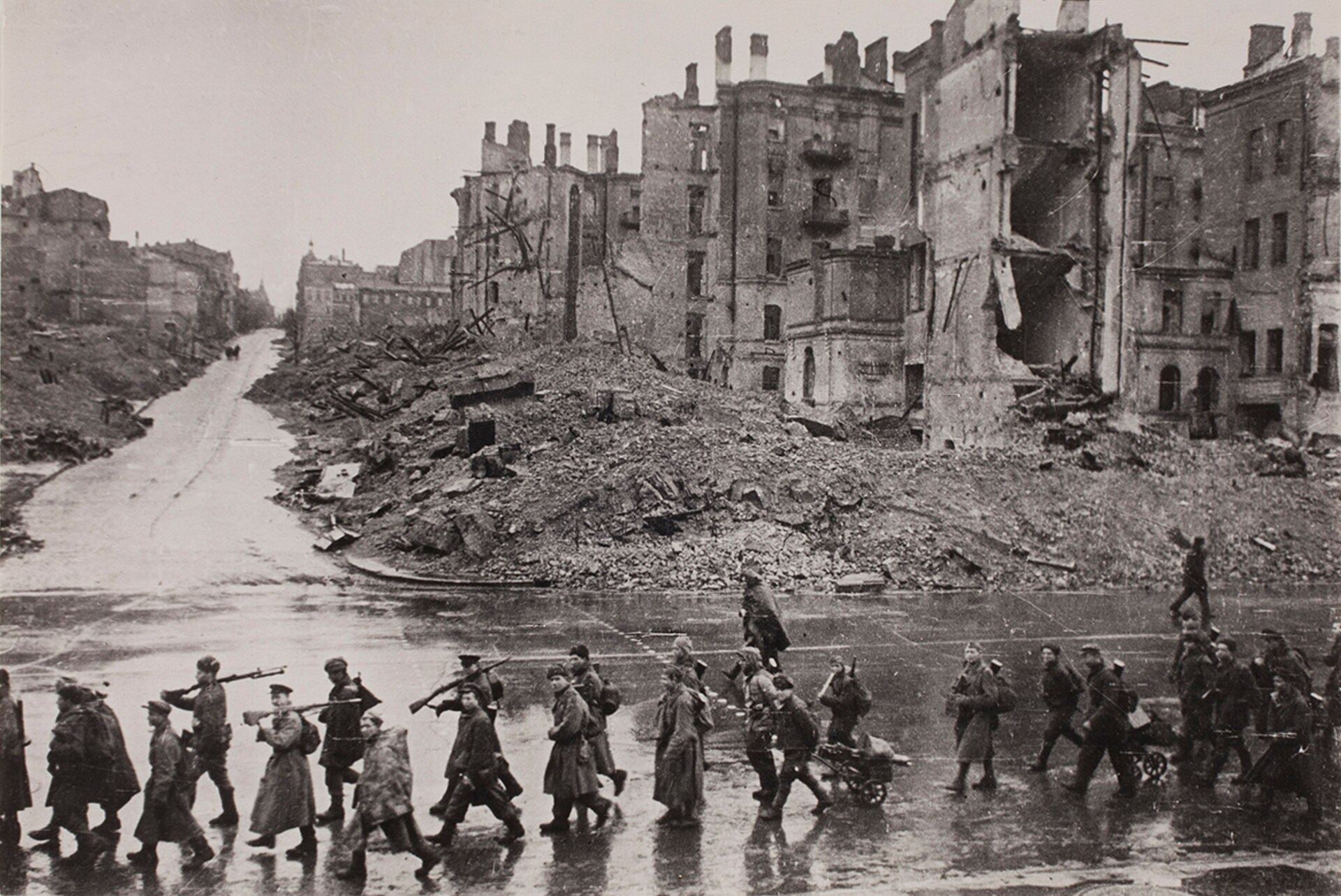
General Nikolai Vatutin’s 1st Ukrainian Front secretly moved a tank army north to the Lyutezh bridgehead above the city, crossing it over the river under cover of darkness and bad weather. On 3 November the offensive opened with a massive artillery bombardment. The German defenders were caught off balance, and in the early hours of 6 November Soviet troops entered the centre of Kyiv. Stalin had wanted the city taken in time for the anniversary of the October Revolution on 7 November, and the victory was announced with a salute in Moscow.
German counter-attacks west of the city later in November regained some ground but could not threaten Kyiv itself. The Germans had tried to destroy the evidence at Babyn Yar before they left, but the scale of the crimes soon became known.
Also on 6 November
- 1944Soviet leader Joseph Stalin, in his annual revolution-eve speech, publicly calls Japan an aggressor nation, a hint of Soviet intentions in the Pacific.
Sources and further reading
Lead image: Khreshchatyk, Kyiv’s main street, after the city’s liberation in November 1943. Arkady Shaikhet, Public domain, via Wikimedia Commons. See our sources and image policy.
 United Kingdom
 United States
 Soviet Union
 Germany
 Japan
 France
 Poland
 South Africa