Grand Strategy · Politics · United States
Cash and Carry
President Roosevelt signs the Neutrality Act of 1939, lifting the arms embargo so that Britain and France can buy American weapons, provided they pay cash and carry them home in their own ships.
- Signed by
- President Franklin D. Roosevelt
- Law
- Neutrality Act of 1939
- Key change
- Arms embargo on belligerents repealed
- Condition
- Cash payment, transport in foreign ships
- War clock
- Day 65 of 2,194
In the 1930s a deeply isolationist Congress passed a series of Neutrality Acts designed to keep the United States out of another European war. Among other restrictions, they banned the sale of arms and munitions to any nation at war, aggressor or victim alike. When Germany invaded Poland in September 1939, that embargo applied equally to Britain and France.
Roosevelt’s campaign
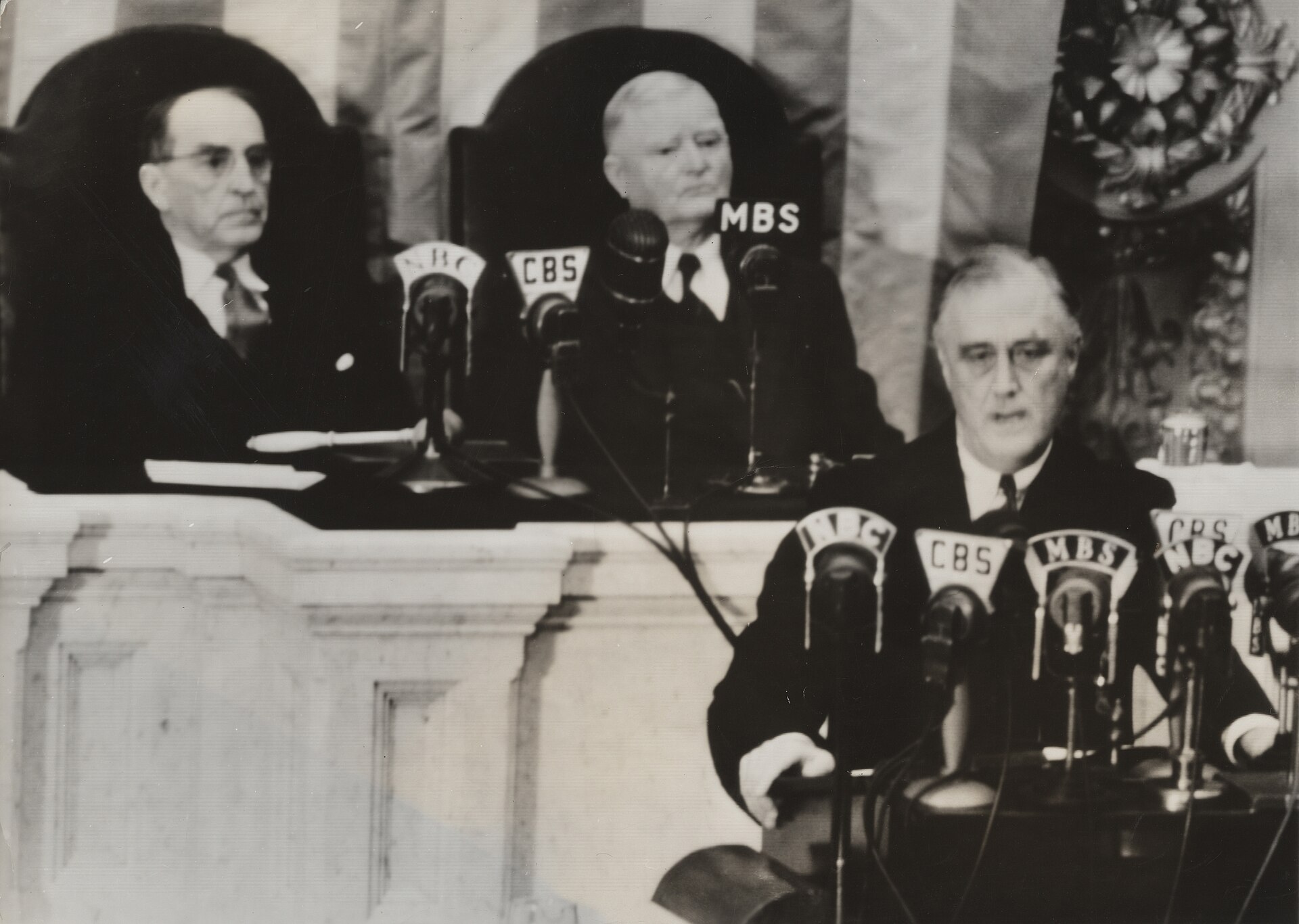
Roosevelt called Congress into special session on 21 September and asked it to repeal the arms embargo. Opponents warned that selling weapons would drag America into the war. Supporters argued that the embargo in practice helped Germany, which had already rearmed, while Britain and France, which controlled the Atlantic, could not buy what they needed. After weeks of debate the bill passed both houses.
The new rules
Signed on 4 November 1939, the act allowed nations at war to buy American arms, but only for cash, and only if they carried the goods away in their own ships. American vessels and citizens were barred from designated combat zones. Because the Royal Navy and French navy controlled the sea lanes, the arrangement favoured the Allies in practice, while keeping American ships out of harm’s way.
Britain and France placed large orders, especially for aircraft. By late 1940, however, Britain was running out of money to pay, which led Roosevelt to propose Lend-Lease, passed in March 1941.
Sources and further reading
Lead image: Franklin D. Roosevelt asks a special session of Congress to revise the Neutrality Act, 21 September 1939. Associated Press, Public domain, via Wikimedia Commons. See our sources and image policy.
 United Kingdom
 United States
 Soviet Union
 Germany
 Japan
 France
 Poland
 South Africa