Grand Strategy · Diplomacy · Hungary and the Allies
Hungary Signs an Armistice
In Moscow, envoys of a Soviet-backed Hungarian government sign an armistice with the Allies while Budapest is still under siege.
- Signed
- 20 January 1945, Moscow
- Hungarian government
- Provisional National Government, Debrecen
- Prime minister
- General Béla Miklós
- Declared war on Germany
- 28 December 1944
- Siege of Budapest
- Ended 13 February 1945
- War clock
- Day 1,969 of 2,194
In October 1944 Hungary’s regent, Admiral Miklós Horthy, tried to take his country out of the war. The Germans forestalled him, forced him from office and put the Arrow Cross leader Ferenc Szálasi in power, and Hungary fought on at Germany’s side.
A second government
In late December 1944 a provisional assembly meeting in Soviet-occupied Debrecen elected a Provisional National Government of Hungary, with General Béla Miklós, a Hungarian army commander who had gone over to the Soviets, as prime minister. On 28 December it declared war on Germany.
The armistice
On 20 January 1945 the provisional government’s representatives signed an armistice with the Allies in Moscow. Hungary undertook to provide at least eight divisions for the war against Germany, to pull its forces and officials back behind its frontiers of 31 December 1937, and to pay $300 million in reparations, two thirds of it to the Soviet Union.
The fighting went on regardless. The siege of Budapest lasted until 13 February, and the last German forces were not driven out of Hungary until early April.
Sources and further reading
- Armistice Agreement with Hungary, 20 January 1945 (Avalon Project)
- Hungary in World War II
- Siege of Budapest
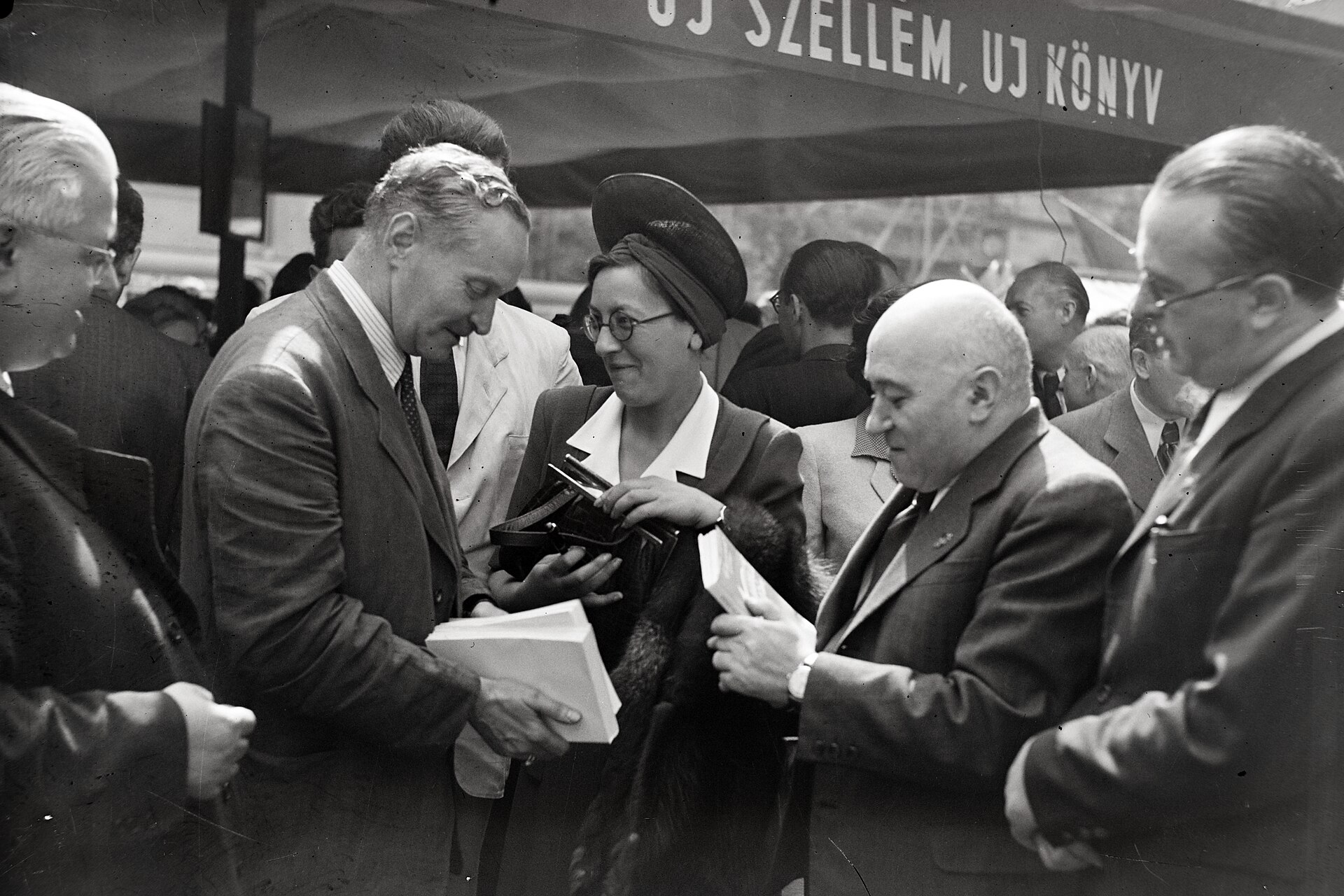
Lead image: Béla Miklós (second from left) with his wife and Hungarian politicians in July 1945. Fortepan, Public domain, via Wikimedia Commons. See our sources and image policy.
 United Kingdom
 United States
 Soviet Union
 Germany
 Japan
 France
 Poland
 South Africa