Western Europe · Air War · United Kingdom
The Lancaster Takes to the Air
At Ringway, near Manchester, the prototype of a new four-engined bomber makes its first flight. The Avro Lancaster will become the backbone of Bomber Command.
- Prototype
- BT308
- First flight
- 9 January 1941, RAF Ringway
- Pilot
- H. A. “Sam” Brown
- First operation
- 2 March 1942, mine-laying
- Built
- 7,377
- War clock
- Day 497 of 2,194
Avro’s twin-engined Manchester bomber was let down by its unreliable Rolls-Royce Vulture engines. The answer was a larger wing carrying four Rolls-Royce Merlins. The prototype, BT308, was converted from a Manchester airframe and first flew from RAF Ringway in Cheshire on 9 January 1941, with H. A. “Sam” Brown at the controls.
Into service
The new bomber, named the Lancaster, entered service in early 1942. Its first operation was a mine-laying sortie in the Heligoland Bight by No. 44 Squadron on 2 March 1942. It was fast for its size, could absorb heavy punishment, and had a long, unobstructed bomb bay that would later carry the 22,000 lb Grand Slam, the heaviest conventional bomb used in the war.
The numbers
Between 1942 and 1945 Lancasters flew some 156,000 sorties and dropped more than 608,000 long tons of bombs. A total of 7,377 were built, and 3,249 were lost in action.
Sources and further reading
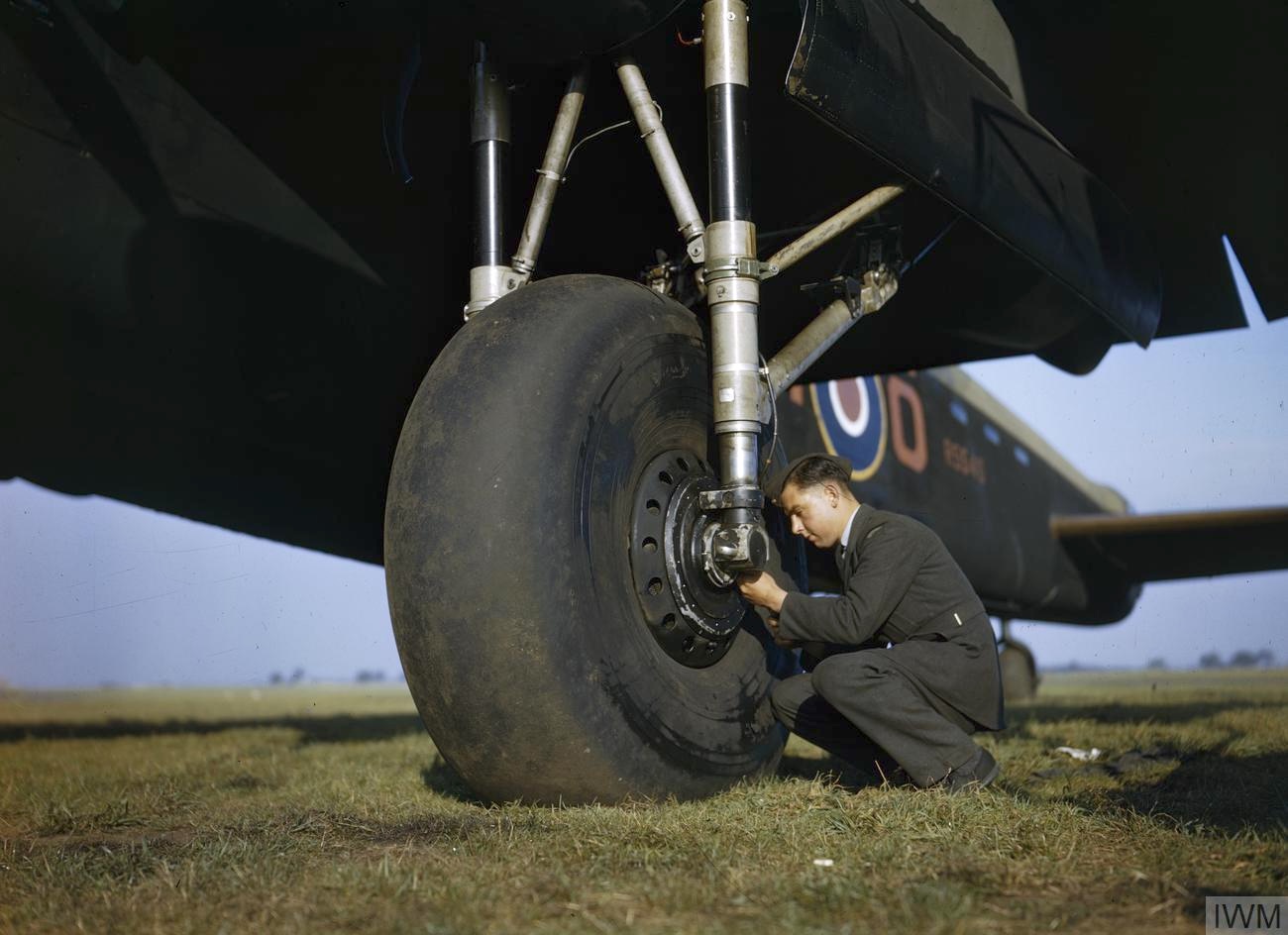
Lead image: An Avro Lancaster at RAF Waddington in September 1942. Royal Air Force official photographer, Public domain, via Wikimedia Commons. See our sources and image policy.
 United Kingdom
 United States
 Soviet Union
 Germany
 Japan
 France
 Poland
 South Africa