Occupied Europe · Resistance · United States
Operation Carpetbagger Begins
American bomber crews begin a secret war of night flights over occupied Europe, dropping agents, weapons and supplies to the resistance.
- Began
- 4 January 1944
- Aircraft
- Modified B-24 Liberators
- Bases
- RAF Tempsford, then RAF Harrington
- Units
- 801st, later 492nd Bomb Group
- Countries supplied
- France, Belgium, the Netherlands, Denmark and Norway
- War clock
- Day 1,587 of 2,194
Supplying the resistance movements of occupied Europe by air had largely been the work of the RAF’s special duties squadrons. As preparations for the invasion of France gathered pace, the United States Army Air Forces took on a share. The American operation was code-named Carpetbagger. It began on 4 January 1944, and the first missions were flown the following night from RAF Tempsford in Bedfordshire.
Black Liberators
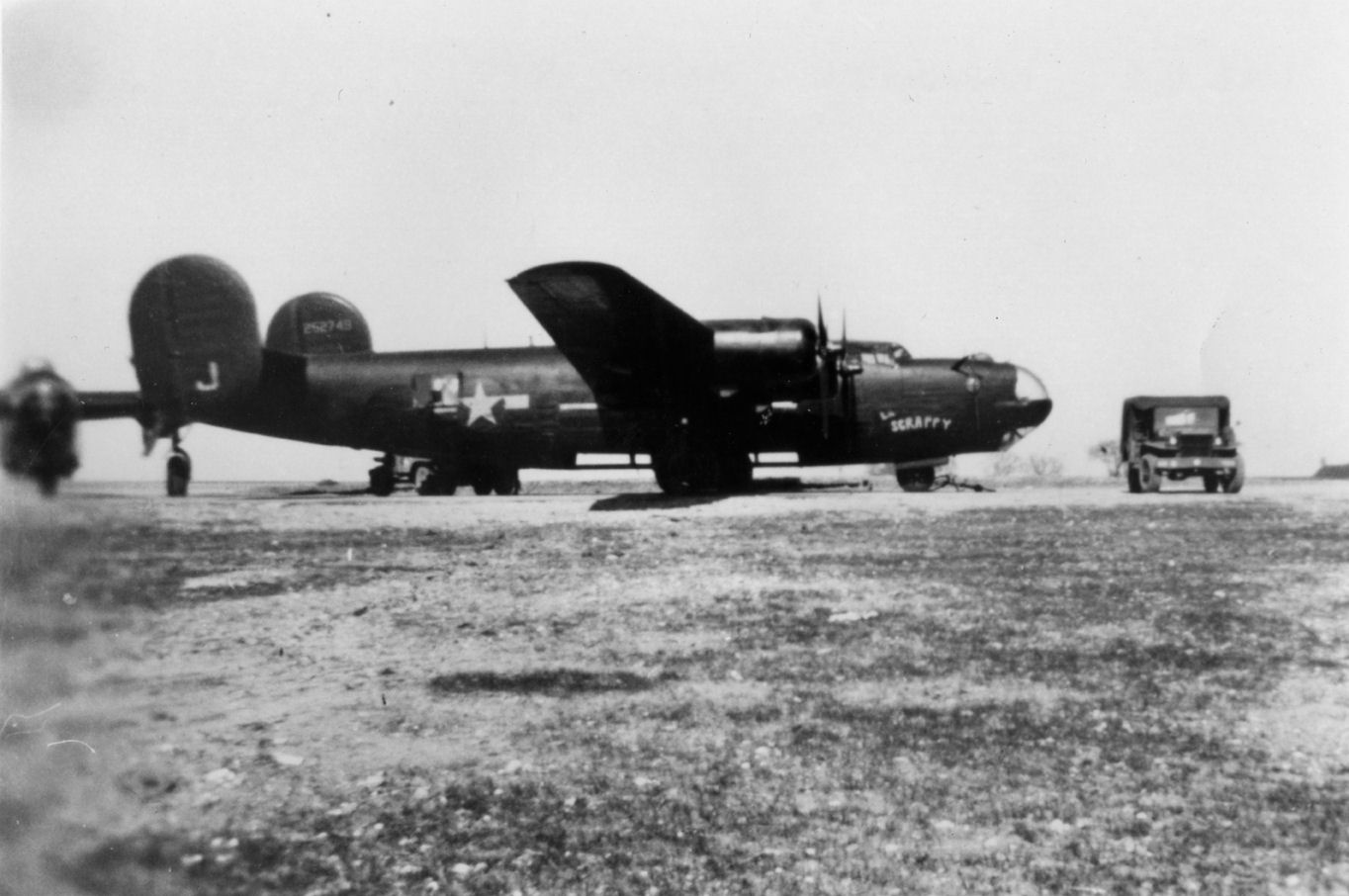
The crews flew B-24 Liberators stripped of their belly turrets, nose guns and oxygen equipment, and many were painted black for night work. Flying alone and low over occupied territory, they dropped agents and crated supplies by parachute, and released containers of weapons and explosives from the bomb bay to reception parties waiting on the ground.
In April 1944 the provisional 801st Bomb Group moved to RAF Harrington in Northamptonshire. In August it took over the designation of the 492nd Bomb Group, which had been stood down after severe losses.
Behind the lines
The drops supported resistance groups in France, Belgium, the Netherlands, Denmark and Norway. By the spring of 1945 the crews were also flying agents into Germany itself.
Sources and further reading
Lead image: A black-painted B-24 Liberator of the 492nd Bomb Group, the unit that carried on the Carpetbagger missions. US Army Air Forces, Public domain, via Wikimedia Commons. See our sources and image policy.
 United Kingdom
 United States
 Soviet Union
 Germany
 Japan
 France
 Poland
 South Africa