China-Burma-India · Occupation · Japan and the Allies
The Burma Railway Is Completed
Near the Thai-Burmese border, the two halves of a 415-kilometre railway built by prisoners of war and Asian labourers are joined. Tens of thousands have died building it.
- Length
- About 415 kilometres, Ban Pong to Thanbyuzayat
- Allied prisoners who died
- Around 12,000
- Asian labourers who died
- More than 90,000
- Best-known site
- Hellfire Pass
- War clock
- Day 1,508 of 2,194
Japan needed a land route to supply its army in Burma, safe from Allied submarines. In 1942 it began a railway from Thailand into Burma through jungle and mountains that engineers had long considered almost impassable.
The labour
The work was done by Allied prisoners of war, British, Australian, Dutch and American, and by far larger numbers of conscripted labourers from Burma, Malaya, Thailand and the Dutch East Indies. They worked with hand tools, often for 18 hours a day during the “speedo” period of 1943, short of food and stricken by cholera, dysentery and malaria.
The cost
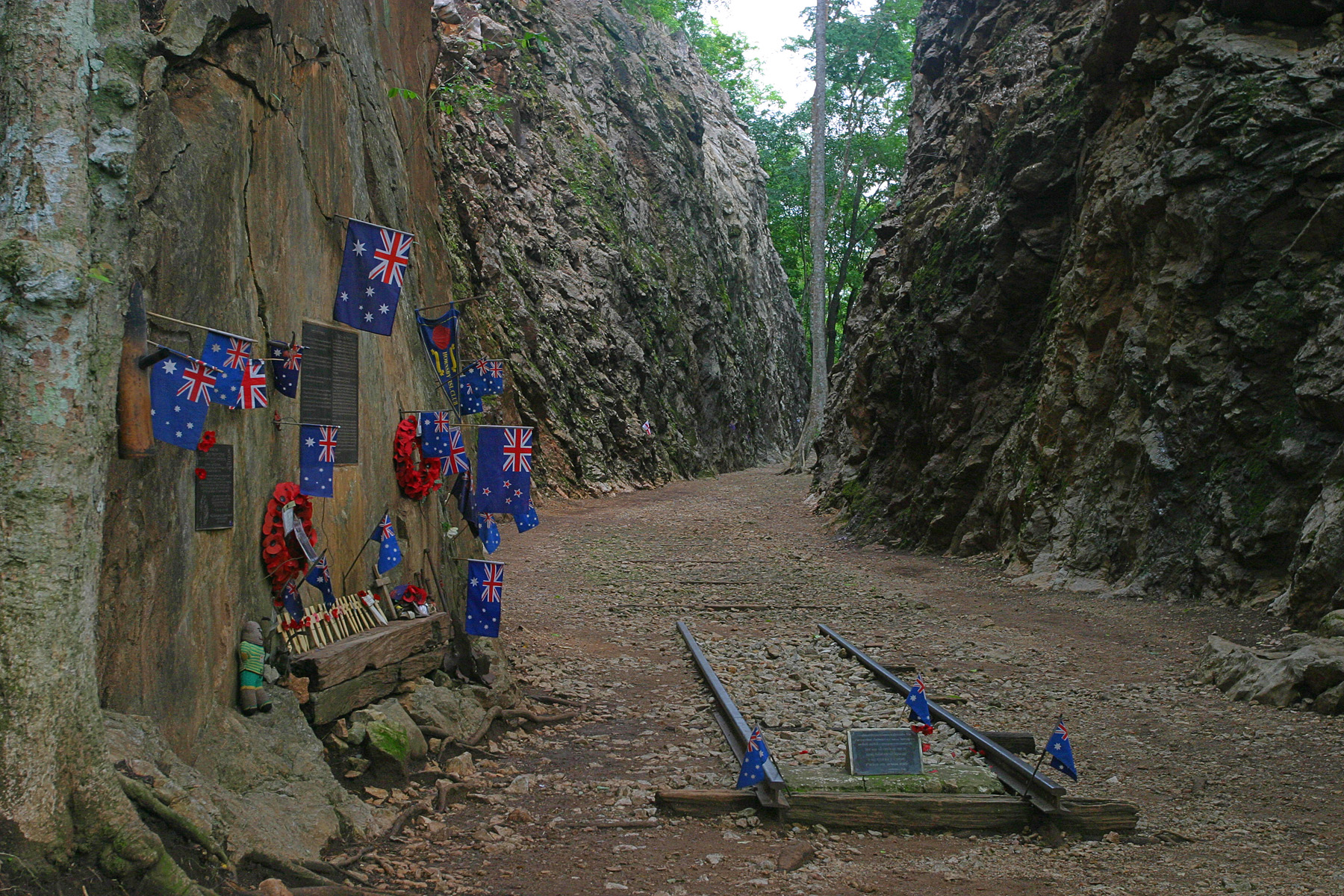
On 17 October 1943 the two sections met. Around 12,000 Allied prisoners and more than 90,000 Asian labourers had died. At Hellfire Pass, a deep cutting dug by hand, prisoners worked through the night by torchlight.
Sources and further reading
Lead image: Hellfire Pass on the Thai-Burma Railway. Diliff, CC BY-SA 2.5 (licence), via Wikimedia Commons. See our sources and image policy.
 United Kingdom
 United States
 Soviet Union
 Germany
 Japan
 France
 Poland
 South Africa