Eastern Europe · Land Battles · Germany vs Poland
Warsaw Surrenders
After nearly three weeks of siege, bombing and shelling, the Polish capital surrenders. Its defenders have run out of food, water and ammunition.
- Siege began
- 8 September 1939
- Surrender signed by
- General Tadeusz Kutrzeba
- Heaviest bombing
- 25 September 1939
- Same day
- German-Soviet Boundary and Friendship Treaty
- War clock
- Day 28 of 2,194
German forces reached the outskirts of Warsaw on 8 September 1939. The city was defended by soldiers and civilian volunteers, rallied by its mayor, Stefan Starzyński, whose radio broadcasts became famous.
The siege
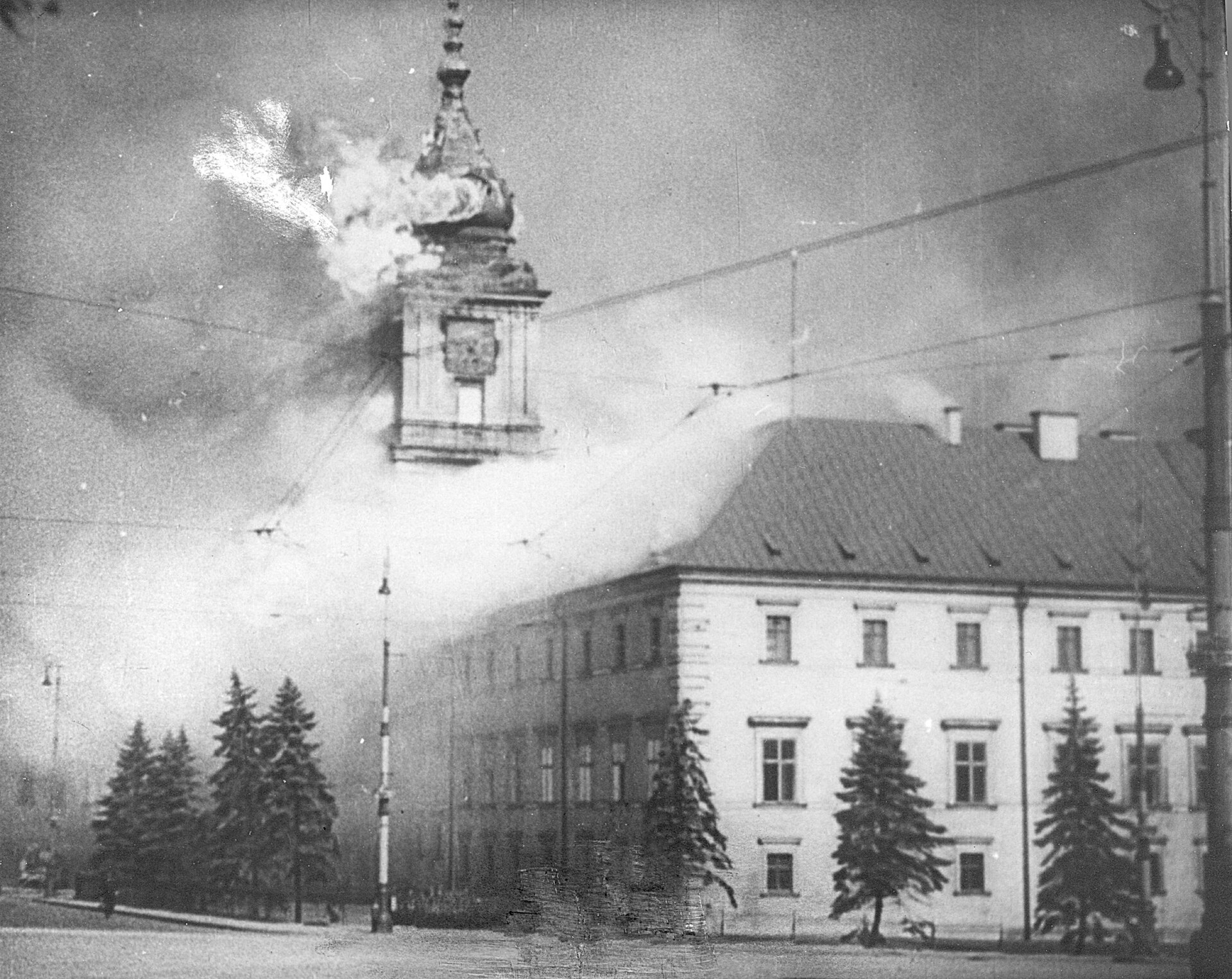
The Luftwaffe and German artillery pounded the city. The heaviest raid came on 25 September. The water works were hit, fires burned out of control and many thousands of civilians were killed. The Royal Castle was set on fire by shelling.
Capitulation
On 28 September 1939 General Tadeusz Kutrzeba signed the surrender. The garrison marched into captivity days later. The same day, in Moscow, Germany and the Soviet Union signed a treaty fixing their new border across Poland. On the eve of the surrender, Polish officers had founded the first underground resistance organisation.
Sources and further reading
Lead image: The Royal Castle in Warsaw burning, 17 September 1939. Unknown author, Public domain, via Wikimedia Commons. See our sources and image policy.
 United Kingdom
 United States
 Soviet Union
 Germany
 Japan
 France
 Poland
 South Africa