Western Europe · Air War · Germany vs Britain
The Blitz Begins
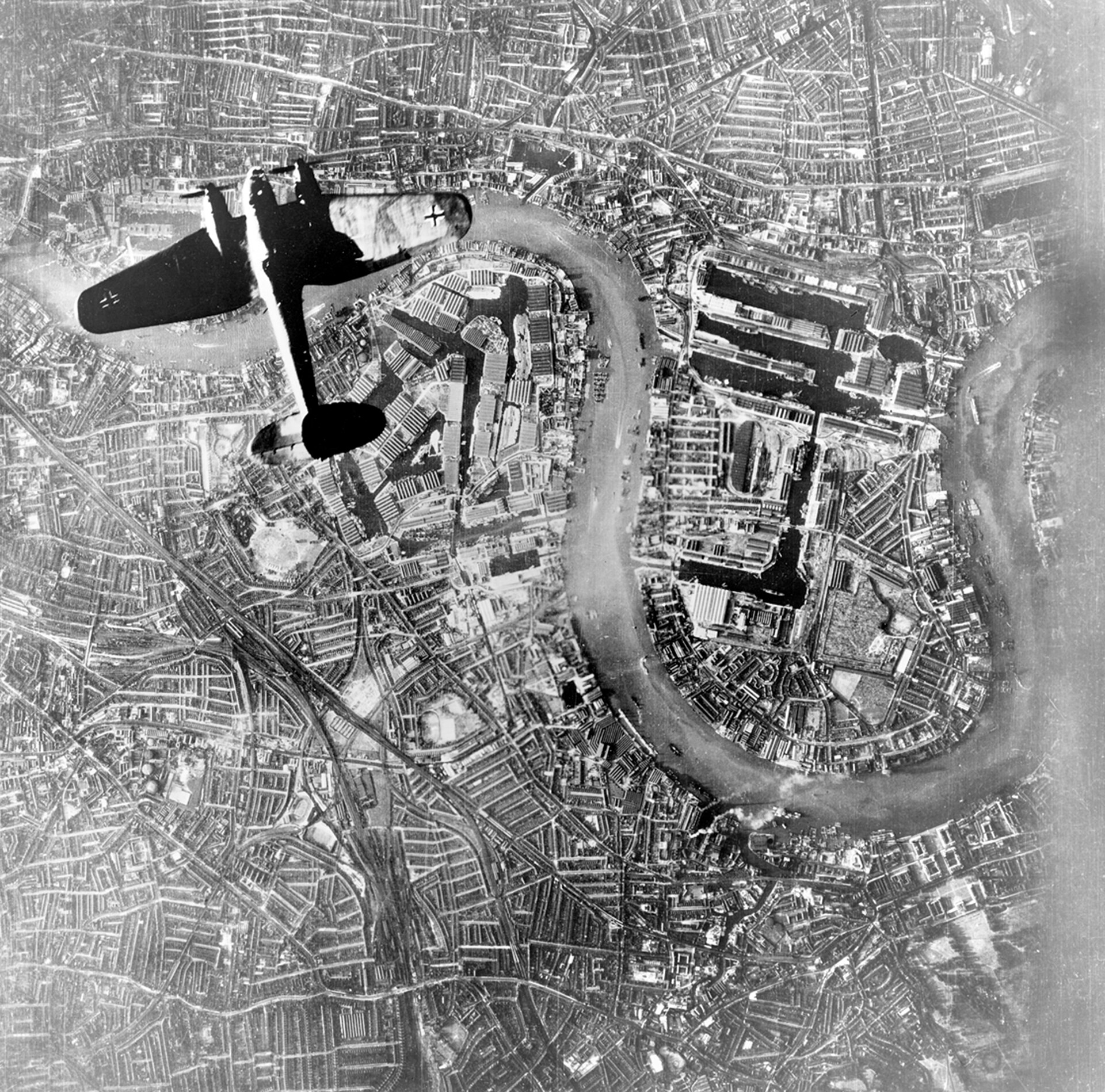
On a fine Saturday afternoon, hundreds of German bombers attack London’s docks. Fires burn all night along the Thames. It is the first day of the Blitz.
- Name
- Black Saturday
- Main target
- London’s docks and the East End
- Nights of bombing that followed
- 57 in a row
- Civilians killed in the Blitz
- More than 40,000 across Britain
- War clock
- Day 373 of 2,194
In early September 1940 the Luftwaffe changed its strategy. Instead of concentrating on RAF airfields, it would attack London, partly in retaliation for RAF raids on Berlin and partly in the belief that Fighter Command would be destroyed defending the capital.
Black Saturday
On the afternoon of 7 September 1940 a huge formation of bombers and fighters crossed the coast. Göring watched from the French coast. The bombers struck the docks, warehouses and crowded streets of the East End. Fires raged in the Surrey Commercial Docks and along the river, and bombers returned through the night, guided by the flames. Hundreds of Londoners were killed.
Night after night
London was bombed on 57 consecutive nights. The raids spread to Coventry, Birmingham, Liverpool, Glasgow, Plymouth and other cities, and continued until May 1941. Londoners sheltered in Underground stations, in back-garden Anderson shelters and in public shelters.
Sources and further reading
Lead image: A Heinkel He 111 bomber over Wapping, East London, 7 September 1940. German Air Force photographer, Public domain, via Wikimedia Commons. See our sources and image policy.
 United Kingdom
 United States
 Soviet Union
 Germany
 Japan
 France
 Poland
 South Africa