Western Front · Land Battles · The Allies vs Germany
D-Day
The largest seaborne invasion in history lands on the beaches of Normandy. By nightfall around 156,000 Allied troops are ashore, and the liberation of western Europe has begun.
- Operation
- Overlord, with naval phase Neptune
- Supreme commander
- Gen Dwight D. Eisenhower
- Beaches
- Utah and Omaha (US), Gold and Sword (British), Juno (Canadian)
- Allied casualties
- Around 10,000, over 4,400 killed
- War clock
- Day 1,741 of 2,194
For years the Allies had prepared an invasion of northern France. Normandy was chosen over the Pas-de-Calais, and an elaborate deception plan persuaded the Germans that the main landing would come further east. After a day’s delay for bad weather, Eisenhower gave the order to go.
The night and the morning
In the early hours of 6 June 1944, British and American airborne divisions landed by parachute and glider on the flanks of the invasion area. At dawn, after heavy air and naval bombardment, troops landed on five beaches along the Normandy coast. A huge armada of warships and landing craft from many nations carried them.
Omaha
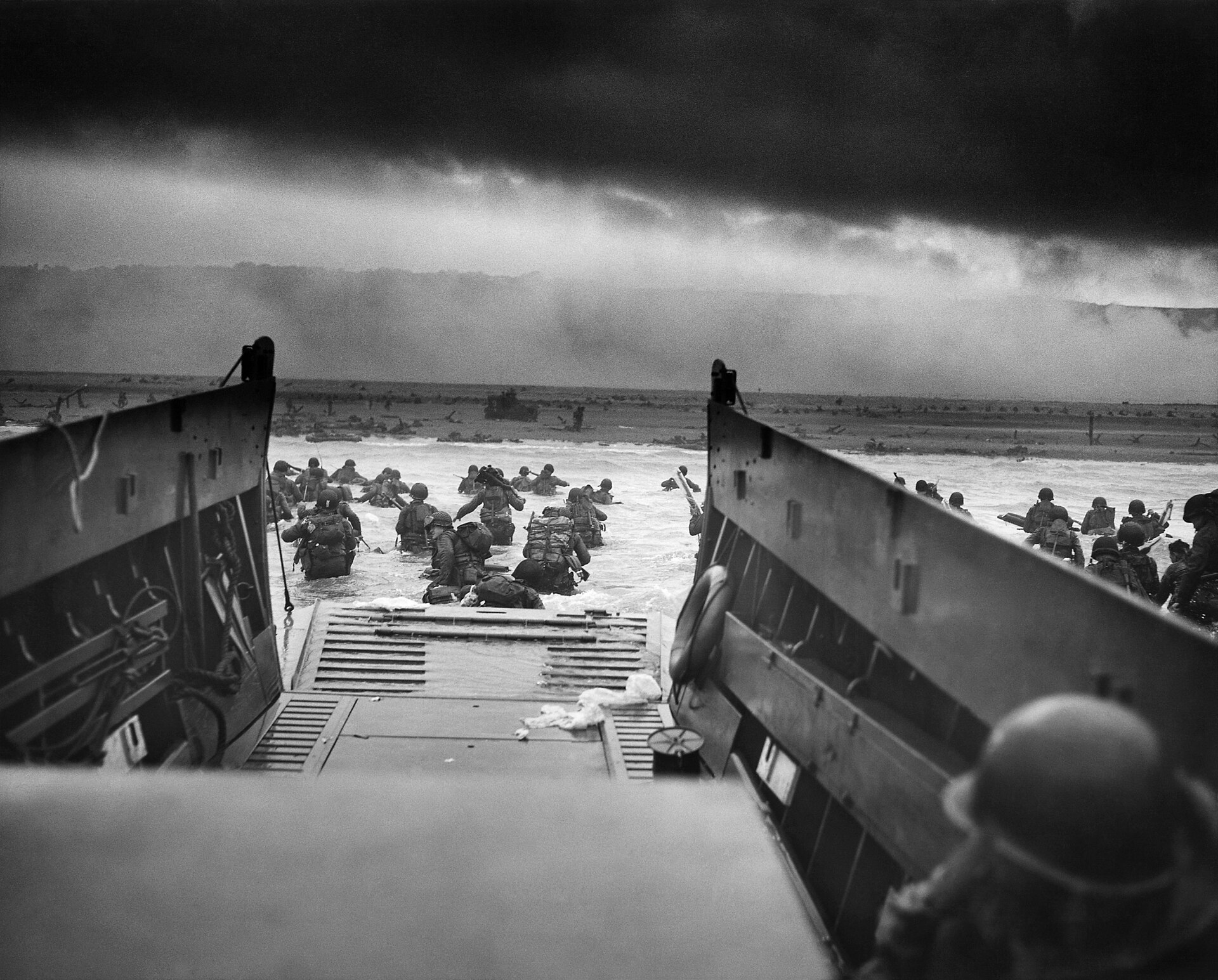
On most beaches the landings went better than feared. At Omaha, however, American troops faced cliffs, strong defences and an alert German division. Many were cut down at the water’s edge, and for hours the landing hung in the balance. Small groups of soldiers finally fought their way up the bluffs. By nightfall the Allies held a foothold along the coast.
Sources and further reading
Lead image: American troops wading ashore from a landing craft on Omaha Beach. Robert F. Sargent, US Coast Guard, Public domain, via Wikimedia Commons. See our sources and image policy.
 United Kingdom
 United States
 Soviet Union
 Germany
 Japan
 France
 Poland
 South Africa