Northern Europe · Air War · Soviet Union vs Finland
The Bombing of Helsinki
Hundreds of Soviet bombers attack the Finnish capital by night, the first of three great raids meant to force Finland out of the war.
- Location
- Helsinki, Finland
- Raids
- Nights of 6/7, 16/17 and 26/27 February 1944
- Attacker
- Soviet Long Range Aviation
- Defence
- Anti-aircraft guns, searchlights and decoy fires
- War clock
- Day 1,620 of 2,194
Finland had joined the German invasion of the Soviet Union in 1941, in what the Finns called the Continuation War. By early 1944, with the siege of Leningrad lifted and the Red Army advancing, Stalin wanted to force Finland into a separate peace. Heavy bombing of the capital was intended to break its will.
The raids
On the night of 6 to 7 February 1944, several hundred Soviet bombers attacked Helsinki, causing fires and casualties across the city. Two more great raids followed on the nights of 16 to 17 February and 26 to 27 February.
A successful defence
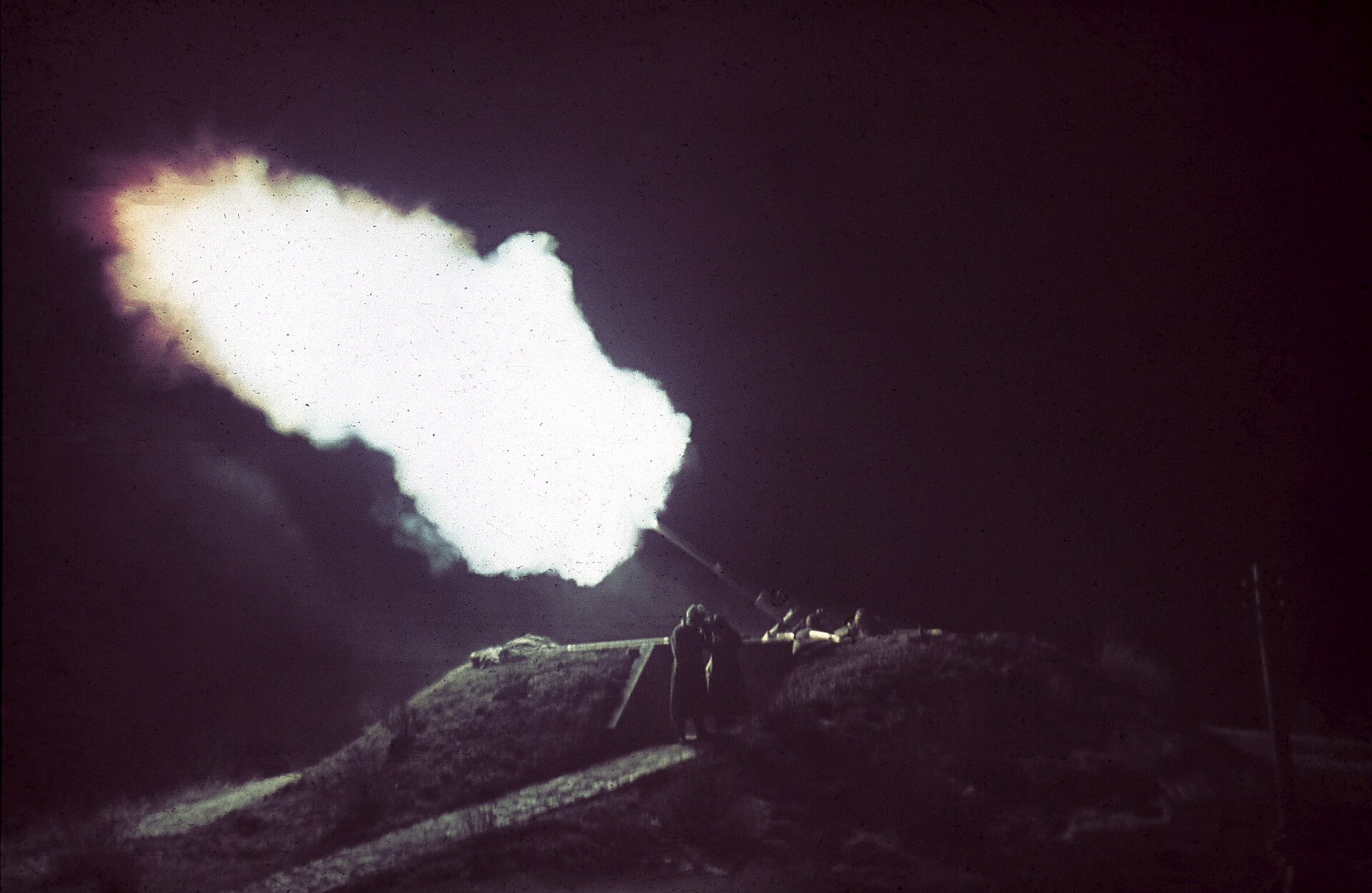
Helsinki’s defences had been strengthened. Radar and listening posts gave early warning, anti-aircraft guns fired intense barrages, and decoy fires were lit outside the city to draw the bombers away. Only a small proportion of the bombs dropped fell on the city itself, and casualties, though painful, were far lower than the scale of the attacks might suggest.
Sources and further reading
Lead image: A Bofors anti-aircraft gun defending Helsinki. SA-kuva, Public domain, via Wikimedia Commons. See our sources and image policy.
 United Kingdom
 United States
 Soviet Union
 Germany
 Japan
 France
 Poland
 South Africa