Western Europe · Home Front · United Kingdom
The Home Guard Stands Down
With the threat of invasion gone, Britain’s citizen army of the summer of 1940 is formally stood down after four and a half years on guard.
- Country
- United Kingdom
- Formed
- 14 May 1940, as the Local Defence Volunteers
- Renamed
- Home Guard, 22 July 1940
- Stood down
- 3 December 1944
- Members killed on duty
- 1,206
- War clock
- Day 1,921 of 2,194
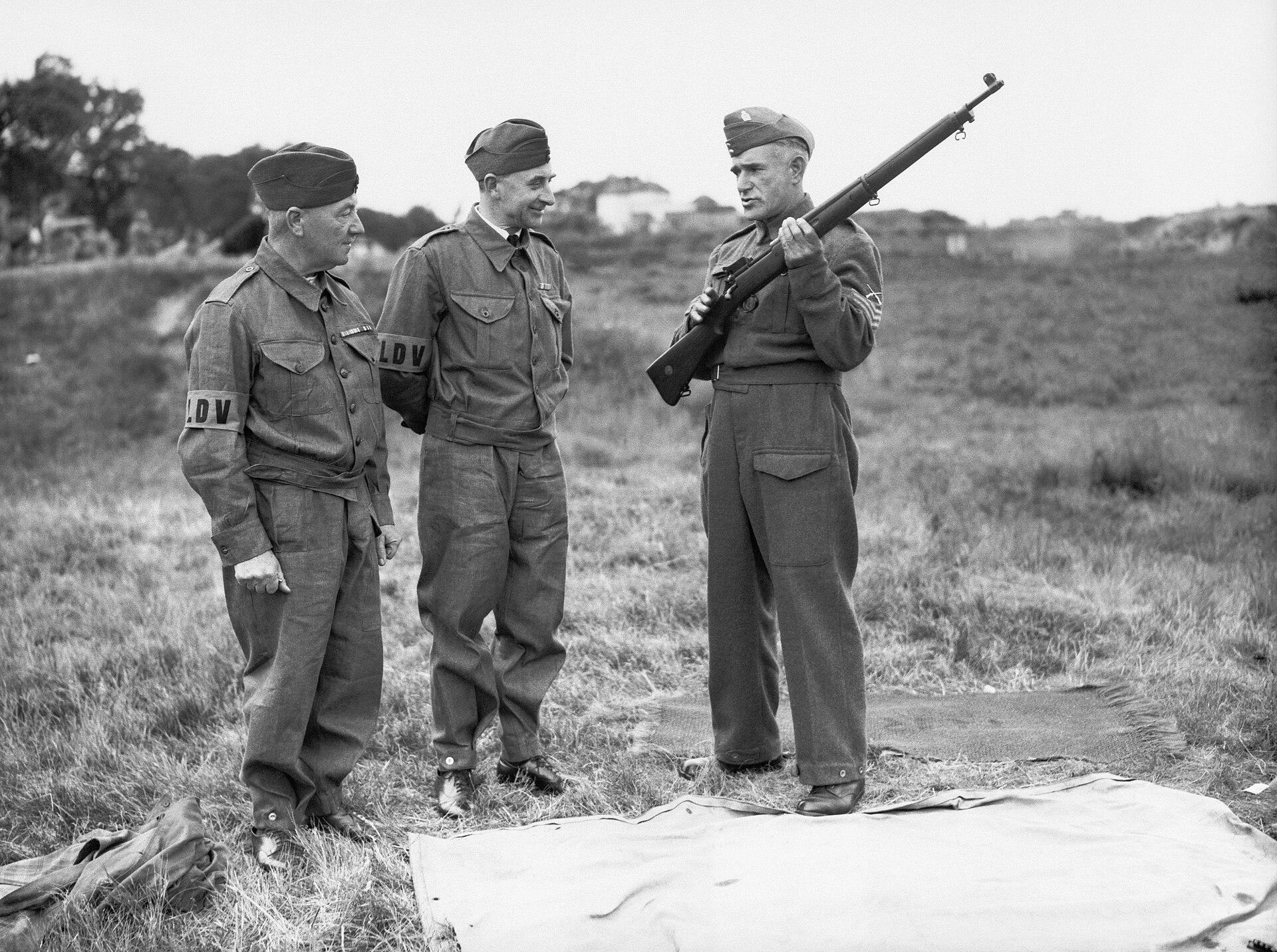
On the evening of 14 May 1940, as German armies broke through in France, the Secretary of State for War, Anthony Eden, broadcast an appeal for men to join a new force to guard against German paratroops: the Local Defence Volunteers. A quarter of a million men signed up in the first seven days. By July there were about 1.5 million, and by the end of 1940 more than 1,682,000 volunteers.
From broomsticks to a real force
Churchill had the force renamed the Home Guard on 22 July 1940. At first many members drilled with shotguns, old rifles or improvised weapons, but over time they were armed, uniformed and trained. Most were men too old or too young for the forces, or in reserved occupations, and they gave their evenings and weekends to guard duty, training and manning roadblocks, anti-aircraft guns and coastal defences.
The invasion never came, but the work was not without danger. Apart from accidental deaths, 1,206 members of the Home Guard were killed on duty, many of them while dealing with bombs or caught in air and rocket attacks.
Standing down
By the autumn of 1944, with the Allied armies on the German frontier, the force was no longer needed. On Sunday 3 December 1944 the Home Guard was formally stood down. Members received a certificate of thanks signed by the King.
Sources and further reading
Lead image: A sergeant instructor shows members of the Local Defence Volunteers, forerunner of the Home Guard, how a rifle works at Bisley. War Office official photographer, Console A, Public domain, via Wikimedia Commons. See our sources and image policy.
 United Kingdom
 United States
 Soviet Union
 Germany
 Japan
 France
 Poland
 South Africa