Western Europe · Home Front · United Kingdom
The Second Great Fire of London
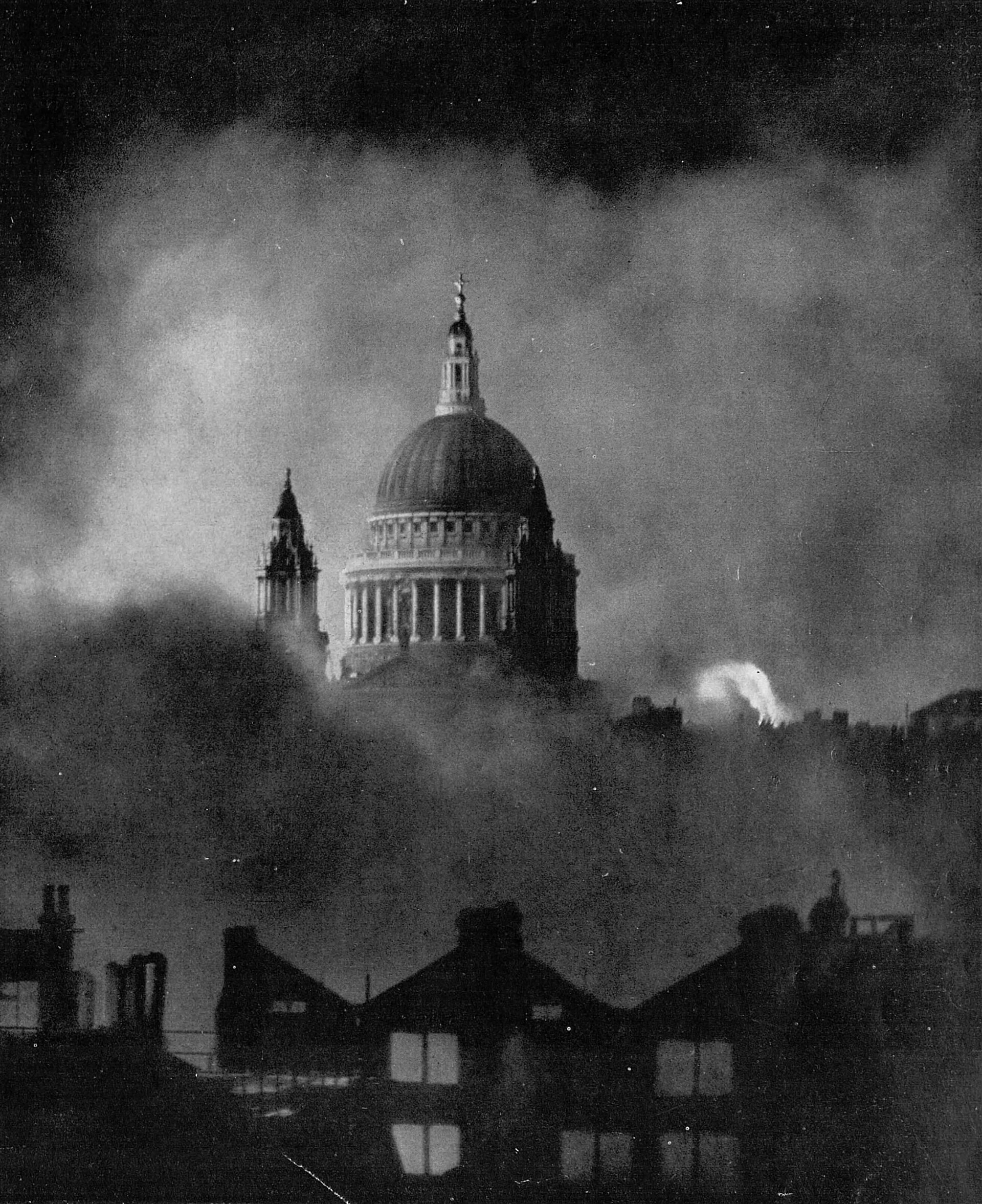
On a Sunday night with the Thames at low tide, German bombers set the City of London ablaze. St Paul’s Cathedral stands untouched amid the flames.
- Location
- City of London
- Raid
- Luftwaffe incendiary attack, night of 29 to 30 December
- Damage
- Around 1,500 fires; Guildhall and many Wren churches hit
- Same night
- Roosevelt’s Arsenal of Democracy speech
- War clock
- Day 486 of 2,194
The Blitz had been battering London since September 1940. On the evening of Sunday 29 December the Luftwaffe concentrated its attack on the City of London, the ancient financial heart of the capital. The bombers dropped mostly incendiaries, and many offices and warehouses were locked and empty for the weekend, with no fire watchers inside.
The fire
Hundreds of fires merged into great conflagrations. The tide on the Thames was unusually low, and broken water mains left firefighters struggling for water. Around 1,500 fires burned across the City. The Guildhall was badly damaged, and many of the churches rebuilt by Sir Christopher Wren after the Great Fire of 1666 were destroyed or gutted. Firefighters were among the dead.
St Paul’s survives
Winston Churchill sent word that St Paul’s Cathedral must be saved at all costs. The volunteers of the St Paul’s Watch tackled incendiaries that landed on the roof and dome. A photograph by Herbert Mason of the dome rising through the smoke, published two days later, became one of the most famous images of the war.
The arsenal of democracy
That same evening in Washington, Roosevelt gave a radio fireside chat in which he declared that the United States must become the great arsenal of democracy, supplying Britain with the weapons it needed. Lend-Lease followed in March.
Sources and further reading
Lead image: St Paul’s Cathedral rises above the smoke of the Second Great Fire of London, 29 December 1940. Herbert Mason, Public domain, via Wikimedia Commons. See our sources and image policy.
 United Kingdom
 United States
 Soviet Union
 Germany
 Japan
 France
 Poland
 South Africa