Atlantic · War at Sea · Britain vs Germany
The Sinking of the Bismarck
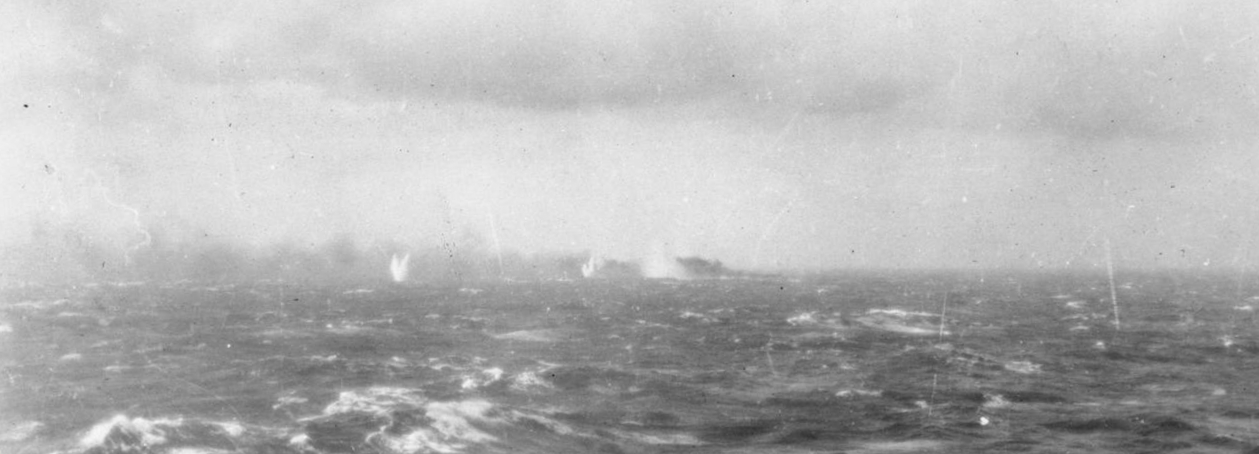
Crippled by a torpedo from an old biplane, the Bismarck can only steam in circles. At dawn, British battleships close in and pound her into a burning wreck.
- Location
- North Atlantic, west of Brest
- British battleships
- King George V and Rodney
- Final torpedoes
- Cruiser HMS Dorsetshire
- Survivors
- Around 115 of over 2,200 aboard
- War clock
- Day 635 of 2,194
After sinking HMS Hood on 24 May, the Bismarck headed for the French port of Brest. The British lost contact with her, and for over a day the Royal Navy searched the Atlantic. On 26 May a Catalina flying boat found her again, only hours from the protection of German aircraft.
The torpedo
That evening Swordfish torpedo biplanes from the carrier Ark Royal attacked in poor weather. One torpedo hit Bismarck’s stern and jammed her rudders. Unable to steer, she turned helplessly into the wind, back towards the pursuing British ships. Destroyers harassed her through the night.
The end
On the morning of 27 May the battleships King George V and Rodney opened fire. Within an hour Bismarck’s guns were silenced and she was ablaze. The cruiser Dorsetshire fired torpedoes, and the ship sank, possibly helped by her own crew scuttling her. British ships rescued more than 100 survivors before a U-boat alarm forced them to leave.
Also on 27 May
- 1942Czech and Slovak paratroopers Jozef Gabčík and Jan Kubiš attack Reinhard Heydrich in Prague; he dies of his wounds on 4 June.
Sources and further reading
Lead image: The battleship Bismarck burning before she sank. Royal Navy, Public domain, via Wikimedia Commons. See our sources and image policy.
 United Kingdom
 United States
 Soviet Union
 Germany
 Japan
 France
 Poland
 South Africa