Pacific · War at Sea · United States vs Japan
The Loss of USS Liscome Bay
Off Makin Atoll in the Gilbert Islands, a Japanese torpedo detonates an escort carrier’s bomb magazine. She sinks in 23 minutes, taking 644 men with her.
- Location
- Off Makin (Butaritari), Gilbert Islands
- Attacker
- Japanese submarine I-175
- Sank
- 05:33, 24 November 1943
- Aboard
- 916 crew
- Killed
- 644 lost with the ship; 702 in all
- War clock
- Day 1,546 of 2,194
In November 1943 the United States opened its Central Pacific offensive with landings on Tarawa and Makin in the Gilbert Islands. Escort carriers, small flat-tops built on merchant hulls, provided air support for the troops ashore. USS Liscome Bay, commissioned that August, was the flagship of Rear Admiral Henry M. Mullinnix’s Carrier Division 24 off Makin.
Before dawn
Before sunrise on 24 November, as the carrier prepared to launch her aircraft, the Japanese submarine I-175 slipped into range and fired a spread of torpedoes. At about 05:10 a lookout reported a torpedo. It struck behind the aft engine room and set off the ship’s bomb magazine. The explosion tore away almost the entire stern and sent fire racing across the hangar and flight decks. Burning fuel spread over the water around her.
Twenty-three minutes
Liscome Bay went down at 05:33, only 23 minutes after the explosion, taking 23 aircraft with her. Of the 916 men aboard, 644 were lost with the ship and 272 were rescued; with men who later died of wounds, the toll reached 702. Among the dead were Admiral Mullinnix, her captain, Irving D. Wiltsie, and Cook Doris Miller, who had won the Navy Cross for his actions at Pearl Harbor, the first African American to receive it.
Sources and further reading
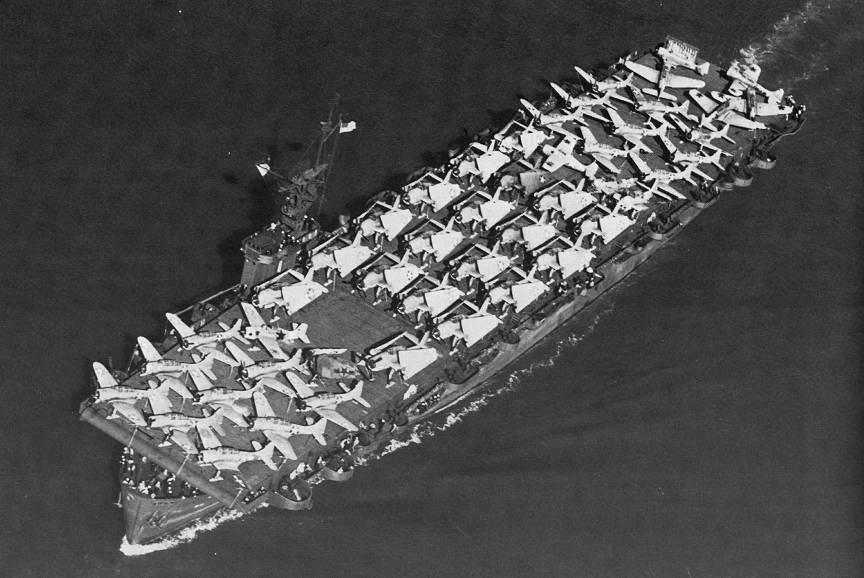
Lead image: The escort carrier USS Liscome Bay. US Navy, Public domain, via Wikimedia Commons. See our sources and image policy.
 United Kingdom
 United States
 Soviet Union
 Germany
 Japan
 France
 Poland
 South Africa